Wood ash weighs next to nothing. Cleaning out a fireplace after the timber has been consumed entirely requires some effort to not let the feathery dust disperse itself throughout the rest of the room. So when the crematorium handed me the heavy urn holding your remains, I thought the material the container was made of accounted for most of its weight. The smooth surface of the object hinted at bakelite or maybe even black marble.
But human ashes are not like wood ash. I did not realize your incinerated body was responsible for the heftiness of the object I had to haul through customs and to Ibiza until our small party was at Winti to return it to the sea you loved so. As all of us scooped handfuls of you from the urn, its weight gradually diminished until it became clear the container was nothing more than a simple plastic jar. Its weight, you, had left it.
In undecided times that complicate international travel, some of your closest friends came through and, on the day you were once born, said a final goodbye to you. The sea was still and receptive, accepting you as a natural part of it, the sky an unbroken blue, the way you preferred it. With the coarse sand that had been you stuck under my nails, one of your recurring jokes came to me: on holidays, when the sun was dominantly present in a sapphire sky, you’d find the tiniest cloud and playfully say: “oh no, it’s overcast!”
Although we all knew the contents of that vessel weren’t you, not anymore, it did feel as if we were setting you free, maybe even more so, ourselves. For me at least, this was closure. Not from you, never from you. You will always be part of me. But returning you to the earth, the sea, was like a permission to continue life without you. To let go of mourning as the main purpose of my daily existence. To know that you’re resting among the rocks of the Balearic Sea makes me feel desperate and joyful at the same time. The furious pain this notion, meaning that you’re no longer a human being, no longer a body, no longer the love I can touch, causes can still strike like lightning and tear me apart in a similar way.
This is a time of countless farewells. Like a dog, I am shedding. Getting rid of superfluous possessions. As our daughters and I are looking to an uncertain and entirely new future, I hold our past in my hands, and every picture, every letter and email from you, passes through my body and mind. Our past is no longer ours, it’s mine now. My responsibility. The process feels like a purging, though that sounds too harsh.
The mushroom table we once bought for Robin had been moulding, useless and unseen, on the terrace for a while. But toppling it into the container at the landfill shut another door to the time we were trying to be the best parents for our two toddlers. We were so ridiculously devoted. I still feel the devotion, but now, I’m scrambling to suffice.
In tiny steps I’m forced to contemplate every part of our life together. The steps need to be small, because at every single one I break, and I can’t continue until I put myself back together again. Every time, I change a little. Does it make me stronger? I really don’t know.
Some of the items I’m casting off are too significant to be a small step, like our Toyota Highlander. Not because of its size, but of what happened inside it, the places it took us. It was an extravagant present from one of our closest friends, and, at the time being the only SUV with a hybrid technology, he had it shipped to us from the United States. That its transatlantic transport probably negated all environmental benefits the hybrid motor offered, was a realization we had no idea what to do with, so we stored it. Well, we did our best. We certainly didn’t do everything right, but we did try to make a difference.
Our second child was on the way and we wanted more travel space. I detested SUVs, but again, it was the only larger hybrid car available at the time. And for its space and dependability, I grew to love it dearly. So now, with a heavy heart, I rummaged through all its nooks and crannies to make sure I didn’t leave anything behind before handing it over to its fortunate new owner. Some of the objects I found had been lying hidden for years in one of the many compartments, like the tiny pink notebook with the portrait of a horse on its cover in which Robin’s simple sentences reveal what a seven-year-old considers relevant travel annotations. “We are in the car for a long time and I don’t like it” and “On the beach, the wind was so fierce, we could hardly walk! It was so much fun!” At the back of the only partially used notebook, in more mature writing, is another note. It says: “I’m dying inside, while outside, I’m staying strong”. I don’t know if it’s a quote of a song or something I need to be concerned about.
Your sunglasses, still perched in their overhead holder, remind me of your sun-sensitive eyes. You’d almost never go out without them. “If I do”, you’d say, “the sun will be sure to come out.”
I try not to get too attached to objects, and my current process is an excellent exercise. But the Highlander was so much more than that, and when I relinquished the kind monster in the parking lot of the car dealer, I left behind a large part of our past.
The laptop I use now, was once yours. The picture functioning as its wallpaper was made by you. It shows our beautiful dog Scout, and, in the background, our house. Of the three entities implied by or figuring in this photograph, we already lost two. Soon, when I have completed my release and the house will be empty at last, the third will stop being a part of our daily life and find a spot on the extensive shelves of our past.
On the 31st of December 2020, a year had gone by since you passed away. It was undeniably a milestone, exacerbated by the date: the year’s end had been yours as well. So, on this day, we had lived through, experienced, every single day a year holds without you. Learned to accept and understand your absence an infinitesimal bit better. Dates are nothing but names and numbers placed arbitrarily by us humans on the circadian rhythms the universe created millions of years ago, but we have imbued them with such significance that, in most of us, dates can evoke strong emotions. And so it was for everyone who loves you.
The days leading up to the 31st of December brought with them very vivid memories of those, your, last days exactly one year ago, how we spent them, with or without you. Our final moments with you are branded into our minds, collectively yet individually, because that ultimate moment was a different one for each and everyone of us. Christmas Eve would turn out to be the last time your parents saw their son, Boxing day, the last time you got to enjoy my mother’s famous traditional Christmas dish: braised saddle of hare. Your sister, awaiting you in the mountains to join her for a few days on the slopes, never got to welcome you there. Instead, she had to drive back twelve hours to cremate you.
Robin’s final moment with you was when she said goodnight to you as I took her to her room. Normally, you would’ve always gone up to give her a bedtime kiss, but you weren’t feeling that well, and were in bed yourself. Her sleep ritual has always been very important to her, so when she realized, right after you died, she didn’t kiss you goodnight that fateful evening, it was like a dagger piercing her heart, and, perhaps even more, mine. A notion like this is enough to destroy a person, but we should take comfort in knowing you were always generous with your kisses and cuddles and showered both our girls with a plethora of signs of affection. And I do, I really do, but this humongous detail can still evoke such a storm of pain.
The last moment I saw you alive was when you left our bed to accompany little Leo, in one of your many selfless acts, to ensure my good night’s rest. Leone had been worried the whole evening (did she intuit your death? It would not surprise me) and wanted to sleep with one of us. Your selfless nature made you get up and join her to sleep in the guestroom.
This made Leone the last person to see you alive. She told me you left her that morning of the 31st. An early riser, you retreated to her bedroom to read. I wish you would have come to me, to our bedroom, where I was still sleeping, entirely unaware of what lay ahead. But you didn’t want to wake me, even though I know there was nothing you wanted more than to snuggle up to me, and so your final, altruistic, act made you pass your last living moments alone.
The events of the 29th and 30th of December 2019 revisited me vividly, moments that had revealed both your grandness of spirit and your unwellness. Remarkably, those final days were packed with special moments: your compassion for an angry waitress, our beautiful family walk on the beach where you told our kids about some of your adolescent mischief, the visit to the cardiologist who did not see the urgency of your situation. It was a bright and crisp winter day and in the waiting room the low rays of the setting sun embraced us, as we mused about all the places we could go to, to visit or live. We talked about our future, full of soft-glowing adventures, when neither of us realized our future together was heaving its last breath.
In the evening, the four of us played a board game, but I could see the raucousness of the children was a bit too much for you. You were not well, and before you went to bed early, you took your very first, and last, dose of antiplatelets.
Questions and doubts, though not as strident as before, still plague me: perhaps the cardiologist failed, or maybe there was no way he could have have seen it, perhaps he shouldn’t have given you the blood thinners. Why did I, who is always cautious when it comes to pharmaceuticals, let you take antiplatelets while neither the ECG nor your blood pressure called for it? What if those were what killed you? No one knows, and I doubt we’ll ever find out. But it doesn’t matter anymore; no explanation, if it ever comes, will bring you back.
Your family, the children and I had decided to spend the holidays on Ibiza, in an effort to make them a little lighter, to let the island’s healing energy carry and guide us. As Holland had installed another lockdown, we benefited from Ibiza’s improved COVID-19 situation and were able to find some welcome distraction in the shape of eating out, or simply enjoying a coffee on a sunny terrace, something we hadn’t been able to do since October.
As the new year drew closer, all of us grew increasingly introspective. A full moon let us live through our painful love for you and lit up that dark night preceding the anniversary of your death. We embarked on a guided walk in the northernmost part of the island. Looking out over the Balearic sea and the rugged cliffs, the sky a magnificent purple stage for this Cold Moon, our thoughts rested upon you and the aching cleft in our hearts.
We were fortunate to enjoy our dinner at a truly Ibicencan restaurant, and the pure campo-food was lovely, but our tears made an almost constant film over our eyes. Somehow it seems that the more wonderful the experience, the more stinging the pain of your absence. At dessert, I broke down in a way that doesn’t happen to me very often. Not in public. Most of my tears are controllable, but these weren’t. Salting my brownie and vanilla icecream and dotting the white linen tablecloth, they demanded to be seen, no matter how hard I tried to continue to talk and smile and eat.
I never say, “it is unfair”, because I don’t have a right to say that. Yes, losing you is the worst thing that ever happened to me and it shattered me like a glass figurine. But many are so much less fortunate. Losing you feels like losing everything, and yet, I still have so much, so many loving people around me, our incredible children.
The day of your passing, the 31st, we set out early in the morning to walk to Punta Galera, the mysterious rock formation that offers eternal views of the sea. It’s quite a tricky walk before you reach the immense slates of rock where, during summer time, people go to sunbathe, in the nude or not. It’s an awe-inspiring place, a piece of art, with nature and erosion as its twin sculptors.
We reached the rock that we used to jump off before snorkling in the clear waters surrounding it. Reminiscing, I saw you in happier times, already in the water, egging on whichever one of the kids was losing her daring, coaxing and encouraging them until they finally followed suit. Even I was one of your unwilling subjects, once.
All of us, your parents, your sister and brother-in-law, your nieces, our daughters and me, existed in a mournful solemnity, each of us with their own memories of you, looking out over the sea and down from the rock face to find you.
The rock formation was deserted, except for Alex, the resident of the cave that can be found about six feet up in the rockface. You saw him, the last time we were there as a family, when he made pancakes for the children. I had talked to him several times and he recognizes me.
This cave has been inhabited for a long time. It reminds me of a night we were here on one of our pre-children, carefree holiday nights. Together with Ruben, one of our best friends, we got it into our heads to drink a beer on the rock terraces. In the middle of a moonless night, we climbed down, armed with a flashlight to illuminate our way. As soon as we didn’t need it anymore to reveal the tricky pathway, Ruben let it glide over the rugged rockface. Suddenly, a deep voice broke the dark stillness, wishing us “buenas noches”. We almost fainted. It was Alex’s predecessor, a yogi who lived inside that cave for I don’t know how many years. This man lived soberly, and all his possessions were inside the cave.
That’s not Alex’s way. Our cycloptic friend has made the surroundings of the cave his kitchen, lounge and living room. The place is decorated with pictures, cats and mantras, and he interrupted our commemorative silence by inviting us for some ginger tea. We accepted with grateful surprise and sat down on the cushions he had placed for us on the rocks. He set out to make tea for us, no small feat, since he first needed to make a fire before getting the water to boil. And that’s very unlike flipping the switch on a water cooker.
As we sat, he grated the ginger and sliced the lemon. With amazement we beheld his well-equipped al fresco kitchen and the long time it took him to prepare the tea taught us a bit about patience. Alex’s hospitality was a beautiful surprise, lending an extra shade to our serene sadness. It was fitting for a day that was so filled with you; you used to relish this kind of encounters.
Some days into the new year, I went running and decided to pass by Alex, to see if he needed anything. As we were talking, nature, or you, perhaps that’s the same now, created a miracle for the two of us. A complete rainbow appeared (again, a rainbow without rain) right in front of us. It rose up out of the cold seawater, a spectacle of which we could see both the beginning and the end, simultaneously. Alex, who has lived with nature as his constant backdrop for seven years, told me he had only ever seen a rainbow like this three or four times. We were dumbstruck and it felt like a benediction. A benediction from you.
Our Newyears Eve was demure, but we did our best. We had oysters and oliebollen (a Dutch pastry, not unlike a doughnut without a hole) but no champagne. I couldn’t help but revisit the way we spent the last day of the year in the past. We would wake up excitedly, in anticipation of the newyears festivities, picking out our craziest clothes. What a different life. What a morphed world, this 2020 world. A year without parties, a year without visits from friends, a year without school camps, but most of all, a year without you.
Time indeed polishes the pain. Like the sea smoothing the rocks it gets rid of the sharp edges. But each passed day, every bygone year, time also takes you further away from me. If one could translate time into distance, which is done in astronomy, after one year, you’re already a light year (the distance light travels in a year, almost ten trillion kilometres) away from me. And every single day adds to that distance.
This last November we would have celebrated the eighteenth anniversary of our marriage, but it was aborted just before reaching adulthood. ‘Till death do us part’ arrived too soon for our wedlock to come of age. I was convinced it would attain a very respectable seniority, we would make it that far, but I never realized how wrong I was. You dying before the era in which retrospection would be our dominating activity, was an entirely unfathomable scenario to me. It often still is.
Monday November 23rd of the cursed year of 2020, the weather was just as beautifully crisp as it had been on our wedding day, and the cloud-speckled blue skies kept luring me back to it. The day I wanted to tell and show the world how much I love you. I don’t think I have ever relived our wedding as vividly as on the first anniversary I had to endure as a widow. That day was an open wound. It sounds bad, but the days that are like pus-filled boils are so much worse. An open wound hurts more, but it is pure and honest, it sparkles. You can behold the pain. The boils, on the other hand, are depressing, covert and stinking and secretive. You don’t acknowledge them until they start throbbing with dull persistence. They are the uneventful, futureless days that hide the pain that is always there.
Our wedding was extravagant, an event. The nuptials and the festivities surrounding them were nothing short of spectacular, and a lot of work went into organizing it. We argued more than we had ever done before. No one told us that getting married was this nerve-wracking, and too late we saw the value of a wedding planner.
Our, or rather, my ambition, was an important cause for the intensity of the preparations. My perfectionist nature (not something to be particularly proud of by the way, it’s a pest and an obstacle more often than not) lay at the root of the desire to make our matrimonial day just as extraordinary as the way I proposed to you.
Yes, I proposed to you, and the way I did it almost scared you off enough never to want to have anything to do with me for the rest of your life. Slightly exaggerated, perhaps, but you did for a moment doubt my sanity. And who’d blame you if they knew my plan was to stalk you?
So how did I go about this? Well, I collected several odd postcards, many that for a while were freely available in restaurants and bars and doubled as ads, depicting things that could be said to have a connection to you or us. One of them was a picture of Bob Marley, a musician whose music you loved. Another showed a cartoon of a man and a woman talking about marriage and yet another displayed the picture of a ‘lying pill’, referring, of course, to my little smoke and mirrors game. On the back, I wrote a single cryptic line that alluded either to the picture, or to you or us. Altering my handwriting was easy, since it is wild and illegible, so all I had to do was adopt a tiny and neat script for the texts on the cards.
Every day I mailed you one of those postcards, so you received one daily, except on Sundays. This went on for a while, and you grew increasingly worried. You discussed it with friends, who hadn’t a clue. My only accomplice was my mother, who mailed a card for me once, when I was unable to do it myself.
All the while, I managed to keep a straight face, even though sometimes I had to pivot away to hide my satisfied grin or swiftly duck into the bathroom to release some silent giggles. You never suspected anything.
Until one day I got sloppy. This had been going on for a few weeks already, and I was almost ready to pop the question, just one or two more cards while I was waiting for the engagement ring to be finished. For a few imprudent minutes, I left the designated card on the console table next to the door, quickly bounding up the stairs to get my wallet.
You were on the second floor, so I figured it was safe to do so. But unexpectedly and suddenly, you went downstairs and got to the card before I did. The look on your face was one of utter confoundment and concern. It took quite some effort to convince you it was okay, and that no, your girlfriend wasn’t a psychopath. I asked you to have a little more patience and rushed to the goldsmith in the hope of finding the ring finished. Fortunately, I did, and when I returned, I asked you to marry me. And with a lingering hint of confusion hovering over your euphoria, you said yes.
Upon learning that the secret stalker was I, your mother questioned the sagacity of marrying someone who is such a proficient liar. She came around eventually and I even think she likes me.
In the far south of the Netherlands, we had our own little tour of castles. The ceremony took place in Kasteel Oost, dinner was served in the limestone caves of Chateau Neercanne, where in 1991, during the Eurotop, European leaders were treated to a banquet with Beatrix, our queen at the time, and we spent our wedding night in Chateau St. Gerlach. Family and friends did too, and afterwards we learned that our mischievous friends snuck into the hotel spa in the middle of the night, armed with an array of alcoholic beverages.
You were nervous, but so was I. I had my period way too early and lost an unplanned amount of weight. Waiting for me to arrive with my father, you were a bit ill at ease, and so guilelessly handsome. The video that holds images of our vows shows the tension in both our jaws as family members wept with affection, and my, “yes, with all my heart!” instead of a simple “yes, I do”, felt a little forced. But that hint of corniness should not eclipse its truth. The awkwardness I felt had to do with breaking through Dutch’s limited capacity for drama. Marriage was never part of my plan, until you made me want it wholeheartedly, if only to tell the world (and even more: you) how special you were, are and forever will be.
Our family and friends showered us with an overwhelming amount of love in the shape of a hilarious power point presentation of our development from baby to adult, a video in which all our friends wished us well in their own unique ways, a beautifully engraved mirror, and an amazing work of art, created with artifacts from our childhood. We received deep poetry from people we would never have expected it.
My father gave me the gift of accompanying me on his saxophone while I sang to you Bette Midler’s The Rose. I cherish our practice sessions in obscure little studios during the weeks leading up to our wedding day.
At the end of this day, we retreated to our beautiful room, exhausted with gratitude and incredulity at all the effort everyone had put into their gifts. Not only did the two of us exchange hearts, we received a truckload of love from our friends and family as well, and we felt like the luckiest people in the world.
Our out of the way location meant the wedding party was quite small, which was a source of stress, since it meant making a difficult selection and excluding friends and family members. The wealth of having many friends and a large family here became a bit of a burden. However, we didn’t see the need of limiting our legal union to only one day of celebration, so a week later, to make it up to all our other friends, we also threw a big party in Amsterdam.
We truly went all out with this wedding of ours, and there were times afterwards I remember feeling somewhat conscience-stricken at its lavishness. But never will I feel that way again. Now that you’re no longer with me, I am so grateful for the opportunity of having had this extraverted, gorgeous and generous wedding. It exemplifies our life together and your passing taught me there is no use in holding back.
Always drenched in love, the time we were given was full and rich, and there isn’t much we failed to do. We traveled to exotic places, experienced freedom and ecstasy and wonder and illness and sorrow. You and I, we took risks and explored different paths that were sometimes challenging. But no matter what, we remained each other’s confidants and support through all of it. Together we tackled parenthood, which was not always easy, but a great source of joy and learning. We created two incredible girls and even though we ourselves felt like we were still kids when we were gifted them, we must have done something right. They are turning into beautiful, good people with big hearts.
You should have been with me still; our grandiose, wild plans were nowhere near exhausted. We talked about them the day before you died. But although my gratitude wears a sturdy veneer of agony, I’m endlessly grateful for all we were fortunate to have. More than anything else, your passing taught me there is no use in holding back. Life and love should be done fully, with wild abandon, like there’s is no tomorrow. Because sometimes, there really isn’t.
The 23rd of November 2002 was our day. And so was every day after that.
Ever since you died, a spiteful creature has been poking its head through the membrane that separates my subconscious from my conscious mind: guilt. Mostly it comes to me in the shape of nagging questions: Did I appreciate you enough? Did I take you for granted? (yes, a little, probably, but isn’t that inevitable in any relationship, to a certain extent?) Was I not honest enough, or perhaps, too honest? Did I give you enough space to be yourself, should we have kept the dog? I dig deep to see if I can find fault within myself, some proof of my neglect in avoiding your death.
If only I’d have insisted the hospital tested you more and longer, something a tiny nudging intuition tried to tell me on what would be your final afternoon alive. I ignored it because it was 5 PM on December 30th , and well, I guess I didn’t think it was necessary, or simply didn’t want to admit it was (how on earth could I intuit you’d die the next morning?) and sedated my gut feeling.
If only I had sent you to see the doctor sooner, if only I had watched you closer. If only we had not moved out of Amsterdam. Is there anything I could have done differently, to have made you still be alive? I know the answer. Maybe, but probably not. That sliver of a maybe is so nasty, though. Like Edgar Allen Poe’s Raven, it taunts me, alternating “nevermore” with “if only”, a maddening rhythm I manage to silence most of the time.
Every once in a while, when the questions refuse to stop and keep on pelting me like a hailstorm, that small vicious creature grows into a fetal leviathan, ripping me open, much like the parasitic creature in the movie Alien. Because it is inside of me, of course. It lives off my bewilderment at not finding you anywhere and at the same time, in every damn corner I look.
In the supermarket, a girl cries out for her father. The shout makes me cringe. My kids will not call out “Dad!” ever again, neither excitedly, nor in anger, nor in that annoyed tone typical of teenagers. Except perhaps in their dreams, or their nightmares. At times, my guilt concerns them. As if it was I who took away their father, by not taking care more, by not being more observant. As if, in some way, it is my fault they no longer have a Dad. And your family. I failed to prevent the loss of their son and brother. Your beautiful, amazing nieces; that petite Vera who’s extraordinary talent is truly emerging now. Do you know she had her first exposition? I fervidly hope you do somewhere; you’d be so proud of her. What an uncle to miss. And that closest friend, how he suffers from your absence. For them, and for the many more who love you and now have to carry on without you, I want to do penance.
But before you make the mistake of admiring this writhing of the soul, let me stop you. There is nothing noble about this guilt-searching, I’ve realized. It is just a matter of resisting the idea I had no control over what happened to you. A twisted hyperbole of my own significance and power. My grasping for guilt resembles the frantic exertion of an ant that will immediately start to fix its routine, even if the entire nest is irreparably destroyed by an animal, poison, or boiling water. As if repairing the daily chores will prevent other disasters, and salvage the way life used to be. But there is no fixing or controlling this. The realization neither I, nor anyone else, could have done a thing to prevent your demise, just might be the hardest of all notions to accept.
A children’s song springs to mind: ‘row row row your boat, gently down the stream, merrily merrily merrily merrily life is but a dream.’ This in turn leads me to something Leone once said. She was only 6 or 7 years old and looked at me with this open, pensive look. She said “I sometimes wonder if all this (she made some inclusive gesture) is not just a dream”. It was one of the many deep things she tends to say.
The metaphor of life as a ship is a useful one when we consider the issue of control or lack of it. When a storm rages at sea, a ship can’t do anything but wait for it to pass. It needs to relinquish all illusion of control, it has to, and go wherever the waves will carry it. Perhaps that’s why I like trains so much, revealing a need for control with stronger roots in me than I was aware of. A train is least likely to drift, it is the most controlled form of transportation. Its rails force it into a direction, which it will, most of the time, obediently follow. When it comes to trains, there is no swerving or meandering. The problem is, the track will end, eventually. And then what?
On a larger scale, the current situation in the world is a clear admonition to humanity as a whole, that, contrary to popular belief, we are not in control. And we know precious little. So what can you do when you have no control over a situation? Freaking out is an option. It’s not an advantageous one, however. Another choice is to, like the ship, have faith. To trust that things will turn out all right, to trust that you, we will make it, to believe things will get better. To be at peace with the notion you cannot and do not know everything.
The English poet John Keats once coined a beautiful phrase to define this skill: negative capability. In his words, it is the ability to accept “uncertainties, mysteries, doubts, without any irritable reaching after fact and reason.” Keats applied this quality to writers, but I think the world would improve greatly if everyone applies themselves to learn this skill. It is exceptional in the sense that it celebrates a passive ability the human world is ready and overripe for. Letting go, rather than a rigid holding on.
Leone’s birthday never ends. Because she was born towards the end of July, we’re usually away on a holiday. Which means her birthday needs to be celebrated at least three times: on the day itself within our little circle, and when we return from wherever we vacation: one party for friends and one family gathering. So when I was relieved the birthdays were done with, we still had two parties to go.
The series was concluded with a sleepover planned to take place during the ultimate reaches of summer, permitting an evening dip in the lake. As I was sitting in the sand, guarding the kids’ clothes and beholding their seemingly carefree joy, the water carried their clear laughter towards me. It underscored my pain. Their crystalline voices singing Moana’s song “How far I’ll go” from Disney’s Vaiana about an uncertain future made me crumble with grief, sticking needles into my crying heart as if it were a voodoo doll.
As I watched them, the velvet sunset caressed my sadness by showing me you weren’t there. So clear it was. My feet in the soft, cool sand, without you next to me to relish the abundant joy of our twelve-year old. I must now experience everything for you.
Then, suddenly, you appeared, taking the form of a rainbow that needs no rain. It seems to be your preferred sign, a rainless rainbow. The symbol for tolerance of all genders and races, a symbol that your brave oldest daughter brandishes with conviction. This is how you materialize in my moments of greatest turmoil. And it makes sense. Because everyone knows, there is no such thing as the end of the rainbow.
The sky is persuasive today. It doesn’t leave any space for doubt and, without mercy, has pressured away all moisture in it. Summer’s heat visualized, a blue dome hovering motionlessly over the pine trees of Ibiza, accompanied by the droning composition of crickets. Those hardy pines, that have braved storms and heat and drought and floods and construction workers and spoiled, rich tourists. Many people dislike them for exactly that, their stubbornness. Their persistence. I love them, but I love all trees. A tree cut down is murder, at best euthanasia; it hurts me physically. To me, the smell of sawdust is like the scent of blood, timberland a vast slaughterhouse.
Sitting on the terrace of our house, thriving Ibiza trees surround and comfort me, though some of them are broken: damaged by the storm that raged while you were here. It wasn’t the one that stole you from me; that was a very different storm. A silent one, wreaking irreparable havoc inside your heart and lungs. Why, oh why did I fail to notice it?
One of those trees hangs crooked, like a broken flower. It is me. You saw this happen, your mortal eyes witnessed the snapping of the trees, you sensed the storm’s brutal force. Last autumn, you filmed it and sent it to me, to show me how extraordinarily severe it was. You shared everything with me. I now regret my decision not to join you and the kids on this holiday, for what none of us knew (or did you?) was your final earthly sojourn in Ibiza. The scarred trees remind me of what I missed then and what I’m missing now. But they are just the hints of the time I wasn’t here with you, greatly outnumbered by intimations of the time we spent here together. The island can’t stop telling me about it.
You are everywhere. Casa Dieter, the house you decorated so lovingly, the sunsets you could never get enough of, the Mercat de Forada, where you used to buy stuff you’d never use, just to support the people who made them. Where we would while away Saturday afternoons, drinking cortados and not doing anything really, something neither of us were very good at, except at this tiny market in the campo on a crossroads you thought could be a backdrop in any Twin Peaks episode. A market where people sell the produce they harvest from their own garden and make unpretentious music. There we got to drink the ultimate and true Ibiza essence, the way it is supposed to be. Simple and pure happiness.
The clubs are closed because of COVID-19, which is just as well. Plenty of memories there too, darker ones, because tainted by the remote possibility of nights spent there, unslept nights, having contributed to your heart failure. Driving past a shut down Pacha I notice the memories of our thrilling parties, once our most carefree moments, are more convoluted than others.
In the garage of our house I discover a duffel bag with objects you carefully stored last October: shaving cream, a bag of ground coffee and a wooden beach-bat set that was a gift from your parents. To realize you put these away, envisioning a future opportunity to get them out for some sporty fun with our kids and your nieces, reveals yet another, brand-new level of agony. It also makes you materialize more, and I catch myself a few times, lost in a world where you still are. Expecting to see you diving into the water. On the brink of calling you, to tell you Robin walked to the beach by herself for the very first time.
To me, you might be here more than anywhere else. Nowhere were we more together than on this island. We vacationed and lived here. Countless memories adorn this Balearic island, most of them very happy, some devastating, like the dark day, a mere two weeks into our adventure-year here, when I got the call from my sister to send word my father died. Out of the blue, like a flash of lightning. Like you. That time, you were next to me, to support me in my panic-stricken grief. Now, it is you who are gone, and there is no one. In my entire life I have not felt this lonely, not even when I really was alone, just having moved to Los Angeles, away from all I knew. Is it better not to have known such intimate togetherness? It certainly makes for a more profound loneliness, I think.
What hidden meaning or lesson should I look for in the reality that the two men who meant most to me (three really, including my uncle, who perished many years ago, but also way too young and unexpectedly) left so sudden, leaving me without an opportunity for saying goodbye, for letting them know how much they mean to me? Is there a meaning, or is it merely? Just because. I prefer a meaning, but I haven’t found it yet, and fear I never will.
I knew that returning to our island would be confronting. But the devastation I feel, especially the first days here, I did not expect. My heart simply won’t stop breaking. There is no pause in the grief, no breather, something I have been able to count on the past months in Holland, where a reminder will set off the pain, but after some time it always subsides. This first week on Ibiza, the pain simply will not go away.
When the flood of memories abates a bit, another aspect of your absence reveals itself: I am now the only one to make the holiday. The chores you and I used to share, like grocery shopping, are now mine. How we relished doing this together, especially the first groceries of the holiday. This time I am dragging my feet in indecision, completely befuddled as to what I need to buy. I’m choking, and it’s not just because of the obligatory face mask. I, an unlikely mother, am now the only one left to entertain and guide the children. Every decision, right or wrong, is mine, and mine alone. I had no idea how exhausting that can be. The day my birthday comes along, I realize it has to be celebrated and I find myself contorted in an anxious determination to make sure we have fun.
So, I plan a trip to Formentera and book a hotel. When we arrive, looking for a quick and simple bite on the beach, we instead end up at a seriously overprized beach café. I rent bikes, but the distances are too long for them to be useful. The hotel is impersonal and not very nice. The food is hardly edible, and because of that MF-virus we can’t even get the overcooked and unrecognizable fare ourselves. We peer at it through plastic screens to see if we want it. Most of it we don’t, but we eat it anyway. The face masks are suffocating in more than one way, but fortunately Robin puts her comic talents to good use and, when we are at our table, places the mask over her eyes in mock despair. She makes us laugh, thank god. The next day we are served an equally inedible breakfast and it rains. The trip feels like, and probably is, a spastic flight in order not to face the bleak reality of having to celebrate my birthday without you.
Our trip is salvaged by our visit to the tiny beach shack where we had been before, with you, though it comes with the painful reminiscence I’m getting used to. The visits to those familiar places. I guess I’m still searching for you, assuring myself you aren’t there somewhere, hiding, waiting for me to find you.
The best part about my birthday are Robin and Leone, who do such an amazing job making me feel special and grateful, and the gifts family and friends gave to me to take to Ibiza. The most precious and heartrending one is a posthumous gift from you, which you give to me by way of your amazing mother. Before you died, you had been collecting pictures of me, to make into a book, once again illustrating your loving dedication. Your mother found them and decided to finish the job for you, this way conjuring up your final gift to me.
Ten days later it is our daughter’s turn. This time, more than ever before, I need to get everything right. The cake, for which I have to get a new oven because the one you and I bought together last year is broken, with Robin’s help comes out really well and the cake-and-presents ritual is wonderful. But as the day progresses the happiness collapses, not only for me, but for the birthday girl as well, culminating in her telling me in a tearful voice she doesn’t feel festive at all. Bewildered by my inability to make our broken union feel whole again, like Sisyphus I push and toil to get the feeling to a higher plane, while sensing the rock of your absence hanging off my neck.
We manage to end the day joyfully, with a moonlit dinner in the romantic garden of a restaurant in the North of the island. It’s little Leo’s warped birthday, but at least part of it feels like one. When I hit my bed, I’m exhausted and secretly glad the birthdays are over.
Two weeks ago was the first time in twenty years I spent your birthday without you. From the earliest dawn of our relationship, we celebrated it together. Sometimes joined by friends or family, sometimes just the two of us, and, later on, always with our children. I did not feel I approached this day with much trepidation; I never put that much stock in birthdays, and I don’t miss you more on the date you were born. But apparently, somewhere hidden inside, was a place that did dread the advent of the 27th of May, for the preceding day greeted me with a severe migraine.
There was a vacancy where all those years before my strenuous search for the perfect gift had found a home; you always managed to find the best, most considerate presents, putting me under quite a lot of pressure to do the same. Now I was left without preparations to make for your breakfast in bed, which I never managed to get done early enough to actually wake you up.
This past 27th of May, just after sunrise, I took our two daughters to the small lake nearby our house. It was a beautiful day, as is the unbroken rule on your birthday. Why would it change now? We brought flowers from our garden and sent them across the water towards you, for you to pick up later. Our children do not show their grief very often, but this serene early morning we wished you a happy birthday and our silent tears flowed in unison, binding our aching hearts together.
Two days later, it was time to commemorate that other most important man in my life, my father. He too, is no longer here to celebrate it. Losing him, five and a half years ago, I thought was the worst that could happen to me. I was wrong.
I am very grateful for the support and love my daughters and I receive during this mind-blowing event and its never-ending aftermath. Most people would agree that what happened to us is so huge, it is entirely accepted if you are still mourning and struggling after five months, or even a year. Especially when the loved one lost was such a brilliant human being as you were. Are? Dying, death, is so enormous. We cannot seem to grasp it.
Strangely enough, this only goes for people. In general, we do not attribute the same significance to the death of any other creature, unless it is almost extinct. Even then, the amount of mourning never reaches the depth or extent of that for a fellow human being.
These reflections were prompted by an incident that happened a few weeks ago. One evening while driving, I noticed a bird on the street. It was not dead, but it did not flee my car, so I figured it must be injured. As I approached the jackdaw, it tried to get away, but could not, so my guess was correct. I picked it up and gave it to my daughter to hold. Its wings were strong. It seemed healthy except for not being able to walk. The pet ambulance came to pick it up and bring it to the bird hospital. “Looks like a broken leg, they will probably put it to sleep”, the paramedic said. This took me aback, and I decided to call the bird shelter first thing in the morning, so if they were planning on putting it down, I would be in time to save it from that fate.
The next morning, I called the bird shelter at the exact moment it would open, 9 am. It was too late already. The jackdaw had indeed suffered from a broken leg, and they had euthanized it. I told them I had wanted to take care of it, like a pet, and all the woman could tell me in her business-as-usual-manner was: “You’re not allowed to keep wild indigenous birds.” So that was that. Wiped away by bureaucracy and rules, a broken leg as a death sentence. A human leg can heal, why can’t a bird’s? I did not get it, and I cannot find the justification for it. Death as an afterthought.
The current worldwide crisis is kindled by our fear of human death. We go to great lengths to save another human being, we close down society, while a non-lethal flu among livestock is reason enough to kill these animals by the hundreds of thousands. Clear them, like broken toys. Why is a human life worth so much more to us? What wisdom, what religion supports this arrogance? Isn’t it time to revise our old-fashioned mores? Yet I know I myself am fickle and inconsistent: I do occasionally eat meat, and I can’t deny I kill ticks or mosquitoes once in a while. I am hardly saying I have the answer, but something feels amiss.
Of course, I did not mourn the bird the way I am mourning you, and probably will for the rest of my life. I did, however, feel the same kind of powerlessness at hearing of its demise. Death is so definite; there is nothing I can do to bring it or you back. In life, you can try again, repair, make a new start. Death can never be undone.
Being in control is the grandest illusion we as human beings have created for ourselves. You might feel in control for a very long time, as I believe we did, until suddenly you realize you are not. At all.
Your birthday ended up being a beautiful day, spent with our blood and extended family in our luscious garden. But when I woke up the next morning, you were still gone.
Walking the empty streets of the usually crowded heart of Amsterdam allows me to revisit each moment I spent with you here, and retrace every single one of the many steps we took together in this city. Your city. I can find my way here blindly, which is a good thing, for my own life has turned into a foreign land that has me completely lost. Amsterdam’s corona-swept canals, where we used to live when life was reckless and never ending, whisper and echo your name. In the calm dark water I see your face, reflected from the memory of nocturnal boat rides with friends, lightly illegal and doused with the thrill of forbidden adventures. Especially now that everyone has vacated this world heritage site, I see you everywhere. The cobblestone streets ooze your essence and funnel it straight into my shattered heart.
The cliche, or cliched truth, goes that when you die, your entire life flashes before you. I’m discovering that something similar occurs when you lose the love you share your life with. All the memories we created together, and they are abundant, have replayed through my mind these past months, not in any chronological order. And this is not only true for existing memories; our future ones, in the shape of plans that will never materialize, also appeared before my mind’s eye.
More than once, I’ve wondered why we should bother making memories when they end up hurting so damn much. Every restaurant we had dinner at, every street we walked, every holiday we went on. I feel like I need to sand these places, to remove at least some of your veneer, before I will be able to enjoy them again. Your absence hurts, but, oddly enough, your presence hurts even more. So I deliberately go and revisit ‘our’ sites and experiences, although that, like everything else these corona-days, is severely curtailed.
My mind is primed to find any connection. It frantically searches for any route that leads to you. Almost every song seems to apply to us, to you, and every object or scene I see reminds me of you and the life we lived. The obvious, such as your clothes or your tennis racket, but also the not so obvious, such as the grass. There is no clear connection to grass, except that you will never lie in it again.
Balmy spring evenings, a delicious meal, deer in the garden. They still bring me joy, but right after a feeling of delight lands in me, a toxic sting penetrates it. The cherry blossom is blooming its heart out in a cloud of pinkish white, but you will never again be there to admire it with me. I really want to believe you’re still somewhere, somewhere near, proving me wrong. That you are and forever will be next to me, marveling at the world. But I find it so hard to do.
When I look into the future, there is no one to share the milestones our children will reach with. No one to say to, “remember, when they were little”. I know I will have a new life. But that particular future won’t ever be repaired, and it will remain utterly bleak. These realizations constitute the darkest, gloomiest reaches of my grief, and I don’t often go there. If I would, I don’t think I would make it out. It’s a black hole, of which I can only approach the event horizon to just carefully take a glimpse inside. And what I see there could end me.
Writing will be my salvation, as it has always been, but at least as much our incredible children. I know you gave them your highest and best, for they are pure and true and strong. Our big girl Robin (she will probably grow as tall as you were), said something the other day that blew me away. She had just gotten out of the shower, towel loosely wrapped around her and still dripping, when she suddenly looked at me in wonder and said: “You know, maybe you just die when your life is full. That it has nothing to do with disease or anything like that.” What pure wisdom. When she was a baby, I wrote a poem about her. It was called “Le connu perdu”, because she often wore that profound look, as if she was watching us with ancient knowledge from some previous life. This insight must have sprung from that place.
The Kalverstraat, always too busy to visit, except perhaps early Monday mornings, now seems alien. As if a virus wiped out all of humanity. It reminds me of I am legend with Will Smith. Stores and restaurants, even McDonald’s and Burger King, closed. No people anywhere. In this alien world I discern poetic justice, in two ways. First of all: because you died the world stopped, and it’s only natural it should. Secondly, it reveals an overdue necessity to rethink our ways. Economy should not, cannot, be endlessly growing. In medicine, something that keeps on growing is called a tumor and will eventually destroy everything around it. This is exactly what our economy, our capitalist system, has become. To the planet and ourselves. We consume to much, we want to much, we need too much, whether it is food or clothes or toys or electronics. Depression is becoming more and more prevalent and obesity is rampant.
The idea that ‘more’ is always good needs to change. There is something like ‘enough’. ‘Enough’ is a marvelous and underrated word, signifying a balance between too little and too much. Life is all about balance. We exist on our planet thanks to this balance. The distance from our star the Sun is just right; not too close and not too far (or hot and cold). In astronomy, this particular distance is called the Goldilock zone (yes, after the little girl who went to visit the three bears). In that same rationale belongs the idea that when you take, you need to give something back. We, at least the people in the West, have lost sight of this balancing act that life is, or should be. And if we do not relearn it, as I think this crisis is showing us loud and clear, we will have to go. The memory of us will soon fade.
But that’s okay, because there will be no one left to remember us.
If you’d come back from the dead today, you’d find such a different world than the one you unexpectedly said goodbye to on the 31st of December 2019. Yes, this goes for many deceased, but it’s not even three months since you died. Very soon after you left us, the world ground to a halt. This first reality shift, you dying upon us, hit us and our many amazing friends like a 9.0 earthquake, already significantly altering the way we regard life, when all of a sudden the entire world stopped turning. No wonder. It is of a symbolic correctness: the one who took care of everyone is gone, the one who made sure everything ran smoothly is no longer here to fix it all.
The rise of the corona virus happened so soon after you died, people wondered whether that might have been what killed you. And the thought isn’t that outrageous. Your lungs were affected, red and heavier than normal. You had been short of breath during physical exertion, even when trying to bike up a small hill. Your lungs had trouble getting enough oxygen, but the question is: why, what was the cause? The pathologists concluded that a heart condition (possibly genetic) was the culprit. As far as I know, you never had a fever, and they didn’t find evidence for an infection, neither in your blood nor your heart and lungs. Still, it is eerie how similar your symptoms were to those of people who have contracted corona. And if you’d come to the GP now, a few months later, perhaps she’d have diagnosed you differently, and you might have been admitted to the hospital to get oxygen. And you might have lived. Time’s nasty ironic games.
But I’ve learned to quickly dismiss all what-ifs. I don’t avoid thinking them, but I get rid of them right after they pop into my head.
Oh, how I’d love to tell you all that happened since you died. I imagine you walking in the door (something that still comes very easily to me) and after hugging, kissing and touching you like never before, I’d tell you every little detail of the last couple of months. Not just your beautiful and heartrending service, which was attended by close to a thousand people, but also how we’re coping without you, how your brave daughters are weathering this storm, learning to live without a father they can cuddle and learn from.
And then I’d tell about how something happened that you never ended up experiencing in your lifetime. Humanity in its entirety forced on its knees by a virus, nature telling us we should change our ways. Now. And somehow, things that normally take so much time to alter, are established within weeks, days even. Air travel has been cut down to about ten percent of what it used to be, and people who can work at home, do. And guess what? Air quality has increased significantly. Ain’t that a surprise.
Our country, The Netherlands, is one of the milder ones in its measures. This has generated some criticism, but it seems we are doing enough, even though we did have to get used to the idea of being curbed in our freedom. After all, we are a headstrong people.
So, like I said, Holland is not as strict as some countries, but still the measures taken are unheard of. Not a complete lockdown (a word that has a good chance of becoming word of the year 2020), rather, a lockdown light. In our lives, or perhaps in the entire history of human kind, we never experienced anything remotely like it, not when SARS was a threat or the Mexican flu (Swine Influenza) roamed the planet. All restaurants, bars, sports clubs and theaters have been closed. Children cannot go to school anymore, which seems to be the most draconic of measures and defining the severity of the situation. Our days are filled with (school)work, drawing and watching movies, all in the comfort, or restriction, of our own home. And it’s happening world wide.
Another piece of agonizing irony: the lockdown this virus has wrought brings with it a general decrease of stress and “to-do lists”, and an increase of family time. Time for playing games, reading and spending time in nature. We’ve been too busy (an ailment of not just us, but a large part of the Western world), and we knew it, but were unable to fix it ourselves. If you’d still be here, we’d finally have the opportunity to watch movies and series together, for which we somehow never found the time. I’m not quite sure why anymore. What I do know is how you would have loved this.
Spring did arrive, as it always does, nature being oblivious to any of our plights, whether it is the loss of a husband and father or a lethal virus wreaking havoc among people. The weather is brilliant, like a cool diamond, and its hopeful promises reveal your absence with a vengeance.
A high-pitched smack shatters the stillness the retreating night leaves behind, a loud hissing its apparent echo. “Vile insects!” A broken housefly tumbles to the ground.
It’s the only thing he dislikes about living in the woods. He realizes it’s a peculiar thing for the nature-loving person he is, but he can’t help it. It just feels like he’s in an unrelenting war with the insects.
“Off to more beautiful things”, he whispers and descends the wooden staircase with measured steps, in an effort to avoid making any noise, as if that would disturb the slumber of some valued guest on the first floor. He is too heavy and fails as usual. The old boards moan under his weight, but that doesn’t discourage him from including it in his morning ritual. One of the copper rods that hold the threadbare carpet to the stairs has come loose, and he almost trips over it. Should fix that is a thought that crosses his mind every single day at least once.
As he arrives in the dusky hallway, he flips up the Bakelite light switch on the faded wallpapered wall. He closes his eyes and deeply inhales the mildewy scent that drifts in subtle wafts from behind the kitchen door. A smile of contentment appears on his still-swollen morning face. He never used to get this puffiness before, not even when he still drank. And he did drink, especially towards the end. Drink to recover from the endless workdays. Drink to get through the time he had to spend with her. Drink to forget the empty waste his life had turned out to be.
He takes a hold of the handle and opens the door a sliver. Through the crack, his eyes scan the space behind it to find the object of his anticipation. For an instant, he fails at detecting it in the lingering early-morning dark. Something has changed. His mind adjusts and focuses on the correct location. The bed of dark brown leaf matter at the far left end of the room is dotted with newborn lilac pinheads that have attained an ultraviolet hue with the bluish morning light coming in through the kitchen windows. A warm ecstasy passes through his body and settles in his groin.
He opens the door wider and enters the kitchen, which looks like a graveyard full of freshly interred caskets, rather than a place for food prep. The kitchen table is taken up by a man-sized crate structure full of soil. Virginal white spheres are strewn over the moist black earth like so many little moons across a night sky. Blue plastic wide mesh buckets hold an abundance of perfect white stalks that have pushed their grey disc-like heads through the holes. Moldy wood stumps are positioned haphazardly throughout the room. A few are residing on the sink’s cracked marble workspace. Some, barely recognizable as pieces of tree trunk anymore, erupt with tiny lacquered porcelain umbrellas; others are almost entirely covered with fleshy beige cushions. Still another is decorated with a fringe of bright yellow funnels looking up in silent expectation.
Unable to take his eyes off of the compost pile at the far end, he gathers his robe, which has come loose, revealing his worn off-white underpants and soft hairless potbelly. He approaches the crate with the lilac protrusions in the soil. A small sign attached to the side of the container reads Clitocybe nuda. With tender reverence, he gazes at the tiny bulges, passes his fingertips gently over the mauve caps of the wood blewits, and closes his eyes.
“There you are”, he sighs, “finally”. The tactile sensation travels from his hand through his intestines to his genitals. He stands for a few minutes, relishing the sensation of their velvet skins.
Since her departure, he’s felt a peace he never experienced before. She was always so present. She didn’t understand.
They look so still, but they never really are. Something is always brewing. How often has he been caught off guard by their sudden appearances? Or, perhaps even more so, by their unexpected demise, when their ephemeral beauty is replaced by unsightly goo? The quiet transformations. That’s what fascinates him the most.
Taking a deep, complacent breath, he opens his eyes and looks out at the woods that are beginning to stir, the solitary song of a wood thrush announcing a prolific day breaking.
The rusty refrigerator makes a creaking sound when he opens it. He takes out the milk and eggs, placing them on the small strip of sink that isn’t taken up by the wood stumps. Careful not to disturb the logs, he opens one of the wall cabinets and takes out a highball glass. He used to make prairie oysters, or, when the hangovers were particularly bad, amber moons, but even though he doesn’t need it for curing anything anymore, he still has a raw-egg drink every morning. The Worcestershire sauce and whiskey he replaced with whole milk. For extra health benefits he sprinkles wheat germ on top.
Inside his sheepskin slippers, his feet start itching again, but he ignores them and rolls down the kitchen shades. Need to keep the sunlight out.
After downing his breakfast, he walks towards the sunroom, where he takes the latest Mycology Digest from the coffee table and sits in his worn leather recliner. He likes to be here when the day dawns. On the cover of the magazine is a breathtaking picture of a Clathrus ruber, one of the several mushroom species that are less likely to be recognized as such. It resembles red coral, with branch-like protrusions and a pale red color, but the Clathrus doesn’t fan out at the top; its shape is like that of a rounded red cage that emerges from a white egg, the volva, in the ground. This one is captured in early morning, the freshly emerged sunlight refracted by the dewdrops perched on its alien arms, its shape still flawlessly oval.
Catching a ‘latticed stinkhorn’ (its illustrative popular name) in this stage of perfection is a formidable feat, since they only exist for twenty-four hours, and that’s from eruption to collapse. The zenith of its development is much shorter, a mere one or two hours. A perfect egg-shaped cage for the flies that relish its carrion stench. He’s been lucky to have come across it, just once, while traversing the woods surrounding the house, and he disagrees with the prevailing opinion of the smell of this most unlikely mushroom. To compare the scent of a mushroom to anything decaying is a desecration, even when it is, in fact, decaying.
To him, the odor of this wondrous creation resembles the musky sweet smell of the secaderos in the Spanish mountains, where the hind legs of the acorn-fed Bellota pigs are hung inverted from the ceiling to cure, while the fat drips away and is collected in small white cones stuck into the meatiest part of the leg. The tour of the cure houses in Guijueolo, Salamanca, was the only part of the Spanish holiday she made him go on that he really enjoyed. Vacations are a waste of time and energy. Without holiday travel, he is convinced nobody would ever again be ‘too busy’. He only agreed to join her on this one because it was their twentieth anniversary.
She had always known about his social phobia, and accepted it. In a way, it had made her feel special.
He passes his hand over the cool, smooth surface of the magazine cover and flips it open, releasing the fresh ink aroma that has been caught inside ever since it rolled off the presses and the pages were glued together. Every month this publication, with its spectacular pictures, brings him pure joy. He cannot stop marveling at the eclectic wealth of colors, shapes, and properties encompassed by the mysterious mycelium fruits.
Even with his entire kitchen and garage occupied by an exceptional collection of cultivable fungi, which he can contemplate from every possible angle, he has an insatiable hunger for more images.
However, he does have his preferences. Miracles like the Clathrus ruber he admires from an aesthetic point of view, but nothing brings him more pleasure than a strapping bolete on the cover. The perfect curves of the usually chestnut-colored cap, tiny yellow or cream pores peeping out from underneath–just a sliver, like the scarce pubic hairs of a teenage boy sticking out of his too-small swimming trunks–if too much is visible, he knows, death and decay are not far off. The strong and fleshy stipe, rising proudly from the moss.
Of the boletes, the Boletus luridiformis or dotted stem bolete, which has bright red pores, is his favorite. The vermillion of the pores, so strikingly unlike the gills of other mushrooms, is like an invitation to him. Towards the end, she caught him, once, while he was servicing himself over the picture of an especially well-shaped specimen. Her reaction was outrageous, of course, but nothing worse than could be expected of her. She uttered words like ‘aberration’ and ‘unsound’ and issued threats of psychotherapy, involuntary confinement. Well, he can’t help thinking, chuckling to himself, look who’s confined now.
For a while, he reads. Mostly things he already knows. About how fungi can clean up the world. How they absorb heavy metals that have contaminated the soil in certain areas, especially those surrounding abandoned metal smelters. Apparently, some even grow in areas that have become seriously radioactive because of a nuclear disaster and simply ‘ingest’ the radioactivity.
Sure, we pump all these toxic chemicals into the earth, and what do we do? We let nature herself clean the mess up. His heart palpitates with angry agitation, but admiration takes over and puts him at ease again.
He recalls an afternoon when he saw some puffballs growing on a dead fox, slowly decomposing it. Disassembling it into its original elements. Truly the great cleaners of nature.
His peace is enhanced by the knowledge no one can disturb him anymore. There is a phone in the house, but he had the landline disconnected. She had still been around when he did, but he never let her know. When she noticed the line was dead, he told her he’d already called the phone company.
“Yes, uh, I’m on it. Some wiring problem… must have been caused by that, um, thunderstorm we had last week”, and she had accepted his explanation. Probably because she did have a cell phone; she never felt safe, all alone in the woods.
#
After reading long enough for the sun to have fully risen, he climbs the stairs to dress himself. It’s a chore he dislikes, but after she was gone he decided it was important to adhere to a certain routine, with daily assignments besides tending to the fungi.
The bedroom, like the rest of the house, is in need of refurbishment. The walls are bare. He removed the abstract oil paintings she put up, but the whitish squares they left behind are still visible against the yellow discoloration of the rest of the wall. A simple queen-sized bed is placed against the middle of the outside wall. The only luxurious aspect of the room are the two windows on either side of the bed, or rather, the picture they frame, a wealth of green and sunlight.
As he steps into the bedroom he can just see the great spotted woodpecker that makes its home in one of the red maples near the window take off. It flees out of routine, not out of fright. It knows better than to fear me.
Sitting on the bed, he takes off his slippers. He tries not to look at his feet, but he has to. The white is coming up between his toes now. Thin white veins of dead skin find their way to the upper part of his foot. If he spreads his toes, he can feel the skin crack, and tender pink patches reveal themselves underneath the white scales. At first it had been invisible–if he chose not to look at the soles of his feet, but it was spreading to the dorsal surface now.
Without the painful itching, he would have been fascinated. A while ago he had taken a piece of effected skin and placed it in a petri dish to see to what extent it would grow. It didn’t.
When she discovered the white spots on his feet, she had gone off on him.
“I’ve had it!” she had scolded. “They’re taking over our house, our life, even our bodies. I never used to get yeast infections, but now… no wonder”, she continued, assuming her characteristic domination stance, her voice carrying that tone of excited anger, “I mean, they’re everywhere! The walls in the kitchen have black mold, fruit rots in front of our eyes, bread doesn’t last more than a day” she’d said, waving a whole-grain bread covered with little green dots in his face.
He had been too hurt and stubborn to correct her, and tell this ignorant woman that any fungal growth wasn’t caused by the mushrooms, of course, but by humidity.
“You have fungus growing on your feet, for chrissakes, and you don’t even want to see it!”
During those moments, he always remained completely silent. Her voice grated on his nerves to the point where his jaws would clench. Always trying to get him to say things.
Dismissing the memory, he rises and gets socks from the cupboard. He has started using cotton ones, but they don’t seem to make a difference. Antifungal creams are out of the question, as he fears they might pose a risk to his population, and the same goes for any ‘natural’ remedies. He tried rubbing vinegar on his feet, but it stung the raw spots fiercely, and when nothing had changed after a week, he decided to discontinue the treatment. Besides, he was afraid that acidic traces from the vinegar might harm the fungi. Any substance that could possibly be detrimental to the result of so many years of diligent work was banned from the house.
Along with taking the obvious measures such as regulating air humidity and temperature, he filters the tap water to remove chlorine, even though many mycologists don’t consider this necessary. With respect to the cultivating environment, it’s crucial that it remains controlled and constant. The humidifier and the air conditioning both have to be running continuously. So he bought a generator to take over in case of power outages, which are no rarity in these parts.
When he started using the kitchen for cultivation he’d had dark shades installed on the windows. Mushrooms are not fond of direct sunlight–-in fact, most of them don’t need any light at all. They all do need an umbrageous environment, however.
One evening upon returning from work he’d learned that the shades had been up all day after she had failed to roll them down in the morning. It had been a sweltering day, and the mushrooms in the beds near the windows had particularly suffered. The following day, about half of all the fruits growing in the kitchen had disappeared-–but even worse, the beautifully knotty mycelium inside the jars he had inoculated with spores of Tricholoma matsutake, the edible and very rare red pine mushroom, had dried out irreparably.
She had apologized, but not really. “It was such a sunny day, for once I didn’t feel like obscuring the entire kitchen for the sake of a few vegetables.”
At that time, the kitchen still pretty much retained its original function, and only held half the number of fungi it does now.
“And you know what, I opened a window, and the dampness has gone too,” she had added triumphantly. “Those moldy jars with dead plants don’t smell as bad anymore.”
Getting nauseous, he barely managed reminding her that the kitchen needed to be humid and shaded for the fruiting of fungi. In a choked voice he told her “First of all, um, mushrooms are not vegetables, and the ‘moldy jars with dead plants’ you refer to, hold, uh, the s-s-spores of a very rare edible mushroom.”
“Oh well,” she had shrugged and told him, rolling her eyes, “you never eat them anyway.” Not long after that, she was gone.
#
From the closet, he takes one from the high stack of neatly folded purple t-shirts and places it on the bed. Purple is his favorite color-–it’s the color of all his shirts–and washing and folding are tasks he likes.
The bathroom mirror shows him the morning swelling is almost gone. He picks up the razor to get rid of the grayish fluff on his face and head. Baring his teeth in a grimace, he contemplates their craquelé surface. With his left index finger he rubs one of the spotted incisors, but his attention is drawn to the reflection in the mirror of the back of his hand where, in between his index and middle finger, he notices a flaky dry patch. Averting his gaze, he turns on the tap and the shower and starts lathering up to wash it away.
Without the hair he still looks ashen. It’s his natural complexion, his face a pale grey plane in which his cloudy green eyes swim. He’s always been rather attractive in a sickly, mousy kind of way. His mother used to say he resembled a Russian Blue, and she always did stroke him like a cat.
The water has heated up and he removes his socks. When it’s hot enough to almost burn his skin, he gets into the shower and starts scrubbing himself with soap and disinfectant.
After having expected them for days, he had hoped to find the blewits pinned when he awoke this morning, and they had not disappointed him. Some mushrooms sprout at the exact time you expect them to; others are more capricious. He likes to guess when the fruiting will happen, and he writes his predictions down in a small calendar on the night stand.
There was a time he used to gauge other things. How likely it would be for a person to die in a car crash, for example. Or for someone to get a certain type of cancer. Or even how great the odds were for a particular individual to be shot. Before his retirement, he worked as an actuary for a life insurance company, where his job was to interpret statistics in order to gain some insight into the most likely causes of death for its future clients.
This way, the company could draw up tailor-made policies for its, usually affluent, policyholders. For heavy smokers who wanted to be insured for everything including death by lung cancer, the premium would be higher. The same would go for marine biologists, for life-threatening risks related to diving-–for example, decompression sickness.
So one fateful day they asked him to draw up a personalized policy for the CEO of Digital Minds, a large computer company. She was convinced that consuming barely anything but mushrooms would make her live healthily and productively until the age of, say, one hundred and fifty.
After he had calculated the risk of her ingesting a poisonous specimen, which turned out to be smaller than he’d thought–she was an experienced collector–the company had drawn up a very attractive policy for her, with a lower-than-average premium since she didn’t smoke or drink and spent a lot of time walking and foraging in the neighboring forests.
This particular client changed his life. He had interviewed her more than was necessary for just the risk calculation, and listened breathlessly to her account of the world of mushrooms, with words he had never heard. Mycelium. Polypores. Hymenium.
The phrase ‘universal veil’ had felt especially like an incantation. And when he figured out what it was-–the membrane that, like an eggshell, encloses the young fruiting body of certain types of mushroom just before they’re born-–he liked the term even more. As if this ‘veil’ encloses all there is, or at least the promise of it.
Like a modern-day witch, the pragmatic, meticulously dressed businesswoman had cast a spell on him. He’d gone straight to the village bookstore to buy all the books they had on fungi. How to recognize the different species, where to find them, how to grow them.
Reading about these mysterious organisms, learning about their anatomies and contemplating the different shapes they assume-–all his senses became aroused in a way they had never been before. It was as if he had come under the influence of mind-altering drugs.
The woman had planted a purpose where, up until then, there had only been a vast desert-like emptiness in which he had always done what was expected of him. ‘Be a good boy, do your best in school, finish your studies, get a job, get married’. His only insubordination was his failure to produce offspring. But he was going to fix that, too.
Before entering the garage, he checks the door for any gaps. Last week, he noticed that the wood on the outside of the door is receding, but it’s still a superficial crack. The garage is his laboratory, where the mushrooms go through the precarious stages of inoculation–the ‘sowing’ of the spores in soil or sawdust or other substances–and mycelium development. Mycelium is the actual ‘plant’ (although not really a plant, of course) that grows in the soil, the only clearly visible parts of which are its fruits, the mushrooms.
For most species, he moves the mycelium to the kitchen when it is ready to bear fruit, but the most vulnerable ones stay here even during this stage.
The garage has been sterilized and sealed off, to keep not only draught, but also any natural light or contamination out. The latter strikes particular fear in his heart. There’s no end to the possible threats to his crop. Insects, penicillin molds, and bacteria–they’re all just one act of negligence away.
So he installed air filters, created a vestibule, and changed the lock on the outside door, the keys of which he keeps hidden.
If she ever wanted to see how his ‘hobby’ (he hates that word, but that was what she called it) was moving along, he made her shower and wash her hands with disinfectant first. Like him, she had to wear sterile rubber gloves and a surgical mask.
“Um yeah, most c-c-contaminants are brought in by the cultivator, or well, uh, anyone he brings along, of c-course”, he had explained when she protested the first time.
Things were still alright then. Fortunately, she had been less than enthusiastic and had only asked to enter twice, which was fine by him. It had made him nervous, as if he secretly owned an extensive collection of X-rated fetish DVDs that she contemplated with her typical blasé expression. It had infuriated him–the boredom with which her gaze had traveled over his precious collection.
He has managed to cultivate some mycorrhizal species like the Boletus edulis, which not many have been able to do. Mycorrhizal mushrooms, like these porcini, are of the group of mushrooms that develop only in symbiosis with trees, which is why it’s so hard to grow them.
Unlike the woman who inspired him, he never eats the fruits–not even the ones that are said to be exquisite, like the porcini. So much tender care went into this tiny crop of three perfect mushrooms; how could he possibly cut them off and eat them? It would feel like cannibalism.
He does really like the taste and smell of mushrooms, though, and so occasionally and with great veneration, he consumes a couple of the Agaricus brunnescens, the common button mushroom. Its white spheres occupy the largest and most productive bed, the one on the kitchen table. They’re easy to grow, and the new substrate makes the spawn produce even faster.
Because he wanted to increase production, he built a larger crate and mixed a new supplement into the substrate, the soil from which the mycelium gets its nutrients and on which it grows. He’d gotten the idea after seeing the puffballs growing from the fox’s corpse, and he found out it was an existing, though fairly new, technique, called carcass composting.
The first time he tried it he had used dead animals he found in the woods, like birds and mice. She had complained about the smell in the kitchen–-that, along with the fungal aspect she had grown somewhat accustomed to, had acquired another, more pungent one of decomposing meat. He had not dared to tell her about the new substrate, and she’d set off on a search for dead mice behind the cupboards and refrigerator.
When the dead animal-substrate turned out to be very fertile and spurred enormous crops, he struck a deal with a farmer who ran a chicken ranch about ten miles from his house. He gets to take the slaughtered chickens and other animal byproducts that, for some reason, can’t be sold. This way, the farmer doesn’t have to bother with the disposal of the carcasses. Sometimes he even gets to use larger animals, like hogs. Those, he needs to chop into smaller pieces before putting them in the composting bin.
Inside the nursery, he first sprays down the entire space. It clears the air and provides extra moisture. The nebulizer is filled with sterilized water that he buys in bottles. To make the moisture resemble rain, he aims the nozzle up, towards the ceiling. This way, the water drizzles down gently. He always tilts back his head to let some of the mist land on his face. After spraying, he checks the humidity on the hygrometer. “97. That’s about perfect.”
Different mushrooms need different nutrients–-some grow on dead material, others are parasitic and feed off of living organisms (mostly trees) and still others grow in conjunction with trees, the mycorrhizal mushrooms. So there’s sawdust, woodchips, compost, and wood stumps. Even tiny tree seedlings.
With satisfaction, he contemplates the structures that have formed. Some are thin like spider webs, others have a more cord-like structure.
“So there… aren’t you doing excellently”, he addresses one bed with particularly thick strands of mycelium.
When he talks to people he speaks haltingly, with a stutter. Whenever he addresses the mushrooms, the words flow out of his mouth with confidence, like a river. He likes talking to them, and when he still drank they sometimes replied. Advised him. With his sobriety came a reticence of both spawn and fruits. Or perhaps it was her departure that caused their silence, taking with her the need for them to speak out.
On the side of the crate with the thickest network hangs a small plate with the name Omphalotus illudens, a poisonous specimen.
His voice sounds muffled because of the mask, but the tenderness trickles through. “I think it’s time to place you outside, so you can come into your full potential.”
He’s especially eager to see the spawn of this jack-o-lantern mature, since it is a kind of mushroom endowed with bioluminescence–it lights up in the dark. It’s just another one of the countless aspects of these fairy-tale beings that awes him.
In the garden, he once encountered another bioluminescent mushroom, the Armillaria mellea (honey fungus), a parasitic mushroom that causes root rot in trees. People regard this mushroom as a pest, and so did she. One night, he discovered the eerie green lights (appropriately named ‘foxfire’) at the foot of one of the white ashes that line the driveway. The next day, they were gone, after he’d told her that they fed on the tree’s roots and it would probably die. And because he’d told her they were edible, she had cooked them in a pasta with cream sauce, which he refused morosely.
Today, he decides, he will move the jack-o-lanterns to the kitchen. But not before checking up on the masterpiece of his collection, hidden all the way at the far end of the garage. One of the fungi that never leave the garage, because it is so fragile when grown in a controlled environment. He can make out its spectral silhouette in the dark corner, like a pale emerald apparition. Still only two fruits. But, as he gets closer, he notices a very small pinhead on the other side of the oak seedling. It makes him dizzy with joy. His Amanita phalloides is producing another fruit. As far as he knows, no one has ever been able to pull this off. Of course, it takes a very dedicated and special kind of mycologist to have the ambition to cultivate this particular mushroom, the death cap. Ingesting only small quantities of its flesh can be fatal.
So now there are three of them. The cap of largest mushroom has been open like an umbrella for a while now and is no longer convex, but has flattened out. Its many thin, fine gills are a porcelain white and the cap a pale watercolor green. The slender white stipe has a ring like the collar of a dress-shirt, and the universal veil at the bottom still resembles the egg from which this majestic specimen erupted. In the wild, these mushrooms usually last between one and three weeks but this one, because it is so sheltered, is already well into its second month. There’s a smaller mushroom next to it, half its height and not yet fully developed. It is still more or less white and the cap is closed, forming an imperfect circle. At this stage it cons people into thinking it is a Volvariella volvacea, the edible paddy straw mushroom.
The toxin of the Amanita, amanitin, works by shutting down the liver and kidneys–but not right away. It operates by delayed release, meaning that the symptoms (which are very similar to those of a stomach flu) don’t kick in until after ten to sixteen hours. First you get sick, then you show signs of recovery, and then you die.
The mushrooms look aloof, as if their toxicity makes them invincible. Untouchable.
A strong need presents itself, even though he knows he cannot do it here. The risk of contamination is too great. He has to go outside, but wants to keep looking at this enticing threesome while he does it. So he steps into the vestibule, and shuts the connecting glass door, never taking his lecherous eyes off them. Panting, he pulls at his belt impatiently, unbuttons his pants and lets them drop to the floor. He grabs himself hard. Leaning against the wooden partition, he gets it done quickly and with a loud moan. It happens so fast and hard that his right testicle hurts. Lately, that seems to happen more and more often.
A tiny pang of guilt plagues him afterward, because he knows he’s taken a risk by staying in the vestibule. He soothes himself –-the filters will take care of any threat–-but is not entirely convinced. He has never done this before. In the kitchen, sure, but that’s not a sterile environment. Some of the fungi in there, such as the blewits, actually need bacteria to thrive. He likes the idea of impregnating the mushrooms, and since the fruit bodies really are the reproductive organs of the organism, he has shot his load many times over some impeccable pink oysters or shaggy manes. He imagines that the spores he gathers from these mushrooms contain his genes as well. But the laboratory is a sterile temple that he strives to keep as pristine as possible.
When the mushrooms came into his life, they not only provided him with a life’s purpose, but also with a libido that he’d never really had. Sure, he had intercourse occasionally, but he was never turned on by things other people were. For a period in his life he thought he was gay, but when he summoned up the courage to try it by going to a gay club, he found out the penis in his face pretty much had the same effect a vagina did: none, except provoking a vague feeling of disassociation.
When he got married, it became a real problem. She always wanted to have sex. With the arrival of the mushrooms, it got easier to comply with her demands.
After pulling up his flannel pants and cleaning up with an alcohol-saturated paper towel, he goes back inside. The sterilized water container is almost empty; he has to go to town for more. He buys large quantities and arranges for home delivery whenever possible, but unfortunately it isn’t always.
He doesn’t like going into town. People start talking to him out of the blue. Now that’s she’s gone, they seem to think they have a right to bother him with their expressions of sympathy.
“I’m so sorry”, they say with their eyebrows pulled all the way up. It’s only been a month and a half, so he assumes their meddling will probably fade with time.
“Such hard luck, man”, the cashier at the grocery store felt the need to say to him while he was getting his wallet out to pay. Never before had he had any conversation with this guy.
“So many people got it, my Dad too. He was throwing up all over the place. But he got better.”
As a reply, he had mumbled something inaudible, “Mm, yeah, uh, t-t-thank you”, while rushing out the door.
The worst thing of all is that these people make him think about her. He never thought he would have any grief, but he did–he even cried once. Just once. In the bakery, while ordering his bread. One of her acquaintances had been there as well, asking him all these questions. He’d been utterly embarrassed, but seeing his tears had mercifully shut her up.
Back inside the garage, he returns to the Amanita and smiles. “Oh yes, you’re gorgeous. If only you could stay with me forever”. He plans on getting a spore print of the mushroom, which is the collection of what is effectively its semen by cutting off the cap and letting it rest on a piece of paper or glass, onto which the spores will drop after a while.
Cutting the mushrooms is something he loathes to do. “Oh well”, he says, addressing the largest fruit body, “you will have to be sacrificed. Sacrifice is imperative. It always serves a higher purpose. But you know all about that, don’t you, my darling? You’re already past your prime, anyway. Yes you are”. The flat surface is beginning to show small white cracks where the pale green skin has dried and shrunk a bit. He’ll have to be quick to get the spore print of this mushroom. But first, he’ll move the jack-o-lantern to the kitchen.
When he takes a hold of the small bed of compost, in which the strong mycelium lies expectantly, already visibly pregnant with fruits, he notices something about the substrate of the bed next to it. The dark brown compost, containing the spawn of Flammulina velutipes (the gracefully small and perfectly white enotitake mushroom) should have been colonized by the mycelium, but it hasn’t been. There’s hardly any mycelium to be seen. And the substrate is too wet. The mycelium does need a lot of moisture, but there is a subtle difference between the substrate of this bed and that of the jack-o-lantern. Feeling it, he can’t assess the humidity as well as he would like to, because of the rubber gloves. He doesn’t like the gloves, they are to him like condoms are to other people, but they are just as indispensable for the prevention of disease. Despite the gloves, he can discern a pasty sogginess that worries him.
Standing there for a moment in contemplation, he tries to figure out what the problem is. He checks the hygrometer again, and then suddenly, he stomach drops and he feels sick. Nematodes. He squeezes his eyes shut, presses the fist of his right hand hard against his mouth, emitting a desperate breath.
“Of course, they’re here. At last.”
He knows all about mushroom pests, including the nematode-–a tiny (often microscopic) eelworm with a needlelike mouthpart, with which they suck the mushroom cells dry. Unlike infestations by sciarid flies, for example, nematode invasions are usually not discovered until it’s too late. The worms themselves, hardly ever larger than two-and-a-half millimeters, are almost never detected, but after a while you can see the havoc they wreak: the weakened or destroyed mycelium they leave behind.
“Goddamnit!”, he exclaims as his fist lands hard on the wooden surface of the large table. “Get rid of one threat, next one’s already waiting in the wings!”
Paralyzed by a rushing panic, he lets his gaze travel over the rest of the beds to see if anything is out of the ordinary. Now he discovers others in which the mycelium has developed inadequately. His heart starts knocking hard and way too fast against his ribs, his breath becomes shallow and rapid, and his mind rushes back and forth to figure out the right action to take.
What should he do, what must he do, what can he do? Is all lost or can the spawn be saved? His brain goes into overdrive until one glowing solution presents itself in his mind’s eye. He never needed it before because he always sterilizes the substrates in a pressure cooker, but it patiently awaits its finest hour, hidden on a dark shelf, as if it has always known its time would come.
“Well, it has.” His voice quivers, as he stumbles towards the vestibule. Outside, he rips off the surgical mask that has been making his already labored breathing even more constricted. He takes a gulp of fresh air and stands a moment, staring at the commemorative stone next to the house. He wanted to keep her close, he told them. Which was true; it’s just that the stone doesn’t mark the spot. But it doesn’t matter. It will, as soon as most of her is consumed.
Adjacent to the garage is a small shed, in which he keeps all his cultivation necessities. To the left are the blocks of compressed sawdust, next to bags of compost and larger woodchips. On one of the shelves to the left stands the pressure cooker in which he sterilizes the substrates-–a large pan of stainless steel grown matte with heavy usage. He flashes it an accusatory look before he dashes to the locker hidden behind brooms and rakes and hoes, shoves them aside, and unlocks the metal door with trembling fingers. He checks the top shelf, but it’s empty.
“That’s impossible!” he shouts while clenching both his fists in disabling rage, and a howl of tormenting frustration escapes from deep inside him. He wants to cry–he has to do something now, or they’ll destroy everything that matters anything to him.
Getting himself together, he continues to check the rest of the locker. He doesn’t see it anywhere. Finally, he peers inside the bottom compartment. For this, he needs to squat, which is no small feat for him anymore. And there, pushed all the way back, he can see the black container.
He grabs it by the iron ring on the top and yanks it towards him. It’s heavier than he remembered and he needs two hands to lift it up. He places it on the table and looks at the label. ‘MBC’ it says, ‘methyl bromide and chloropicrin mixture, for soil fumigation.’ There’s a warning, but not much else. It says DANGER, and next to that a yellow and black picture of a skull and bones.
“Good. Let’s annihilate these evil worms.”
The guy that sold it to him had said something about the pesticide, but he can’t remember what it was. No time. He grabs the container and the spraying hose, and brings them into the garage. Although he has calmed down somewhat at the prospect of killing the nematodes, he is sweating profusely and his heart is still beating too fast.
Holding the nozzle, he opens the valve on it but realizes he’s still wearing the rubber gloves, which he never took off when getting the MBC. His panic returns full-blown, and he rushes out to get new gloves. Back inside he grabs the nozzle, aims it at the infected substrate, and pushes the button to let the gas out.
Nothing happens and he inspects the nozzle. The button is rusty and remains depressed when he releases it. He checks the container for any operating clues. On the back of the container there’s another valve, and he turns it. With a loud hiss the gas starts flowing with abandon. The noise makes him start and he deeply inhales what was just pumped out of the nozzle.
“Ah! Damn it!” he cries out, coughing as the gas enters his lungs. Liquid fire drowns him and attaches itself to the membranes. The garage is spinning. Reaching for the container to close the valve, he reels and drops to the floor. Just before he loses consciousness, he feels for the surgical mask, but his face is bare.
As he lies there, dying, the unhindered airborne toxin wends its way through the space, curling around the wood stumps, forcing itself inside the compost and the sawdust, sowing itself into the moisture, saturating everything with death. Killing nematodes, seedlings, spawn, and mushrooms. Only the Amanita remains unaffected, welcoming the gas twirling around the newborn pinhead, the pale adolescent, and the adult mushroom. Two wicked sisters reunited, the deadly breath caresses the deadly cap, trailing an invisible finger along the white gills and the brownish edges of the large indentation at the back of the flat green cap.
The San Miguel caves, once a favorite hiding place for smugglers
Most of us would agree that the era in which humanish creatures called subterranean dens their home is safely lodged in ancient history. Sure, visiting them is a popular diversion among tourists, who are awed by the sheer inconceivability of our ancestors actually cooking, sleeping and having sex underground. Like moles, or rather, rabbits. After having been guided through a labyrinth of low-ceilinged grottoes, the vacationists are usually pretty relieved to be able to stand up straight and leave the humid limestone atmosphere. Modern man turned his back on cave-life. Unfortunately, I don’t think we can conclude that this act led him to enlightenment, or even a minimal grasp of the concepts that Greek philosopher Plato knew would lie outside of that cave, in the true reality.
Plato’s cave
For those who haven’t got a clue what I’m talking about, a brief explanation of Plato’s cave allegory: Plato visualized humankind as a group of prisoners in a cave, chained with their backs to the entrance. They only see the shadows of real things that move behind them. Some, however, (according to Plato, only the philosophers among us, of course) manage to unchain themselves and venture out of the cave. At first bewildered, they see the actual Forms, the unchanging essence of everything, whereas the people in the cave only see a reflection. The prisoners see the picture of the book, the ones outside see the book itself. Like a holographic Michael Jackson performing on stage, years after his earthly body had ceased to be. Basically it just comes down this: most of us are in the dark, while some of us aren’t.
Michael Jackson resurrected
Punta Galera
I think it’s pretty ironic that, in this day and age, the allegory in practice often seems reversed: a lot of people who are trying to catch glimpses of some spiritual truth are returning to these holes in the ground. Caves and the areas around them are still used for worship or spiritual activities, and people are reluctant to tell about their locations. Supposedly there is one somewhere along the West Coast of Ibiza that’s only accessible by boat, where they have full moon parties, high solely on their own spiritual energy and the secrecy of it all. The caves are often adorned with drawings and sculptures, some of which bear witness to rituals that were performed. Occasionally, these signs silently tell of more uncanny rites, like that time we discovered a large bloodstain next to a wax-sculpture at Punta Galera. It’s not surprising this stuff happens on Ibiza: every resident you talk to, even our straight-forward gardener, mentions the island’s special energy. And I guess Punta Galera is one of those hubs where it gathers…
Light show in the cave
So whether it’s for spiritual awakening or merely hedonistic motivation, caves in Ibiza are also used for parties. Secret parties, never announced anywhere. Those fortunate enough to be included (after fifteen years of holidays in which I desperately tried to discover those parties, I’m in!) receive their directions by text. A road that is not really worthy of this definition leads us to the middle of somewhere. What lies beyond the makeshift parking lot is what many consider the ultimate party-location: a bare limestone cave. Forget posh clubs with comfortable seats, bars and bathrooms. Here you sit on the rocky cave-floor, be it somewhat softened by a few large pillows. You bring your own booze and you urinate underneath one of the many Sabina trees just outside the cavern’s mouth (I hadn’t taken this into account, having opted for a one-piece catsuit, so for me, this activity meant squatting in the bushes half-naked at a temperature of 8 degrees Celsius). Stilettos are not a great idea. The deepest part of the cavern is not high enough to stand up straight, and when you accidentally hit your head on the ceiling, small particles of it end up in your perfectly styled hairdo. After a few hours most of the booze has been drunk.
Ken Abel
Ohm G Gutbrod
While these aspects of the Cave Rave might be a bit primitive, the sound and light are definitely not. A cave is acoustically well-suited for music, and the sound system and light show are impressive. Generous disc jockeys work for the mere love of their trade and to the beat of our capricious desires. Inside this hole in the ground, we are treated to the best of the island: DJ Ken Abel, Ohm G Gutbrod and Manolo Molina serve us their slickest beats. Ken Abel is the driving force behind many secret and not-so-secret parties. Together with Donaes Platteel he keeps the island’s groove alive during winter time, with cool sets at places like Sushi Point and Hotel Ocean Drive.
The cave is heating up with very happy people. Even the sober individuals are amiable and grateful for being here. The strict invitation code pays off and nothing here resembles the sometimes anonymous clubbing atmosphere at the large venues. Is this spiritual exploration? Why not. Especially with the reborn moon out in full force and people connecting so freely, whether or not assisted by mind-altering substances. In the middle of the campo the overflowing moon illuminates the wilderness and us. Darkness can only be found underneath the straight Sabina trees and in the hearts of some of us.
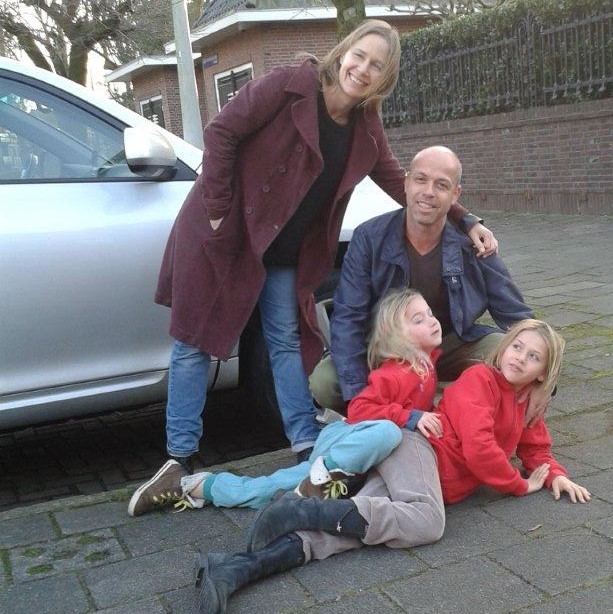

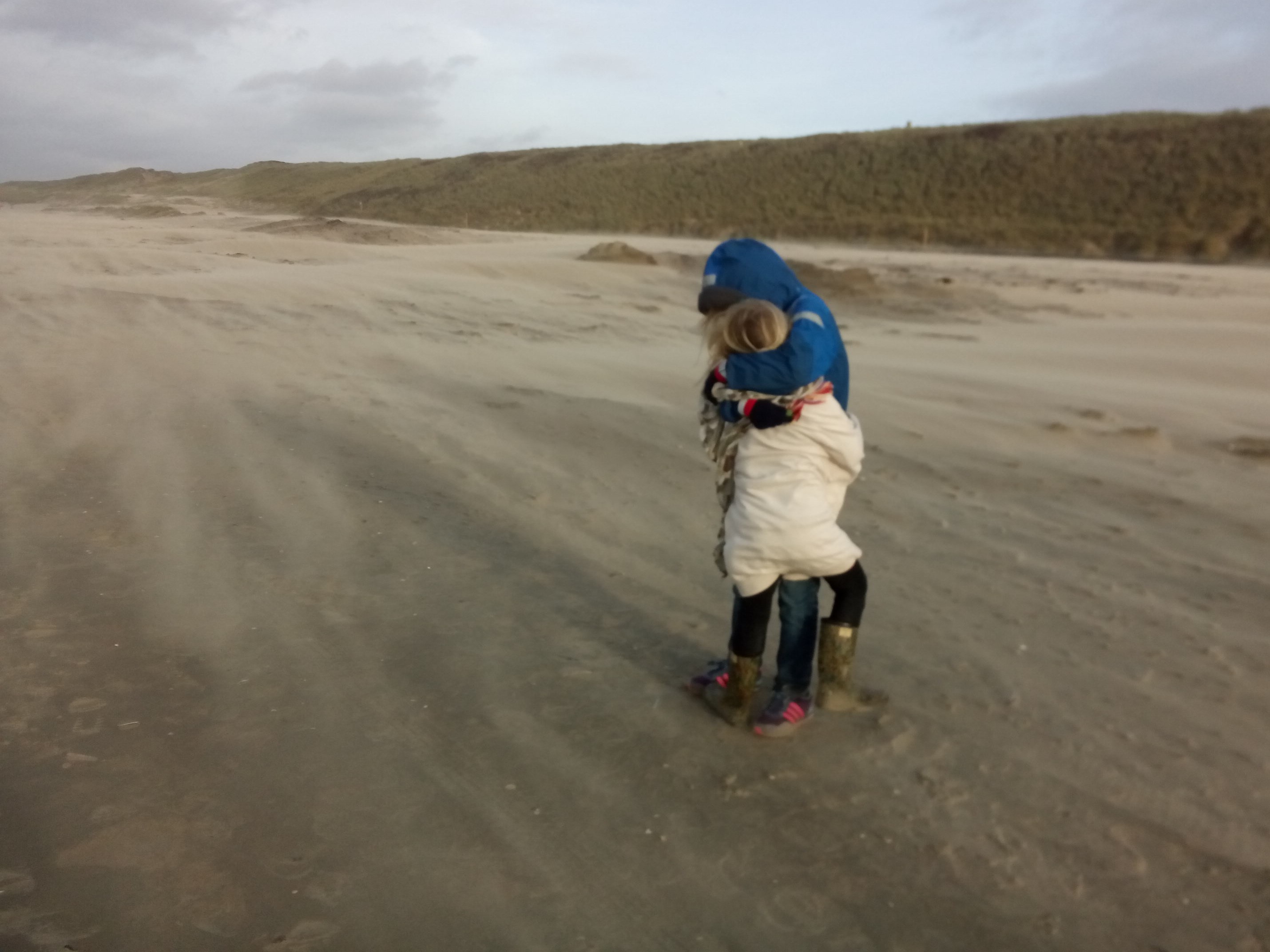


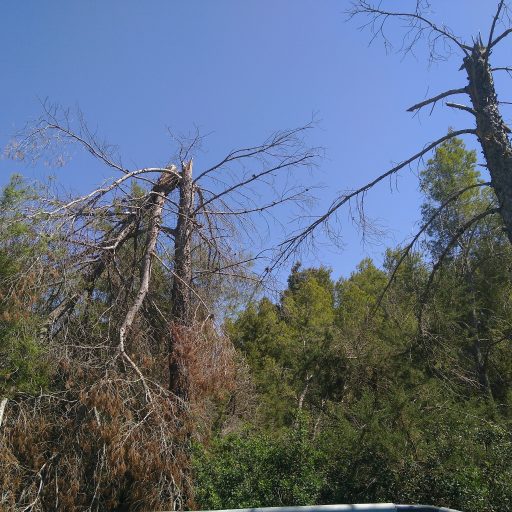
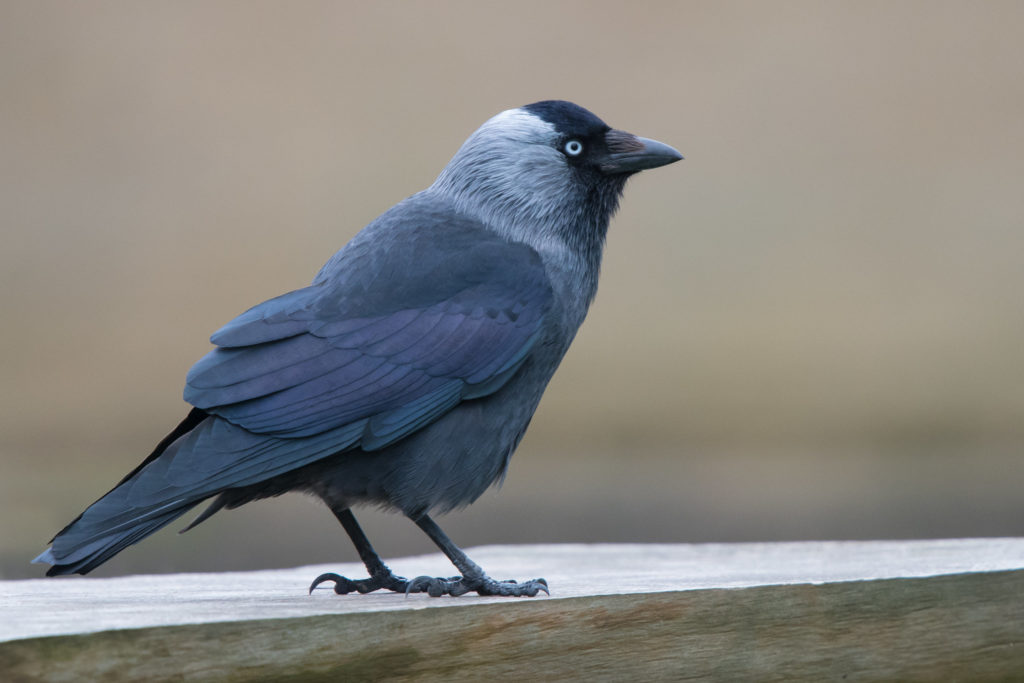




 NEW CHAPTERS