Home

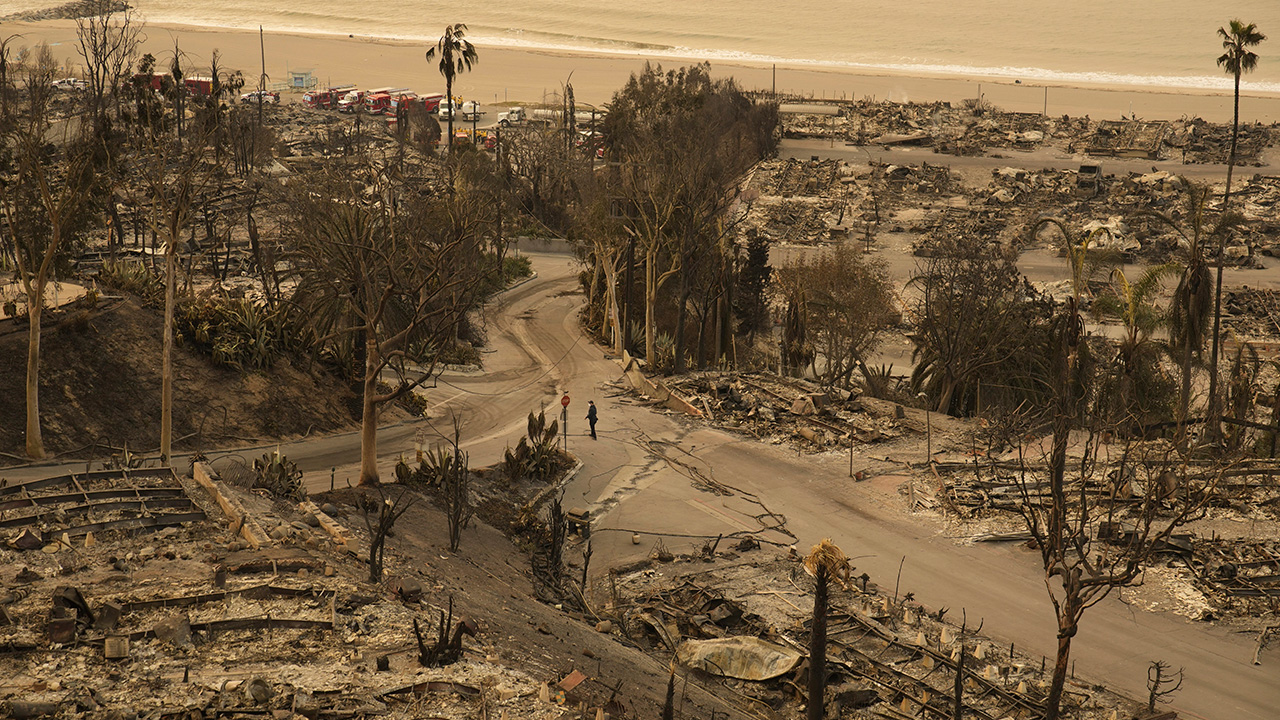
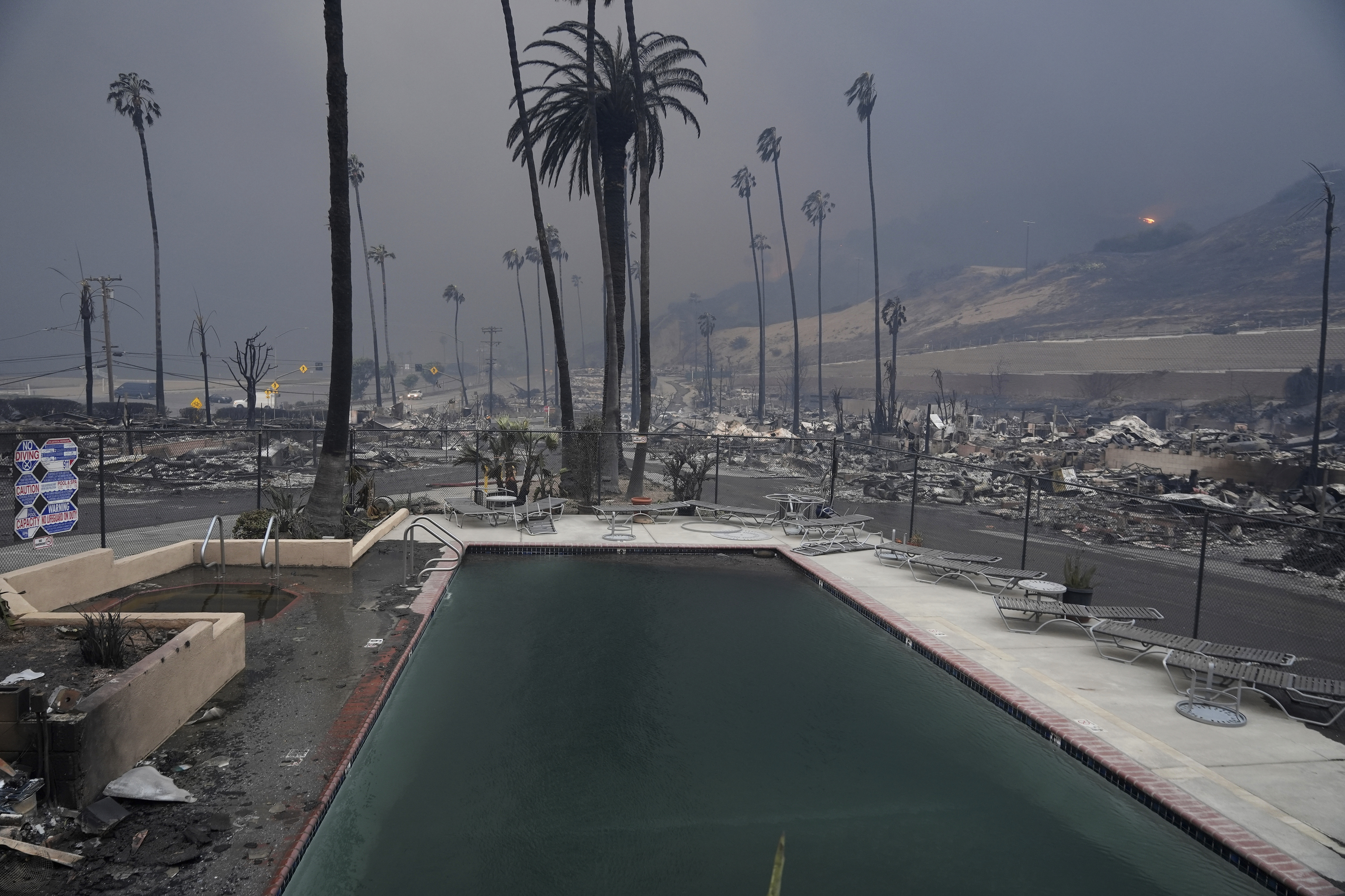
Oh, how disorienting it was to come across a street our mind used to perceive as an urban landscape filled with stylish bungalows surrounded by well-maintained gardens, now empty, a forsaken wasteland covered in a thick layer of white-grey ashes, punctuated only by brick chimneys, most of which have survived the inferno. What stunning, multifaceted irony.

Burned out car-bodies silent witnesses to the havoc the volatile fires wreaked while putting ‘2025’ on our documents and letters hadn’t even become automatic yet. A stone entryway, still decorated with Christmas lights, now an introvert black instead of shiny and colored, all that remained of what must’ve been a lovely home only a couple of weeks ago. Upon entering the Palisades on Sunset, we were no longer greeted by the quirky blue house decorated with iridescent dolphins, symbol of the Palisades and mascot of Palisades Charter High School. The bleak destruction that replaced this neighborhood brought tears to my eyes upon beholding it for the first time. It was the scene of a nightmare that wouldn’t evaporate at dawn’s advent.

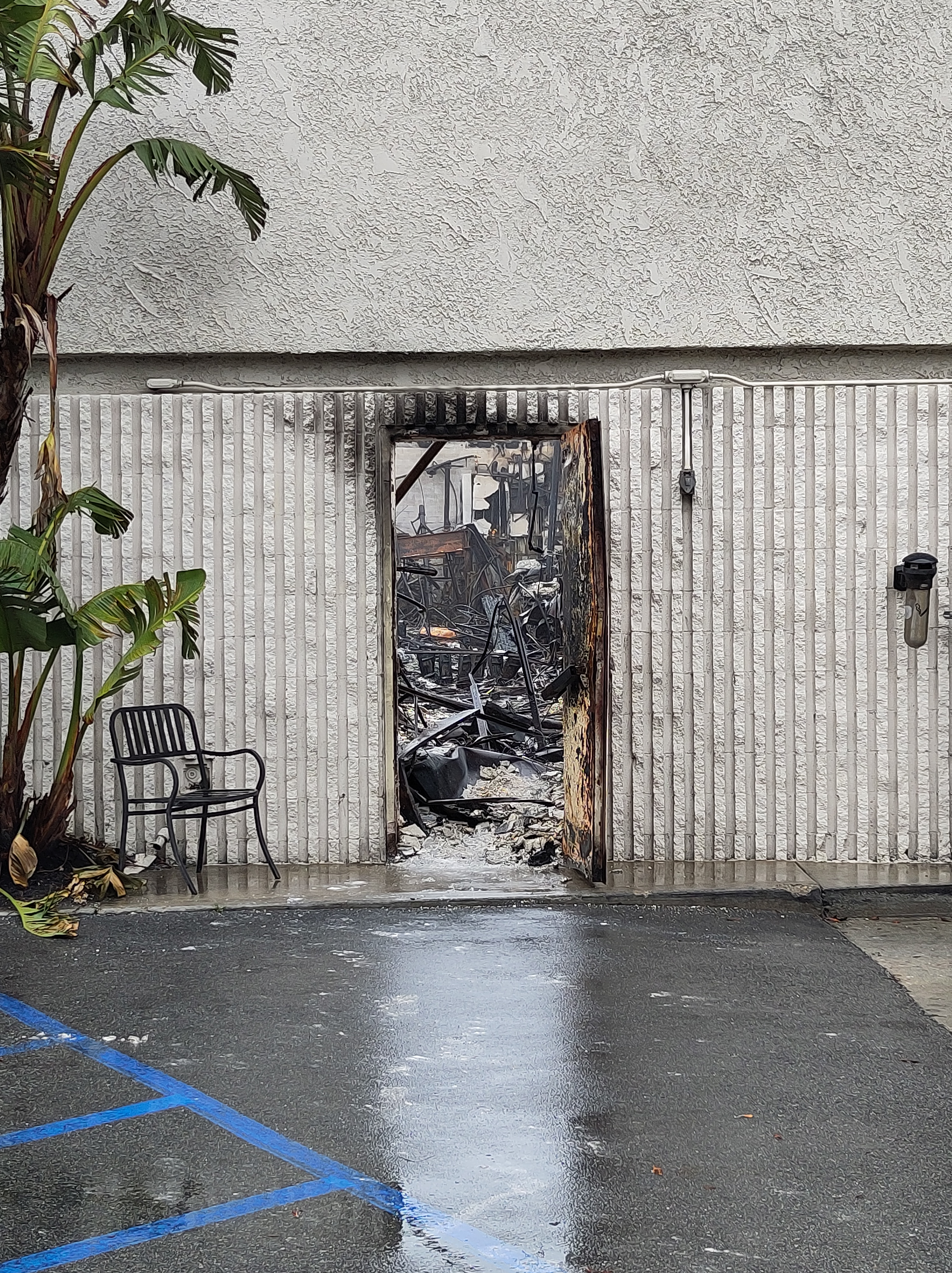
Bestowed with the ambiguous right of entry, we waited warily at the check point to be let into what could only be described as a warzone, making the presence of military personnel only natural. Soldiers and police thoroughly inspected all who wanted to enter, but we, with our big red resident pass on the dash board that branded us as ‘the affected’, were let in automatically. A dubious privilege. Because our condominium was right in the middle of the disaster area, we were granted access to behold the place we started to call home less than six months ago. Our apartment building was still standing, miraculously, and we were lucky to be able to access our belongings, but we lost our home just as much as the people whose house had been reduced to ashes.

By no means do I intend to downplay the heartbreak and despair losing a home of thirty or forty years, a lifetime, inflicts; plenty of people lost their childhood, the place where their kids grew up. And not just in Pacific Palisades. Altadena, another wonderful, small scale neighborhood with the mountains in their backyard, just like the Palisades, but on the other end of LA, was hit even harder. Our situation is incomparable to the one they’re facing, and my heart goes out to all of those who are struggling to rebuild their lives. But there was no way we could live in our apartment, not for a long time. The air was loitering smoke, rich in toxic airborne components, and most surrounding structures were no more than heaps of rubble. The house behind us, with its meticulously maintained garden, its verdurous beauty so dense we could never see beyond it, we can now behold as a skeleton of the villa that had been hidden from us before.  It will be months before anyone gets to inhabit our neighborhood again. And even then, it’s going to be a far cry from the lush surroundings we loved so much.

Inside, though mostly intact except for some broken and melted windows, the specter of the destructive fire was palpable. An acrid smell of the cremation of many lives had forced itself into every corner, every fiber of our clothes and newly purchased furniture. The lemon-yellow citrus juicer on the kitchen counter, covered in a layer of black soot, the remains of burned wooden structures, electronics, paint and furniture, was a silent symbol of our broken adventure.

Over the Christmas holidays, our kind landlord had replaced almost all appliances in our kitchen. It added insult to injury for him, whose home of many years had been consumed entirely, and the poignancy of seeing the brand-new oven and stove, now covered in ashes, destined for months of inaction, hit us hard.

Except for the occasional disaster relief worker assessing damage or employee of the Los Angeles Department of Water and Power repairing electricity poles, Pacific Palisades has turned into a ghost-town. From a lively and green sun kissed village where people knew and greeted each other and full or semi-celebs could be seen perusing the Sunday farmer’s market, it has become a desolate wasteland reeking like a diseased fireplace.

As the fires raged, accounts were contradictory and unreliable, and ‘RIP Palihigh’ got a social media page, so we were led to believe Leone’s school was gone. Although the school is by no means unscathed by the Palisades inferno, we were now relieved to see that the largest part of the campus survived. Nevertheless, attending classes there won’t be possible until the beginning of the new school year in September, and so the educators had to resort to COVID-19-tainted online schooling. It wasn’t great then, and it’s still a far cry from being in a classroom physically.

Since we couldn’t stay in our own apartment, I had to find an Airbnb, without a clue as to the length of our projected stay. When our week in the tiny room was up, we were tired of scrambling over our splayed suitcases and getting on each other’s nerves, but we’d hardly begun to figure out what to do. Mainly, we just wanted to go home, a place that no longer existed. Although we were and are in a very privileged situation and unfamiliar with the desperation that is the daily reality of people living on Skid Row, we were truly displaced and had the dubious opportunity of experiencing what it’s like to be homeless. A piece of confounding irony presented itself to me: homelessness in Los Angeles is an important theme in my first novel. My writings have the troubling tendency of coming true.

Not having a home to go to, even if it has only been yours for five months, is not a great feeling. It’s unsettling. Life can be, often is, uncertain, and a home is sometimes the only thing that roots you. Not being able to place your belongings in a closet, sleep in your own bed, have your own space. To retreat from the world. I guess it’s why I never really believed in weekend or one-week holidays. I usually went along, because you did like short trips, and it wasn’t like they weren’t fun, they were. But to me, the superfluous and disruptive work it requires to pack, leave your own house in the right order, getting care for a possible pet, all for a week in a replacement home which you need to vacate again the moment you start to more or less settle, isn’t really worth all that. And with kids, it’s even worse.

When I lived in Los Angeles as an adolescent, except for a three-day outing to Las Vegas that was initiated by fellow students, I never took trips. Not because I was working too hard, but because I felt I already was in the best place I could be.

However, one of the many gifts we received from the city of LA was a stay at the Beverly Hilton hotel, a place where a long time ago, when I was fully living my rock-n-roll life, I made some crazy memories that inspired its presence in my first novel. Although we really just wanted to go home, staying at this luxurious hotel for free was a great present, not in the least because of the kindness of the staff. People with names like Princess, Lucio and Alfredo, with their encouraging words and sincerity, made us actually feel at home and cared for.

Nonetheless, the reality started dawning on me that, after having done so much work to create a life for us in the USA, I had to leave my favorite place of residency once again. My search for another school for Leone, I wanted to save her from months of deficient online education, had not been successful. Prestigious schools would not take on a student in eleventh grade halfway through the year.  The choice of just any public school that will take her is one I entertained for a brief moment. However, it would mean getting familiar in another school again, making new friends again, finding her groove, choosing her subjects. Again. She has less than a year and a half of secondary education left. Leone’s school career and life have already been disrupted way too many times for someone her age, so when she asked me to go back to Ibiza, to a school where she has friends, where she knows the teachers and heads, where she feels at home, I could not but concede. And even though I felt a profound sadness at leaving our life in California behind, the decision brought me relief as well.

During all this, your father’s health had been in rapid decline, and everyone was aware the end was near. We ended up bidding him farewell on facetime, but knowing the outcome, and thanks to our delayed return to Los Angeles, fortunately we had said goodbye to him in person several times already. I panicked at not being able to be there for his passing or his funeral, and although I set out to try, I soon realized there was no way I could manage emptying out our apartment and everything else that came with our hasty evacuation from LA in time. He has left us now, leaving a blank space that we will need to fill up with memories and love for this temperamental, emotional, vivacious and altruistic man.

In addition to our retreat, we also had to prepare for Robin’s return. Although it took her some time to root in LA (I fear me being there as a continuous backup plan didn’t help), she had already clearly felt its draw. Could love for a place be genetic? I guess it’s probably epigenetic. Anyway, my news of leaving Los Angeles did not land well with her.

It’s not easy trying to do the best for all involved, but I think I figured it out, although I’m still unsure of my own place in this equation, beside the one of space holder. Robin and I decided that it would be very possible for her to travel back to California after we went to see our family to mourn your Dad, so that’s when we began planning for her to return to LA at the same time Leone and I would travel to Ibiza. This involved things like finding her a room with a roommate, and getting her the license to drive in my car, which she would need to sell at the end of her extension. What all of the above required was for Robin to make a huge jump into independency, and I can’t deny we were both a bit intimidated by this step. Also, because this would mean that she was moving out, and we would physically stop being ‘three’ for the first time since your death.

Getting our apartment cleaned out was a challenge for several reasons. First of all, the area our condo is in has restricted access. I wanted to donate our things to the Salvation Army, but they weren’t allowed to come and pick them up, so I ended up taking many of our possessions to the center myself. A part of our household effects I deemed unusable for anyone but us, so I arranged for them to be picked up by the only type of company that was allowed inside the area: debris removal. So the cat-tree I bought for Jazz just before Christmas so he wouldn’t be too bored without us around, was one of the objects taken away by the Junkluggers.

Then there was the time pressure. We had accepted the fact we would not be able to attend your Dad’s funeral, but now that we knew that Leone was going back to her school in Ibiza, it was important for her to start as soon as possible, having missed three quarters of the material she’s supposed to learn this year, year twelve in the British school system.

The third aspect that made this process hard was on an emotional level. None of us were able to stay in our apartment for longer than an hour or so. Surely this could be attributed to the physical discomfort of breathing burned air (or the face masks we wore to keep this out, another horrid throwback to COVID-19 times), but the emotional intensity of saying goodbye to our life there, apparent in the different breadcrumbs it had left behind, the smallest usually the most painful, played a big part in it. The piece of art-on-cloth Robin and I found at a Halloween gathering of her musician and artist friends. The coffee beans from a small independent grower, bought at a Venice market, business cards from promising contacts, the gigantic pinecones I gathered in Forest Falls I had not yet put on display.

Despite the sadness I felt at leaving Los Angeles behind, a sense of gratitude prevails. I remain deeply impressed by the help that was offered by a wide variety of organizations, such as the Red Cross, FEMA, the Tzu Chi Buddhist organization, and the flood of sympathetic words and gestures and gifts we received. Oswaldo, Meggan and Jessie, who rescued and cared for our cat without asking anything in return. I’m grateful for our lovely neighbors in Villa Bella, I wish I’d gotten to know them better. The sense of community in Pacific Palisades, the stunning nature we got to experience right in our backyard, the coyotes we met when we left Yamashiro, our final evening in LA. I’m very grateful for Robin’s new roommate, who’s proven so trusting and trustworthy, who already helped us and her out so much. I’m grateful for our stay at the condo even though it was cut way too short, grateful to Claire for helping me find it, grateful to Mark for letting us live there. I feel an inundating gratitude to all the people that helped us settle in LA, who were willing to work around the bureaucracy a bit to make things easier for us, for the kindness we found everywhere.

On the other hand, I want to give thanks to the island of Ibiza for always being there as a refuge. How many times has it taken us in when life throws us serious punches? I’m starting to lose count. Then there is Morna International College, welcoming our daughters every single time we come crawling back. A constant is my gratitude for the unwavering support and love of our family, a condition without which we could never do the things we do, take the steps we take, live in the places we do. It’s because of them, and our friends, in the Netherlands, in Spain, and now in Los Angeles too, that we, in spite of everything, always feel at home and anchored.

Perhaps most of all, I feel so fortunate for having been, for being, a part of Los Angeles. Not everyone understands this, I know, but I have such love for the city; its mad passion, its creativity, its colors, its tolerance, its nature, all of which combine to exude an exciting energy, pregnant with promise, that never fails to inspire me. Even the short time we were there, it gave us more than we could have ever gotten elsewhere in the same time frame. The ocean, mountains, dolphins, hummingbirds, cybertrucks, Will Wood, Mitski, Sting, Alexander Hamilton, the best handrolls we ever tasted (hint: they’re in Westwood), The Whisky a Gogo where we watched friends perform, art galleries in downtown, Halloween, Thanksgiving, The haunted hayride, the Teragram ballroom, inflated egos, those without egos, homeless people, people with dreams, award ceremonies, Disneyland, bonfires on the beach, high school, celebrity schoolmates, traffic jams, earthquakes, and finally, wildfires. That I got to show our kids all this, live Los Angeles with them, is something I will always cherish.

As we withdraw our physical presence from this cauldron of diversity and dreams, I believe the bonds have persisted, intensified even. Not just in me, but in our children as well. My beloved Sunset Boulevard, paved with past and future memories, blows me promises on the wind like kisses, of a little more patience that will be rewarded. And when we’re at LAX, lugging our nine suitcases that hold the remains of our life plus our too big cat in his too small carrier, I know, this is not the end.

A Fire Dragon Ate our Life

My love, perhaps you can tell me: what is the universe’s plan with us? For a while, I could still follow its logic somehow, but by now I am seriously confused. First of all, about a month ago, we received the devastating news about your father. He doesn’t have much longer to live, though no one can say how long that is, and this already cast a different light onto our Los Angeles adventure, being so far away from him. I considered staying in Holland, returning to Ibiza, but our life had been set up in California and we were looking forward to living it. It would be too disruptive, I figured, especially for Leone and her school routine. Little did I know that disruption was waiting in the wings, sharpening its claws, to strike with an intensity I could not have imagined in my worst nightmares.

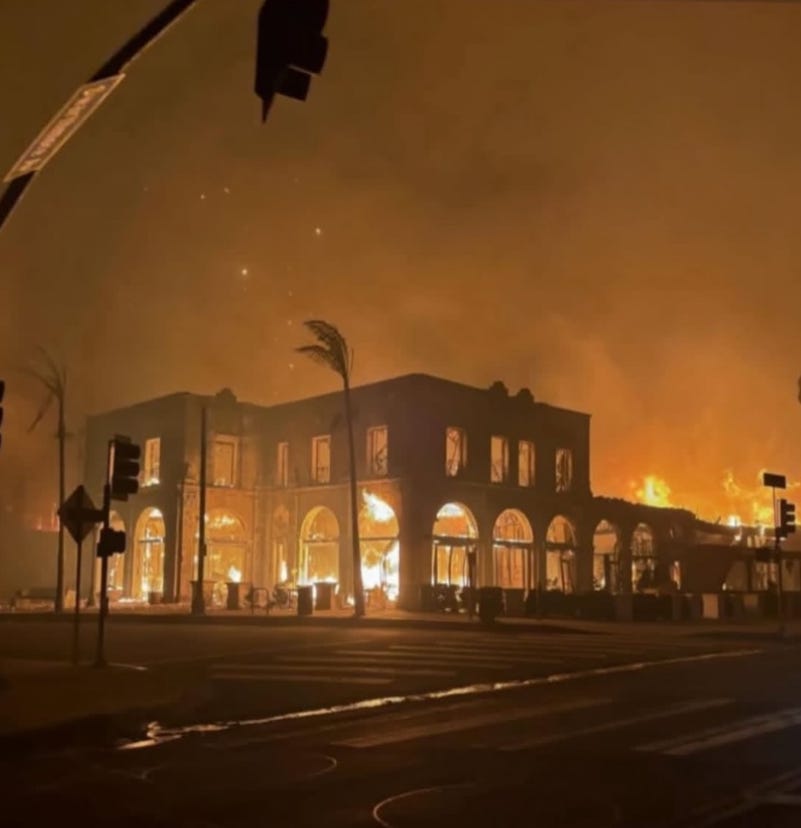
As we were wrapping up our holiday sojourn in Europe, disaster struck again in an even more mind-blowing and destructive way, basically blocking us from returning to LA. Leone was the first to learn of the inferno that would consume the entire village that we had already grown to love during the past couple of months. Our Café Luxxe, Ralphs, CVS, and our lovely little library where Robin and I sometimes sat down to read and write. The somewhat Disney-esque Palisades Village Mall, a bit artificial and elitist for our stuck-up European tastes, but so welcoming and comfortable, with its coffee and ice cream shops and little wrought-iron tables and chairs terrace. As evidence of her strengthening connections in the Palisades, the evening of Tuesday the 7th of January (noon LA time), one of Leone’s friends called to inform her about a wildfire very nearby our house. Not unfamiliar with this situation, we had wildfires in Malibu before that we could smell but that never seemed like a real threat, I didn’t think too much of it. Being nine hours ahead of Los Angeles we nonetheless went to bed with a sense of unease, and when I woke up the next morning, text messages from friends and neighbors revealed the true import of what was happening. “Call NOW, it’s an emergency!”

Tense as too tightly tuned violin strings, we passed Wednesday the 8th of January, desperately glued to our phones, thirsting for information, any information, watching the news, scouring the internet for images of our apartment building, ‘our’ village, our city, hardly able to eat anything as snapchat and instagram steadily fed us the news of friends who lost their home. With each ‘goodbye house’ captioned picture the magnitude of this disaster became clearer.

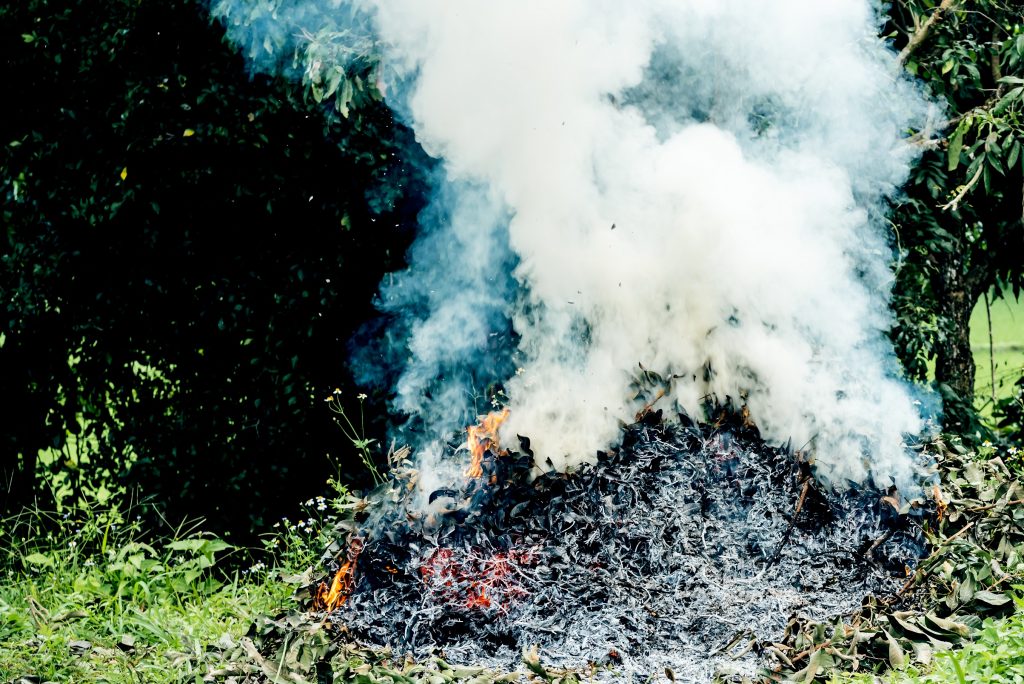
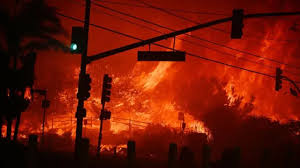
It took less than twenty-four hours for our entire village to burn down. What started as a brush fire in the highlands of Pacific Palisades coupled with the insane Santa Ana winds to explode into an inferno that rendered any attempt at stopping it hopeless and dangerous for those trying. It’s at times like this that firefighters, police officers and other first responders truly shine, and I’m extremely grateful for their grit and bravery. It’s not hard to imagine how frustrating and perilous it must have been to be confronted with a hellfire of this magnitude, in particular the moments when the water hoses ran dry, due to pressure loss. As for our own house, the information remained conflicting for a long time. Everyone in our building had been evacuated, and for at least a week, we did not know if it was still standing or not.

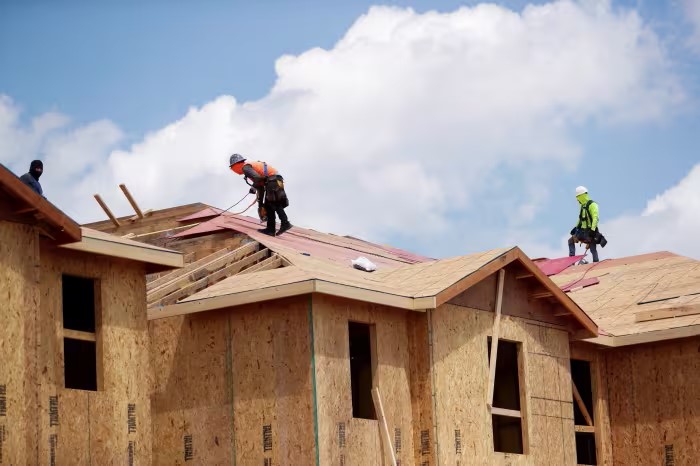
A now almost prophetic memory sticks in my mind, of a Dutch friend visiting us in our new Palisades home and voicing her observation regarding the way Angelenos build their houses, after having passed a several construction sites. “All the houses here are built with wood!”, she remarked with some astonishment. I had noticed it too, but not as consciously, and I wondered out loud if it maybe had to do with earthquake-proofness. Now, her observation bears much more weight, making this way of constructing a major factor in the insane speed with which almost the entire village disappeared. And the question becomes so much more poignant: why are so many houses in LA constructed from wood?

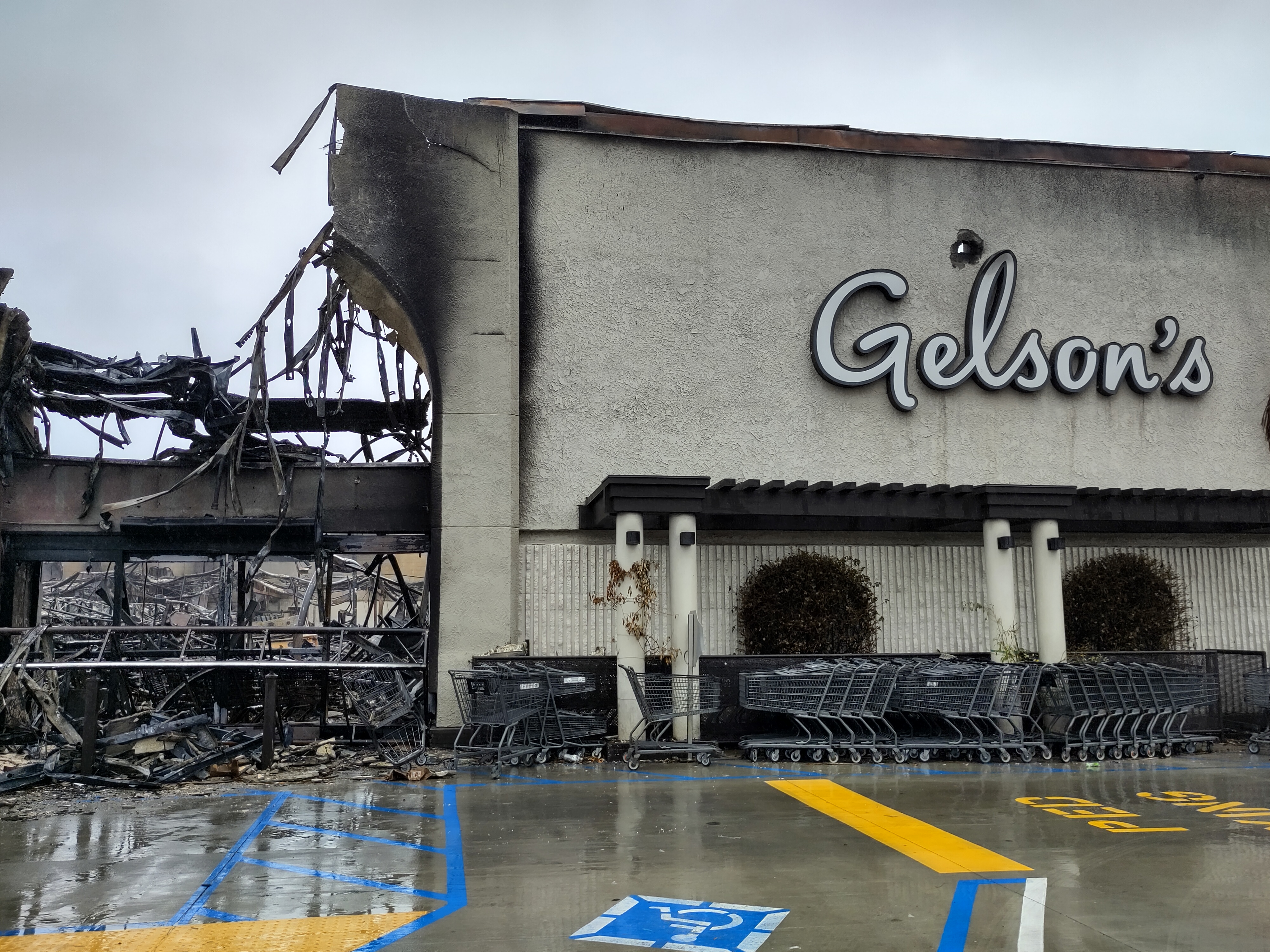
Instead of things becoming more defined and clear, something I was expecting and hoping for, they have become more untethered and uncertain than ever before. Questions rise, in people around us, but also in us, of the feasibility of going back to Los Angeles. Although our apartment building still stands, miraculously, our condo is uninhabitable, at least for the time being and probably several months to come. Most of our neighbors’ houses are gone, our supermarkets too. Leone’s school, Palihigh, has postponed the start of the second semester until the end of January, but what happens then, no one knows. The building isn’t entirely destroyed, but it will take time for it to once again become a place where kids can attend school safely.

Still, there are many signs of hope. First of all, an enormous surge of support for the people who are affected by the fire has arisen. The way Angelenos have stepped up to help family, friends, neighbors and strangers is impressive and heartwarming. Free housing, free cars, free food and clothing, free underwear, makeup and skincare, free transport for horses, safe houses for abandoned pets. Our cat Jazz, who stayed behind in our apartment during our trip and had been cared for by our neighbor, was rescued by this same neighbor. A woman with a shelter for abandoned pets and animals found him a temporary home. The lady who is taking care of Jazz now is incredible. This person, who I have never met, loves and cares for our cat like he was her own. Unconditionally and without asking anything in return, including money.

I’ve always disagreed with people who say Angelenos are shallow, superficial and not really interested. My experience wasn’t like that when I lived there twenty years ago, it wasn’t like that before the fires and it certainly isn’t now. The explosion of current initiatives mimics the intensity of the fires, and among the rubble and destruction they shine like gems of hope. Palihigh is maimed, but its spirit is still very much alive, and their communication has been honest, caring and hopeful.

We are fortunate to not have been there when the fire fully raged, of course, but it was also strange. Perhaps the very best indicator of it having become our home, I felt the need to go there as soon as possible, not only to assess the damage, but to help rebuild the community. By now, almost three weeks after they started, the fires have almost been extinguished. And we are finally back here, so that we can see for ourselves what remains of the city I always loved, and by now, our kids do too. My heart bleeds for the crazy town that made me who I am and that plays such a significant role in my first book. But, ‘can we stay here?’ is a question that I’m unable to answer right now.

About new chapters, paperwork and cats

My love, forgive me my long silence. My last letter was still deeply rooted in and tainted by COVID-19, but it’s a different world now, once again. Every day it emerges as a newborn and unknown entity, although this reads more idyllic and pure than reality has it. The human story is constantly being rewritten through severe political polarization, distorted media representation and pandemic afterlife, where we discovered that many of our umbilical cords to the past have been cut. That’s not necessarily a bad thing, but it makes for less familiar surroundings. An umbrella AI, embraced by many, inoculates everything, while no one knows exactly what it does anymore and what the consequences of its dominion will be. Humanity’s social structures are fragmented and drifting more than ever; detached from traditional values and conventional wisdom we no longer know what to be or what to do, driving people to yearn for the old ways. Like a fluid mirage above scorching desert sands, the world shifts ever more rapidly, and all we can do is ride its wave.

In this unhinged time, your daughters and I have started a new chapter, or rather, a new book in our life. Mirroring the state of world, I uprooted our family because the illusion of certainty, security and control frightens and deceives us less every day.

This next step is blazing and new like the California sun, and because of its brightness, we had trouble seeing it, at first. As our eyes get accustomed to the light, a picture slowly emerges but we can’t quite make sense of it yet. New friends and plans need to be made, but a wealth of opportunities and unfamiliar mores froze us into anxious indecision for a while.

The foundation for this continental relocation is the spark of an idea that originated during the talks you and I had about future plans. Yes, we contemplated this possibility before you left us: moving to Los Angeles to let the children experience American high school life. We were a good team for adventures, and I sometimes imagine how different this one would have been with you by my side. Our picture would have been so much less fragile, less like a teetering crystal statue struggling to stay upright in a storm. My apprehensive doubts about whether it was the right thing to do, taking our kids away once again from everything they know and love, wouldn’t have had such an asphyxiating hold on me.

A lifetime ago I made Los Angeles my home for the first time, and this hard-to-summarize city then worked itself into my genetic makeup and heart. Settling here posed its challenges for me then too, for sure, but a relocation like this, with the sole responsibility for the happiness of one’s teenagers is on another level entirely. A vicious guilt lurks behind every academic obstacle and snub by a new-fangled friend. Every single disappointment takes on the hue of gratuitous pain and unhappiness, even though I know that high-school relationships are by definition minefields, and that creating your own life for the first time after leaving the guiding hand of school behind, is daunting and takes time wherever you are.

Finding affordable furniture was a hurdle I hadn’t counted on; the last time I moved to LA, I gathered my entire domestic outfit at thrift stores for a couple of hundred bucks. But the identity of Los Angeles as one of the most expensive cities in the world has percolated to the secondhand stores, and a dresser at the Salvation Army Thrift Store tends to be more expensive than the ones at Ikea. So instead of filling our house with quirky and semi-antique furniture, I found myself a grateful customer at the Burbank branch of the Swedish corporation and made our living room resemble the pictures in their catalogues to a t.

We are familiarizing ourselves with new dangers too. Earthquakes are a part of life, even though we hardly ever notice them. But the city warns its residents whenever a substantial shaking is to be expected or happening by sending an alarm through the covert channels of Google. Honestly, the fact that they made their way into my phone, without me giving any kind of prior consent, scared me more than the seismic activity itself. The first two times we were advised to PROTECT YOURSELF, TAKE COVER!, I felt more than a tinge of panic and dragged the kids out of bed to make them stand outside, braving the chilly morning air in their pajamas, awaiting the great collapse of our condo-complex. No one else in our building even opened their front door. After making a fool of myself the second time, enduring the disgruntled faces of my very unconcerned but annoyed daughters I quickly unlearned that habit.

Guns are real here. With some regularity, we receive notifications from Leone’s school, Palihigh, informing us parents about firearms safety, and a friend of Robin casually mentioned that his family probably owns about one hundred guns. Confounded, I asked him “why?”, but he couldn’t present me with a satisfactory answer, and in his amused shrug I thought I detected a hint of pride.

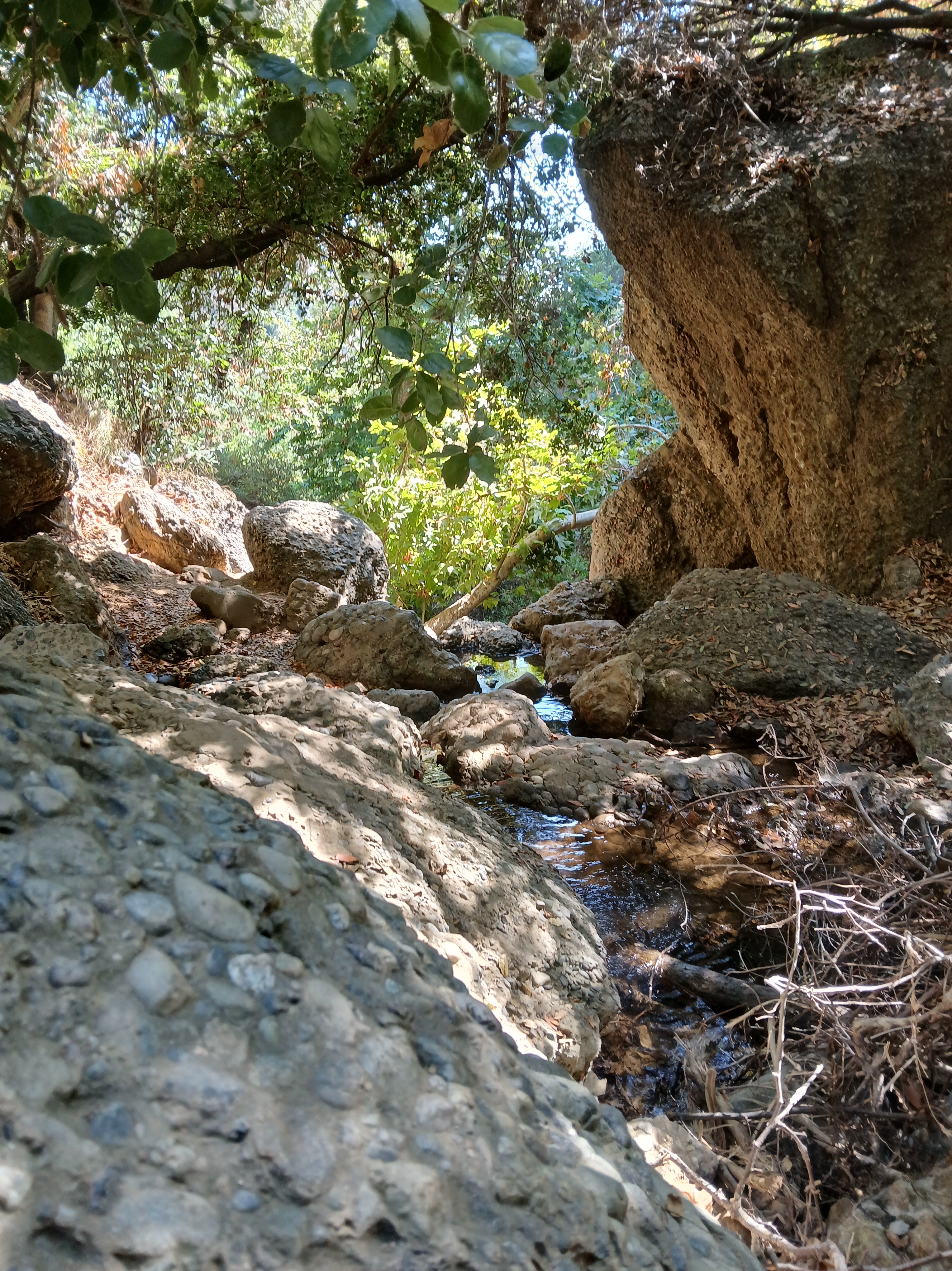
The city’s kaleidoscopic personality offers us not only disconcerting surprises and experiences, of course. Nature is almost everywhere, and we are very lucky to be only a five minute walk removed from the entrance to a national park where coyotes, mountain lions, humming birds, and rattle snakes roam. The Pacific ocean is nothing like our Balearic sea, but the wildlife it harbors is abundant, glimpses of which are offered at regular intervals. Pelicans are the most visible, but it’s not rare to discover dolphins and sea lions breaking the surface of the excellent surf waves with their heads and fins. And unlike the Posidonia in the mediterranean sea, the kelp forests are thriving, of which there is plenty of evidence to be found on the otherwise very clean beaches, and to be felt around your legs when you venture into the cold water.

As a magnet for creative people, LA’s energy is inspiring and exciting and can make you end up at afterparties of artists where you befriend members of fairly well-known bands, and although Los Angeles, like the rest of the world, has changed, the quality that made me fall in love with the city is still very much here. If you look in the right places, of course, and I concede that those are a bit harder to find nowadays, because of the rise of what I call ‘the online plague’. More than in Europe, Americans have learned to live their lives in the digital realm. Meetings, get-togethers and classes are mostly offered in a remote environment, and Amazon is not so slowly taking over the entire spectrum of the retail industry, resulting in the disappearance of shopping walhallas such as Third Street Promenade in Santa Monica. The faces of empty stores are spreading like a disease.

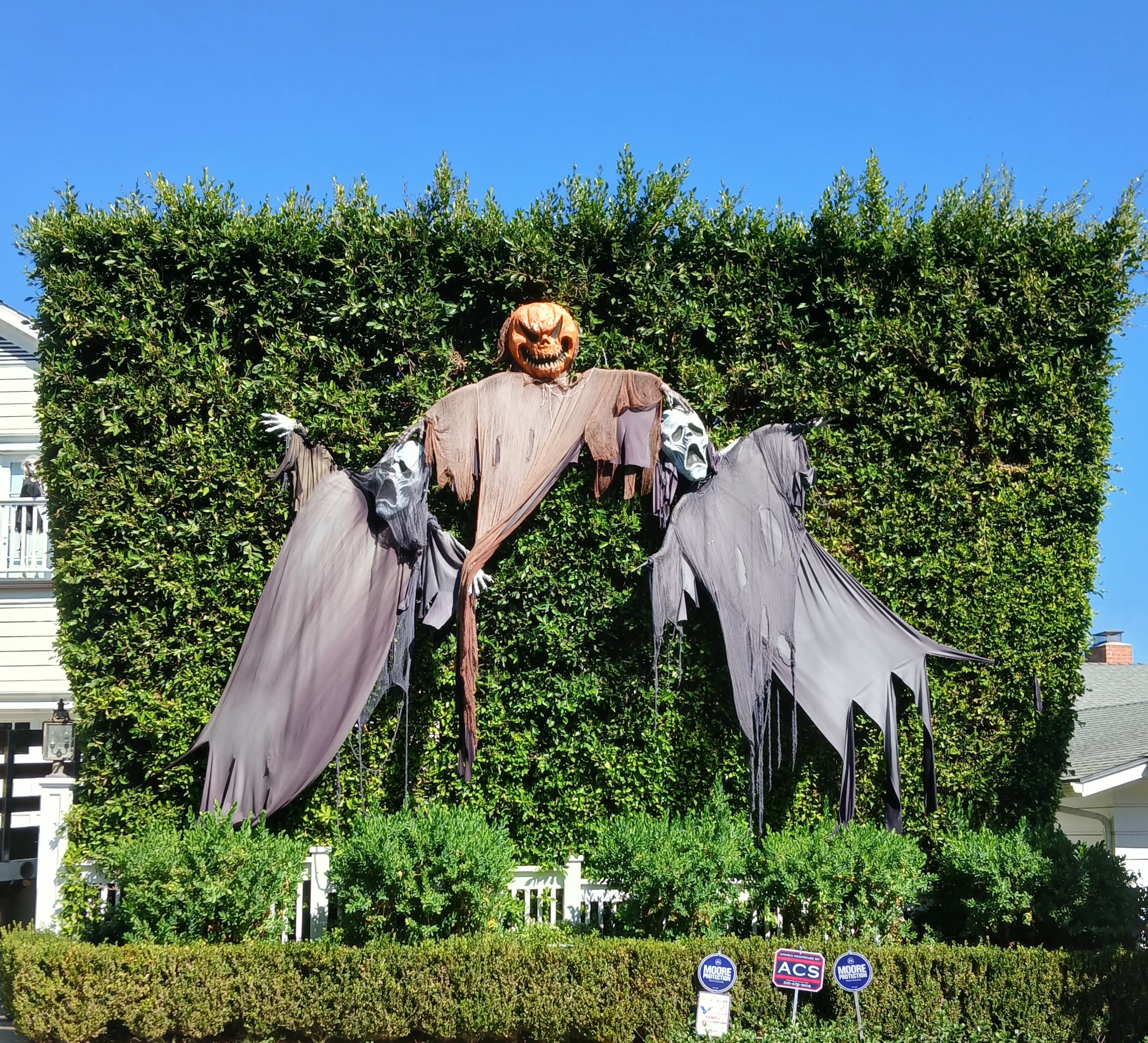
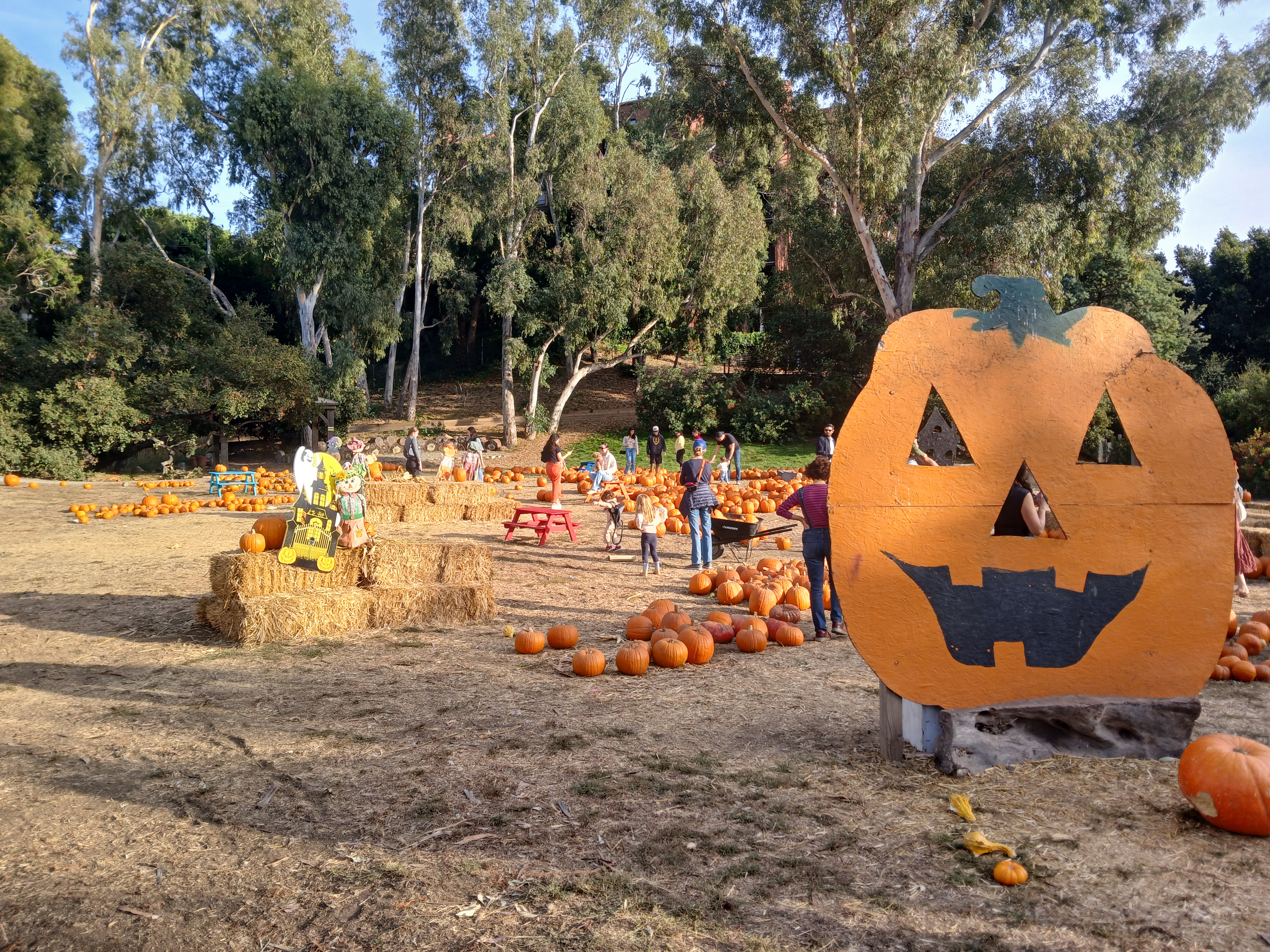
As you know, we are great Halloween devotees. Here, celebrating it can be done weeks before the actual date in a wide variety of venues and manners, and I can assure you we did. Pumpkin patches, a double feature with the classic horror movies “The Black Cat” and “The Raven” at Quentin Tarantino’s old-fashioned cinema, dressing up with friends for a high school Halloween bash, embarking on a haunted hayride and attending seances in the fictitious village of Midnight Falls in Griffith Park, and to top it off: a Halloween party in downtown LA at the Teragram Ballroom. Roaming Universal Studios with its spooky and gory mazes reminded us of our own haunted house, which we created in the cellar of our beautifully gothic house Overbeek in October of 2018. Now more than ever do we realize how good and special that was, for so many different reasons, and castigate ourselves for perhaps not having relished it as much as we should have.  All three of us have developed a strong and sometimes distracting sense of nostalgia.

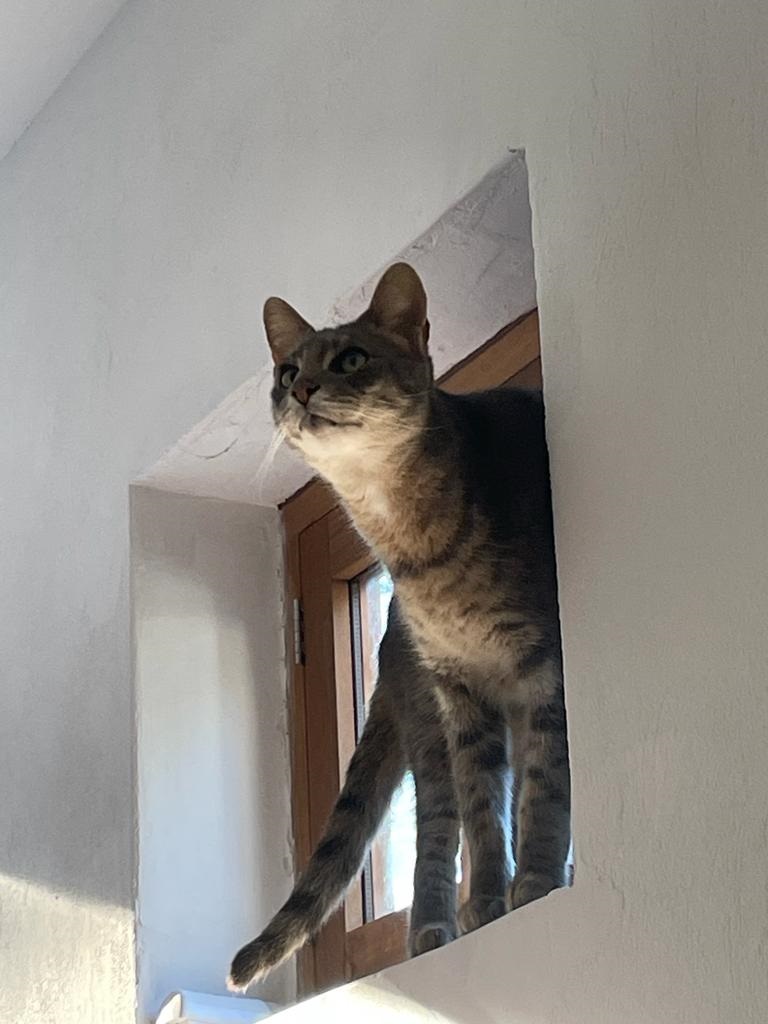
The relocation of our oddball but adorable Jazz cat was an added headache I had not counted on. Like with most things in retrospect, I can joke about it now, but at the time the red tape labyrinth was exasperating. Not the first time this notion came to me, I did once again realize what an insane amount of time, and therefore, life, we humans lose because of paperwork in order to legitimize ourselves, our possessions and even our loved ones. Surely there must be a better way to organize a society, without us drowning in registrations, fiscal paperwork, travel documents. Migrating birds or butterflies don’t need to prove they are allowed to fly south during winter.

Anyway, because of our kitty’s genotype, one of his ancestors is a serval, we had to go through the procedures required to import a wild and protected animal. To complicate matters, Leone and I were already in Los Angeles, and I had to catch the tiny time frame in which the correct Dutch authorities could be contacted (before 8 AM PST). On top of everything, our Savannah tomcat escaped from your parents’ house and got lost a few days before his scheduled transport. Thanks to Robin, your mother, the neighbor and other caring people, after more than a week Jazzy boy was found roaming the subway station of the Bijlmer meowing and trying to get the attention of sympathetic humans.

When he finally arrived in the USA, I had to collect him at some depressing warehouse, where he was held like a piece of cargo. Once again I was asked to present a ton of paperwork before they accepted me as his legal owner and importer. Jazz was not happy, he had been in his travel bench for days. Why put him through all this, you might wonder, and honestly, I did too at times. We could’ve easily found him a temporary home in the Netherlands. But you know, he’s part of our family, he belongs with us, more than any animal we were lucky to call our companion previously. Perhaps that’s because he was born the morning you passed away. I like to think that in him, we have a little bit of you still.

Your should see me in  a crown – A Royal Fear, part II

As a child, whenever I was sad, my mother would say: “Don’t cry sweetheart, save your tears for later”. I’m not certain how my naive ears interpreted the words back then, but I know they didn’t carry the ominous and fatidic charge they do now. Freshly unfamiliar with the depths life can plunge you into, I guess I didn’t understand them. To me, a notorious daydreamer, the future could only be better and more exciting, surely ever improving. So I must have missed the notion of an adult life that would require the amassing of tears, or else dismissed it. Although the words were spoken with infinite tenderness, and I strongly recall feeling the love that spurred them, I believe telling a child to save her tears for when she grows up is objectionable in more than one way. Beside setting the stage for a future full of sorrow, it implies that her youthful sadness is too unimportant to cry over.

I’ve done that all my life, look ahead, expecting goals to be achieved, a name to be made, the perfect home to be found, our wonderful life to be even more perfect. Until all of a sudden, you were gone and life collapsed. Only recently did I learn (still learning, really) to truly live in the present; your death helped, forced me to. I always thought it was good to be one step ahead. But it never is, not when it comes to living. The step ahead might never come, and as you peer ahead, you miss this very moment, which is all we really have. Being present, here and now. Words that can be heard so often these days, they have turned into a cliché. But just because it’s a cliché doesn’t mean it isn’t true. A growing number of people seem very intent on teaching us this axiom, practically shoving it down our throats. Despite the jarring fashionableness of spirituality, something many businesses have eagerly latched onto, I think they have a point, and I suppose the idea has become ubiquitous because it’s time we learn. Or, in fact, re-learn. For ourselves and for the world.

This not only means taking the time (in fact, sitting down and meditating on it is not even needed, you can do it while running errands or slaving at your 80-hour-a-week job, though, as a side effect, you’ll automatically start wondering why you run or work so much) to be in the moment, it also means be in our bodies and listen to what nature has to tell us. She is a great but soft-spoken teacher. Silence and serenity are needed for hearing her.

You used to have great faith in Western medicine, but I think it provided you with an excuse for ignoring your body. Pills were your principal panacea, as they are for the majority of people in the Western world. Because of our myopic way of viewing health, or rather, disease, we act only when something is wrong and set out to treat the malady or compromised immune system or ailing organ, which has often taken quite some time to develop or deteriorate, while our body sent us messages we ignored. Everything is connected, and if we learn to truly take care of and pay attention to our bodies and the world around us, which are inextricably linked, I’m convinced we can prevent many diseases.

To me, Western medicine, though brilliant in isolated instances, suffers from the band-aid-for-a-bullet-wound syndrome. It could benefit immensely from a paradigm shift, focusing on how to keep people healthy instead of cure a disease, but of course the pharmaceutical’s revenue model gets in the way of that. Very in the way, and, I suspect, deliberately.

The COVID-19 crisis clearly proved this. The entire world, well, the so called ‘developed’ world at least, was looking to a vaccine as the sole solution to get us out of lock-down, to return to life as it was before the pandemic. Not disregarding the brilliancy of the scientists who are able to create this kind of protection, and realizing it can be a life-saving tool in rare instances, in this case I think it was an attempt at another quick fix for our fundamentally distorted way of dealing with health, the environment and our food.

Plentiful were the articles regarding the development of a vaccine, rare the ones focusing on more natural cures or immunity boosting herbs or foods. If those managed to reach the mainstream media at all, they were rapidly dismissed as quackery. Another news coverage lacuna during the corona-crisis should have been taken up by a discussion of underlying problems or causes, like how air pollution makes people more vulnerable for getting seriously ill from COVID-19 and plenty other respiratory diseases, like asthma. On the website of the Dutch Lung Foundation I discovered that the number of people who died prematurely every year of bad air quality was comparable to the amount of deaths by COVID-19 in its first year.

Factory farming employs massive amounts of antibiotics to treat healthy animals that we regard and treat as products, creating widespread resistance in bacteria and an ideal environment for the development of virulent pathogens. Instead of looking critically at the way we use, or rather abuse, animals, we forego their well-being in favor of our insatiable lust for meat and dairy by incarcerating too many in too little space, and, as soon as a new virus appears on the scene, like the bird flu virus that’s going around in many countries right now, we lock up the free-range ones as well.

The way we deal with this kind of threat reflects our irrational and destructive fear. In the news, we hear of wild birds being the culprits (a preposterous and perilous notion), and we read about millions of deaths among farm birds. Contrary to what headlines like,”raging avian flu destroys nearly a million farm birds in Alberta”, lead us to believe, this massacre is not caused by the virus. Panicked governments order farmers to destroy their entire flock if one of the chickens or other birds tests positive for the virus. I know I am not the only one who thinks this way of dealing with animals is utterly insane, but why is this genocide still happening? How can we accept and justify this? These measures are merely taken out of fear for our own health, since a virus will not wipe out the entire bird population, as COVID-19 did not wipe out all of humanity. Considering the way we deal with nature and other living creatures on this planet, I almost wish it had.

Now that we’ve returned to ‘normality’, and the vaccine has proven less, or at least no more, of a solution than the development of natural immunity among humankind, we can go back to focus on all the other diseases that have never left us, like cancer, cardio-vascular diseases and depression. Even though the latter has been on the rise for quite some time, the corona-crisis made it increase exponentially. I’m deliberately saying the corona-crisis, not the virus itself, because I believe it was the fear and the fear-based measures that helped tumble many people into a dark hole from which they couldn’t see a livable present or future.

Knowing the way you placed your trust in Western medicine, I figure you’d probably be more inclined to accept the new vaccine. We might have had differing opinions, but it wouldn’t have been a problem. We were able to disagree, that was the kind of relationship we had. During the pandemic situation, an acquaintance indignantly accused me of distrusting the motives of health professionals. Having doubts concerning a vaccine that was created in record time, doesn’t imply a suspicion of foul play, it is merely an acknowledgment of the possibility for human error. Healthcare is not exact science and the workings of the body are still largely a mystery to us; we simply cannot foresee what consequences injecting altered mRNA or even a disabled pathogen into a body, bypassing the ‘normal’ route, will have. It’s another example of our myopic view of health, where we fail to look at the entire picture, or body, in this case.

Physicians, scientists, nurses, all with the best intentions and like everyone else, make mistakes or decisions based on incomplete or faulty knowledge. It’s inevitable, since our cerebral knowledge of the human physique is limited. Each and every one of us, however, has the ability to know our body fully, on a very different level. Throughout my life, I’ve seen this principle forcefully confirmed. You know I come from a family of doctors (once was a time I wanted to become one myself), and my father was a dedicated and brilliant OBGyn. You admired him, and sometimes unfavorably compared yourself to him, but you were no less brilliant, be it in a different way. My father made important contributions to the treatment of infertility and his patients adored him. But he wasn’t infallible. Because of a slight acne problem during my teenage years, he prescribed a contraceptive pill. It wasn’t until I turned about twenty-one that I realized that the depressed moods were not part of my own constitution and that my metabolism wasn’t slow. As soon as I stopped taking the Diane-35 my moods improved and balanced out and I lost excess weight I never put on again. My father was a great physician, and there was no doubt he meant the very best for me, but I finally listened to my body and drew my own conclusions. And I was right.
Less than a month before you suddenly passed away, my mother almost did as well. The oncologist who treated her was convinced that the spot in her lungs heralded adenocarcinoma. In order to confirm this suspicion, the radiologist took a biopsy, which almost proved fatal, causing massive pulmonary bleeding. After her recovery, the result of the biopsy revealed it wasn’t malignancy, but an innocent topical infection. During my mother’s treatment, two major mistakes were made by her specialist doctors, one of which instilled unwarranted fear and worry in her and us, the other of which almost killed her. A quick aside: the biopsy gone wrong landed my mother in the IC of the hospital (hooked up to a ventilator!), but she was ushered out as soon as she was no longer in immediate danger, because, yes, the IC was working at overcapacity. This was December 2019, but I checked for previous years, and it’s the rule for every fall and winter. During that time of year, Dutch intensive care units are usually fully occupied with an overworked staff. It only takes a quick Google-search to find articles corroborating this, revealing this is the seasonal situation in many countries.

https://www.bbc.com/news/health-42572116

Surgeries postponed due to severe flu cases overwhelming Toronto ICU

https://www.france24.com/en/20170111-french-hospitals-cancel-operations-amid-brutal-flu-epidemic

https://nos.nl/artikel/2084678-ziekenhuizen-hebben-handen-vol-aan-grieppatienten

https://www.rivm.nl/nieuws/griepseizoen-winter-20142015-zwaarder-en-langer-dan-voorgaande-jaren

The third miscalculation by a doctor in that fateful December month did prove fatal. To you. I’m positive the cardiologist who examined you and told us not to worry didn’t mean for you to die. I am sure he thought he was treating you in the best way possible, sending you home with blood thinners. But we should have been concerned, very much so, since you did die. This doctor made the catastrophic mistake of not keeping you for more extensive examination, instead once again going for the band-aid solution: pills.

I bear no grudge against this cardiologist, I feel no anger towards him and I’ve never considered suing. But I don’t think you’d blame me for not blindly accepting whatever a health professional says. Your body, the only true health authority, knew something was terribly wrong, and it either didn’t tell us loudly enough or we didn’t listen. Or perhaps we were simply too afraid of its message.

Your should see me in  a crown – A Royal Fear, part I

My second novel bears an eerie resemblance to the current state of the world. This in itself is not surprising; I’m sure a great body of written work and other art will grow out of the COVID-19-induced situation, and literature, as everything else, will forever be shaped and colored by it.

But I was working on this book in 2019, when the word ‘pandemic’ was still largely the fodder of science fiction, and you were still physically next to me. As my only alpha-reader, you read most of the material that now lies dormant inside my bright orange flash drive, and I’m so grateful you did. You were the best alpha-reader I could’ve wished for: honest but sympathetic to my fragile writer’s ego and so supportive. No matter how busy you were, you always made the time to read my work and do it with your full attention. Lacking a literary background, your criticism was spot on.

Your death and all it entailed temporarily paralyzed my creativity and writing muscle. I became a functional zombie barely capable of going through the motions of daily life, so the novel and all my other writing were put on hold while the pain I felt wriggled its way out and grew into these letters. The inciting incident was a disaster that would become COVID-19, something about which I so desperately want to tell you. You were always the very first one I would talk to, even when it concerned our relationship (no one can accuse us of not communicating enough), and it is still so hard to stomach I can’t anymore. I have not found a substitute for you as a confidant and my preferred collocutor, and it’s highly doubtful I ever will.

Virtual classroom

If you were to miraculously come back, I could’ve told you that the story of my dystopian novel became a reality. I’d tell you how, in addition to my time suddenly being gobbled up by home schooling our two children (or rather, creating a space for them to attend online classes, and waiting on them), I had no idea how to handle my work-in-progress. What to do with a science fiction story that has turned into science reality? These strange days, what novelty is there in describing a world where all human beings are living in isolation, communicating with each other solely through digital means? Life had truly shown itself to be at least as strange as fiction.

Tom Wolfe, whose novel The Bonfire of the Vanities I only recently picked up to read, in his introduction talks about how he experienced this same phenomenon in 80’s New York and how it was a reason for many writers of that period to renounce the realistic novel and set out to create more experimental work. His analysis of that situation, and reading about how he was confused and frustrated when the fictional events he created were echoed by real ones immediately after, fortified my spirits and helped ease some of the doubts concerning my own imagination.

The world of my paused novel is not the same as the one we currently inhabit, but the similarities are disturbing ones, like growing division and the increasing amount of control the powers that be are allowed to exert over our bodies and privacy. And as time advances and the pandemic situation, regardless of the question whether it’s natural or manufactured, only barely releases its grip on our lives, animosity and polarization, especially in the Western world, are taking on grimmer hues. Blessedly unfamiliar with war, I believe I do descry some of its instigating mechanics.

What’s happening?

Well, fear of death, for one thing. Fear of losing control, which has been an ailment of Western society for a long time, is reaching an all time high. These two fears are closely related by the way, since death is the ultimate loss of control, as both you and I can attest to.

I realize how hard it is to lead a country when the killer virus that scientists have been anticipating for such a long time, prepping our minds to see it coming, has finally arrived. How do you deal with a pathogen we know nothing about and might just wipe out half of humanity? You freak out, of course.

So I understand the initial nervous decision of locking people up in their houses and making them wear face masks in public; a virus travels from one person to the next and is successful when it infects as many people as possible, a lesson we learned in biology class. However, another thing we learned from studying viruses is that they don’t benefit from killing their host, thereby limiting the scope of transmission.

It’s more than a year-and-a-half since the first bout of corona-panic passed over the world like the blast wave of a nuclear explosion. You’d think that by now, we would have created a sustainable, wise way of dealing with this fairly unfatal pathogen (you’d be hard pressed to find anyone that still calls COVID-19 a killer-virus anymore), but I’m sorry to tell you we haven’t. Governments still resort to isolating people, enforcing them to wear face masks while in public spaces and curtailing already disabled businesses, as the nth wave of the delta, omicron or any other damned letter of the Greek alphabet variant washes over the numbed populace.

Only one significant development can be discerned since the very first meeting with this virus-in-a-crown: a partially effective vaccine that is still in its experimental stage. And now this half-done instrument is held aloft as the ultimate and only solution out of this mess. At the same time, however, it functions as a crowbar, psychologically cleaving a humanity that’s already divided physically and whose overall situation is quite precarious anyway, largely of its own doing.   

I see many of our friends, intelligent people that I hold in high esteem, gripped by fear: fear of ending up on an ICU, fear of being turned away from ICU’s and not having access to medical resources, fear of death, fear of losing loved ones. In relation to this virus, it’s an irrational fear, since the overwhelming majority, if infected by it, only come down with a mild to moderate flu. On the other side of the divide is a much smaller but nonetheless significant group, the people who fear the loss of freedom and physical sovereignty.

Like the twin sister moons of Mars, Phobos and Deimos, fear and panic make many otherwise sensible people resort to unreasonable and polarized statements, and it’s suddenly very easy to relinquish basic and unalienable human rights. Name calling has become rampant: people who are pro-vaccination are called sheep and the ones against are called crazies or anti-vaxxers. We get a thorough glimpse of how thin the veneer of civilization really is.

My American friends have been so (understandably) traumatized by the past presidency of Mr Trump, some seem to have lost the ability to see nuances when it comes to corona, and with a heavy heart I see them resort to the same shaming and blaming they so loathed in this flagrant and destructive president. Ask any American about their political preference, and you know how they stand in the vaccination discussion. How can it be that simple? In Holland, the situation is less clear cut, but I see how the extreme right-wing parties that both you and I used to scoff at are now voicing some of my sentiments. Fortunately the party I’ve voted for the past years, the Partij voor de Dieren (Party for the Animals) tends to evade the tired and outworn division into left and right, and they too are opposed to enforced vaccination.  

Facebook and other social media are only aggravating this process of division. Instead of offering a platform for nuanced discussion, something it never was, of course, it has become the equivalent of a town square where people go for a brawl, to vent their anger and frustration and hang out with other like-minded individuals to unite against people who have differing opinions. It also turned into a big brother-like instrument where every post containing the word “COVID-19” or “corona” is followed by a warning.

Not only US friends are prone to polarization, some of our Dutch friends suddenly seem to hold far-reaching views when it comes to people who choose not to be vaccinated against COVID-19. One of them posted on FB, his words dripping with anger: “it’s real simple. If you don’t take the vaccine, you’re the last to receive medical care.” Some years ago, this particular friend fell off his bicycle and smashed up his face, landing him in the ER. A serious drinker, he happened to be plastered when the curb had suddenly seemed way too close for comfort. Clearly, the accident was a result of his own irresponsibility, but he received medical attention, just like everyone else in that ER. The fact is, many people who refuse the vaccine take very good care of themselves, accepting full responsibility for their own health. So, I wonder, should a heavy smoker who’s fully vaccinated get priority over a non-smoker who’s not? This sounds wrong to me, and I know you would agree. The whole discussion about whether anyone should get priority when it comes to medical attention is a tricky one, of course, as it has always been.

The argument used ad nauseam by the government and the largest part of the population, that you take the vaccine to protect others, doesn’t hold water, as the jab has proven not to prevent transmission. Our daughters and me, we have done PCR tests until we were blue in the face, and every single test came up negative. After a visit to our fully vaccinated family, the next day they called to warn us that one of them had fallen ill with COVID-19 and that we should watch for symptoms or do a test. The girls and me, we remained clear, but it just added to the feeling of backwardness of it all.

Protection?

Spain is about to regard COVID-19 as a regular flu, meaning they stop monitoring the number of infections, and I believe it’s about time, but it’s still one of the very few countries to have the guts to take this step. I don’t understand why governments massively disregard the psychological and economic damage inflicted by the lockdowns; a damage sustained by everyone, but substantially more by the less affluent in this world. Large companies, often having a very strong online presence, don’t suffer nearly as much as the smaller businesses and the creative industry (I sometimes wonder, will there be any theater, dance performances, concerts, left when the people in power finally decide to end it?) and the combination of online classes with work from home is infinitely more stressful for families with limited means.

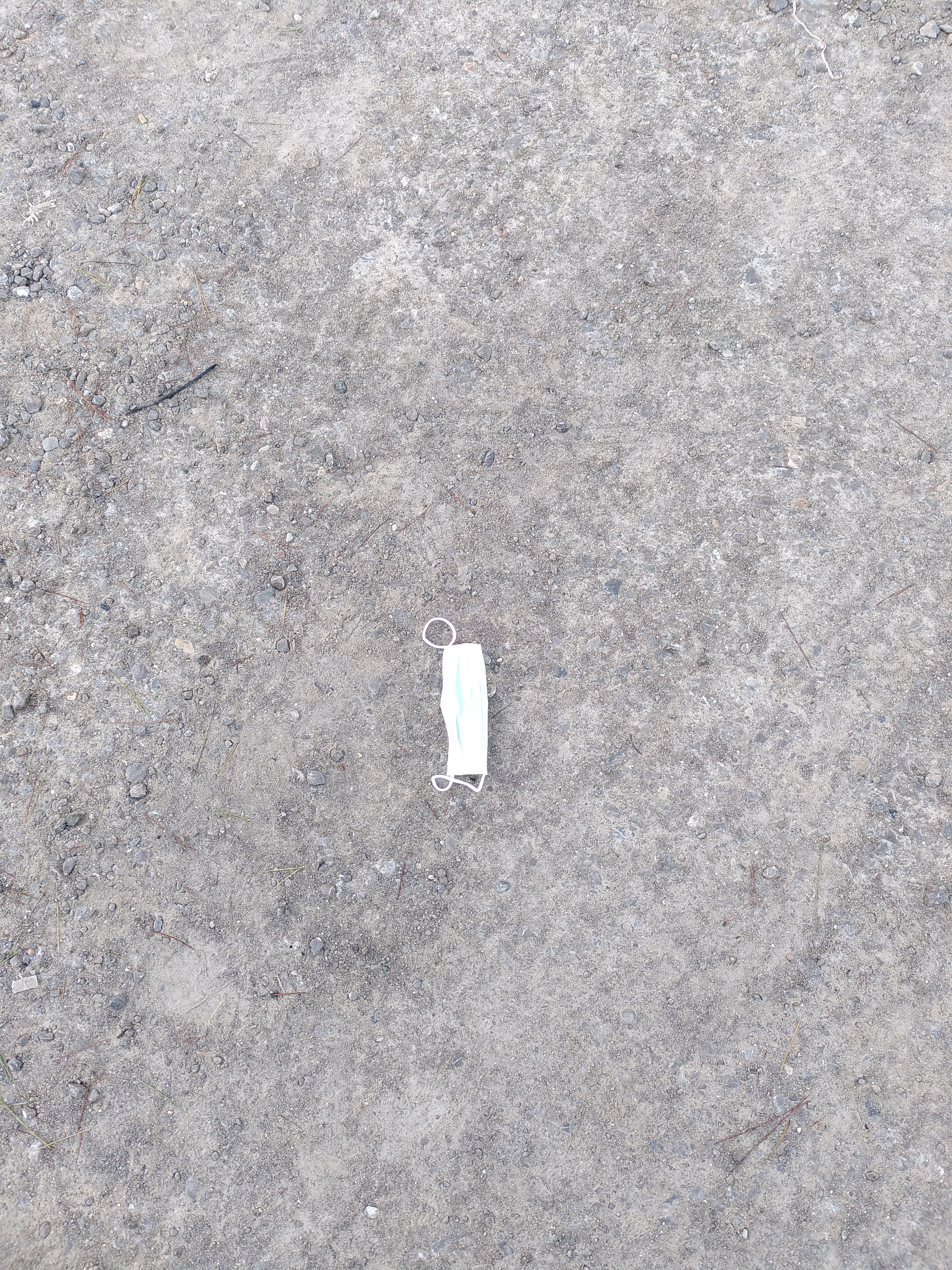
The use of facemasks, a seemingly innocent but at the same time ridiculously ineffective measure, has already developed into a new environmental disaster, since we humans tend to put ourselves first, no matter what, forgetting that earth is our habitat and we are the environment. Children, forced to wear these masks in class, have trouble concentrating. A cashier I met the other day was complaining about nausea caused by the obligatory face cover she was to wear all day, impeding her vision and causing disorientation. Yet another way humanity pollutes this planet, the masks can be found in parking lots, in forests and in the ocean; and how about the brand-new garbage pile created by the many millions of disposable corona-tests?

Contrary to what people might expect, in Ibiza, the majority of permanent residents lead healthy lives. Many of them don’t see the need to ‘get the jab’. Island life is more relaxed, especially in winter, when it gently forces one to slow down. This relaxation was visible in you as well, when it was still the four of us residing here. Corona isn’t front page news anymore, and people go about their lives almost like they did before. Here, I feel less alone in my reluctance to get vaccinated, less cornered, although the influence of an 85 % vaccinated Holland can be felt in messages from family and friends. Robin’s Dutch teenage friends are all vaccinated and they burden her with tales of guilt and downsized freedom. If it weren’t for her Ibiza friends, many of whom remain unvaccinated, she might have insisted on getting it, not out of conviction but out of opportunism. And to me, that feels wrong, especially with a technology that’s so new.

I’d like to speak to you about how it’s possible that people are still so dead set upon everyone getting the vaccine, blaming the unvaccinated for the overflowing ICU’s, a notion that has proven to be false. When I see the Dutch secretary of Health Hugo de Jonge appear on a late night talk show lustily stirring up the furnace of disharmony, I understand. He’s joined by old and crabby Johan Derksen. A mere soccer commentator, I’m not sure what made Derksen turn into a COVID-19 authority all of a sudden, but he can’t wait to get his filthy, cigar-stained hands on those nasty anti-vaxxers. “I think we are way too kind to these people”, he whines on national television. Of course, this man has always been the personification of discord.

As with the inadequacy of the vaccine, the fact that ICU’s have been overtaxed every single winter simply doesn’t seem to register. I discuss this with people, but it gets old. Corona or the vaccine or the next wave are not exactly inspiring conversational topics and people get antsy, as do I. Some even get angry or downright abusive when I voice my doubts about this new mRNA technology and it’s a topic I tend to avoid. There is no one I can talk to like I did to you; you were willing to see my way while adhering to your own viewpoints. With you, I lost my touchstone, my haven, where I could safely utter and investigate and develop my ideas before tossing them out into the world. My letters to you should be read by you first (if not by you alone), before I make them public, but now, they face the world naked and imperfectly pristine, possibly containing faulty or hurtful elements.

Our final exchange (oh had I but known that it was, I’d have poured out my heart and soul to you all night, saying everything I wanted you to hear) about a restaurant for New Year’s Eve and the insomnia of our daughter, was over two years ago. In order to take away the worry I saw in you, I told you I was sure your heart was fine. Once in a while, I still ask you forgiveness for that lie born out of ignorance, but you never reply.

Milestones – Fly baby girl, fly

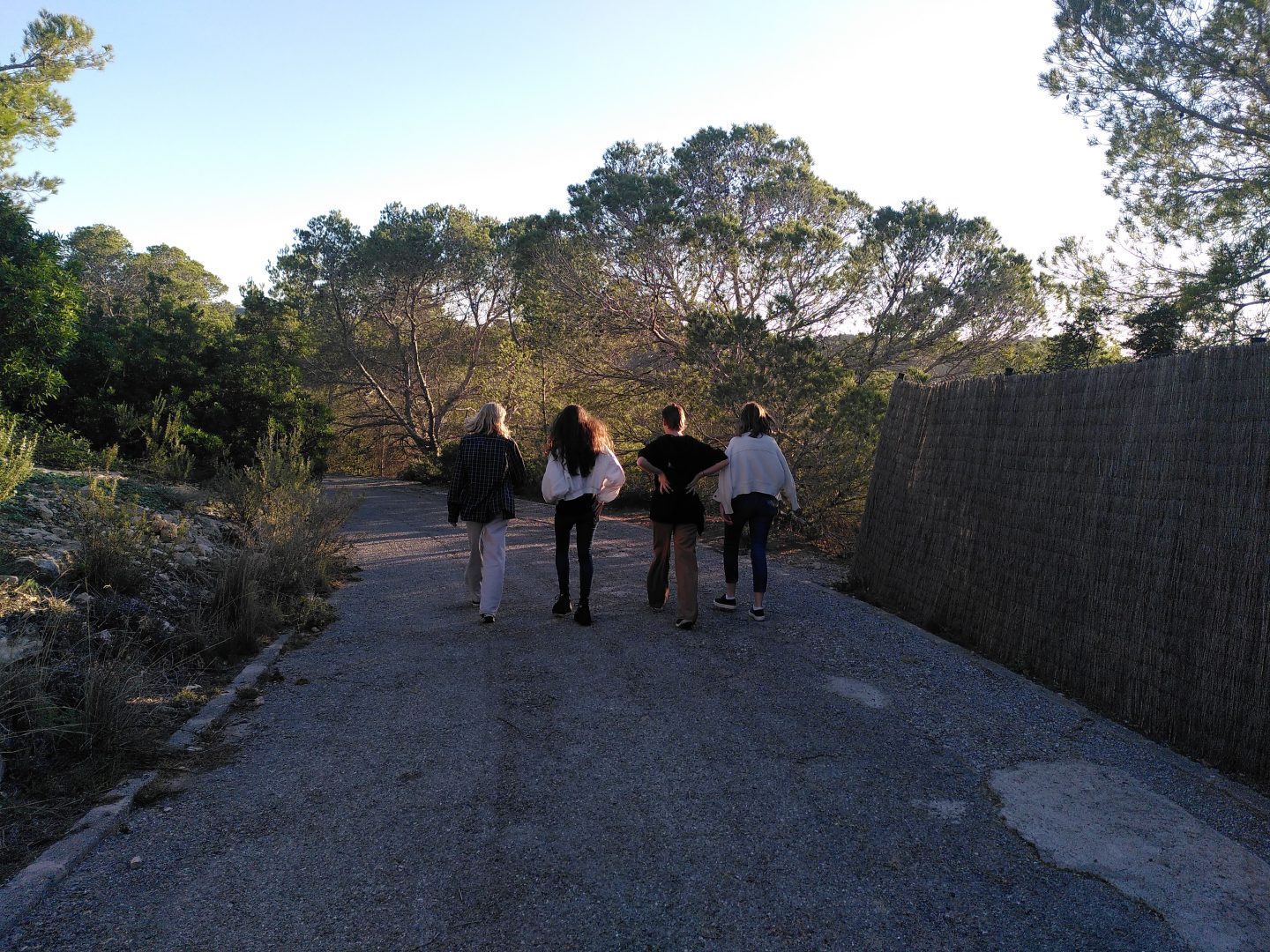
Perched on a promontory of Punta Galera, the exact place where, seven months ago, she held your cinders in her long-fingered hands to entrust them to the dark waters, your Birdy had a pensive moment amidst a weekend of elated happiness. Hands on hips in her own peculiar way, elbows pointing backwards, I noticed this stance made her long arms look like wings. As I beheld her looking out over the sea, I tried to divine her thoughts. Was she contemplating her future as a sixteen-and-up individual, relishing the nearness of her friends, or simply letting her mind take a rest from the extended celebrations? Whatever it was, you must have been a part of it. I couldn’t tell if she was in pain, but she didn’t seem to require my help or comfort, so I let her be.

A baby and her Dad

Your daughter, who so resembles you but at the same time is her own person more than anyone I know, has reached the momentous age of sixteen. Halfway on her way to legal adulthood, she can now officially quit school and get any body part pierced without my permission. Had we been in America, she’d be able to get her driver’s license, and the strangest thing is, that doesn’t even seem far-fetched anymore. Our once socially awkward and shy little girl is growing into a radiating human being: she is strong, independent and gorgeous. A force to be reckoned with.

Alas, we are not in California, so she won’t be driving a car for some time, and although Ibiza is treating us well, it isn’t Overveen either, where Robin would have hopped on her bicycle to be with her pals and celebrate reaching this landmark age, roam the streets of Haarlem and hang out at their school. Holland isn’t exactly in a festive place at the moment, with its recent lock-down and talk of mandatory vaccinations, but it’s home to one of the most important elements in her life right now: friends. Like her sister, our big girl isn’t a complainer, and only once did she voice the wistful realization she’d be celebrating her sixteenth birthday without her posse.

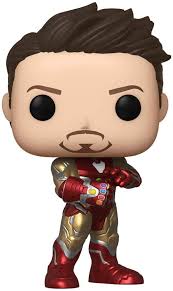
Tony Stark / Iron Man

So as I was straining to figure out what gift would be special enough to honor this sweet age, a gift extraordinary enough to make the absence of her father on this day less prominently present, a crazy idea popped into my head. Facilitated by the rock bottom prices of Transavia tickets, together with Leone I conjured up a scheme to get Robin what we believed would make her even happier than a Tony Stark Funko pop : her friends.

At first, the idea seemed too wild to catch on, but after repeatedly prodding the collective helter-skelter teenage mind of the Whatsapp group Leone had created, we ended up with a batch of three amazing girls, who went out of their way to get a day off from school to embark upon this adventure. In cooperation with the high school in Haarlem and the girls’ parents, the whole plan seemed to materialize successfully when the deteriorating COVID-19 situation in Holland threatened to prevent it. All of us were so excited by the prospect of the ultimate surprise party, we awaited the press conference, in which the Dutch government would reveal the new measures for curbing the spread of corona, in uneasy anticipation. New measures were indeed installed, but when we learned that travel remained free from obstructions I heaved an emphatic sigh of relief.

Robin’s birthday started off quietly wonderful. We gave her one gift, with the promise that after school, in the afternoon, more would follow, and Leone handed her a special version of one of her famous flap book birthday-card fabrications, displaying some of Robin’s favorite actors: Scarlett Johansson, Florence Pugh, and of course, the only possible Loki: Tom Hiddleston. All Marvel actors, of course. Do others exist?

Our newborn Robin

The sun was out (not a given on our Birdy’s birthday, it being the 2nd of December) and she went off to school in cheerful spirits. During the day, I had my work cut out for me, prepping a party cum sleepover that, unbeknownst to Robin, would have to accommodate not merely our tiny family, but an additional five.

After school, we went home to pick up where we left off in the morning. Leone and I struggled to hide our steadily increasing excitement as the arrival time of her friends’ flight drew nearer. While we were having our threesome party, the accompanying parents loaded the band of exuberant girls into the rental car and headed over to our house. In the meanwhile, the presents Robin unwrapped were all very well received, and she was serenely happy with how her birthday turned out. She seemed very content and for a brief moment I wondered whether it had been a good idea to invite her friends over; I’d be throwing everything into disarray, moreover since the following week she was facing exams. But I dismissed these qualms, my once high-strung ambition regarding tests and grades having alleviated gradually since … well, perhaps since you passed away?  

As an apparent conclusion for her day, we put on a Marvel movie, something Leone and I thought would be an excellent stage for the arrival of the mystery guests. So when we finally received word the gang from Holland were in the vicinity, Leone, who had a sudden need to use the bathroom, in reality snuck out the back door to welcome the travelers. Everyone who was familiar with the plan wanted to see Robin’s face as she discovered who was at the door, so Leone had been assigned the function of camera woman. 

I went into the kitchen ‘to make tea’, leaving Robin nearest to the front door. So when the tentative and highly anticipated knock could finally be heard, me asking her to get it was obvious. “No idea who’s there, probably Pepe, the gardener. To wish you a happy birthday”, I chuckled, since he has a tendency to knock on our door at odd times, though not usually in the evening.

When Robin opened the door, she was beyond surprised. Her knees literally buckled with perplexity and she couldn’t believe her own eyes. But after the first seconds of stupefaction, delirious and emotional joy set in. The girls couldn’t stop hugging and jumping and laughing. It was magnificent and their happiness was like a wave engulfing everyone present.

So what appeared to be a nice but quiet cinematic end of her sixteenth birthday turned into an endorphin-powered party with dancing, singing and laughing. During a time where partying has become all but illegal, this kind of elation was greatly overdue and so welcome.

Breakfast at Rita’s

The girls stayed for the weekend, and every moment, whether we were showing them Ibiza’s natural wonders, having breakfast at Rita’s Cantina and tapas at El Zaguan, discovering Ibiza town, or simply on our way in the car, was bliss. Organizing it took a lot of time and preparation, but few of the things I’ve done in my life have been more worth it. It was Robin’s birthday, but the undiluted joy, not just in her, but in her wonderful friends as well, was my greatest gift.

Strangely enough, it was the first birthday since your death I didn’t approach with a sense of dread. I guess the whole operation help keep it at bay, but I hope (or do I?) it is an enduring change. As I was dragging the group of friends across the island, however, despair found me a few times. Setting them free to solve the Sherlock-puzzle in the town of Ibiza, mesmerized by their elation, my lonely gait away from them was heavy with your absence. How different, how lovely, would it have been to while away our time together, meandering the cobbled streets, having some coffee or lunch, waiting for these promising kids to find the perpetrator in their Cluedo-like quest. To relish their glee together. Oh how I yearned for you, my drawn heart paving the streets of Ibiza town.

Friends on their way to Punta Galera

And Punta Galera of course, will forever speak of you.  As I watched Robin listen to it, one of her friends, an intelligent and beautifully kind girl, stood next to me. Since she is familiar with the kind of pain Robin might be feeling (her own mother passed away four-and-a-half years ago) I told her that this was the place where we dispersed your ashes. Robin had told her, and briefly we spoke about her own life without a mother. She said that for a long time, it had been hard for her to show her sorrow, seeing her Dad so devastated. I read about this in the how-to-deal-with-loss book someone gave me when you died, and recognize it in our children, and as much as I tried to give them space to express their own grief, I think something similar happened in our household.  

Your last summer with us

I asked how it felt for her now. After contemplating the question a moment, she said, with tears in her eyes: “It changes. But it doesn’t really get better.”
Her answer made me sad, but in my heart I knew she was right, and I realized I have been telling our daughters a lie. It doesn’t get better. How can it? The only way it could, is if you would magically reappear. If, as a birthday surprise for Leone’s sixteenth birthday, I would manage to conjure up you.

Three sailors

It wasn’t until the very instant I beheld the tiny jellybean that would become Robin snugly nestled in my uterus, the momentous occasion of our first ultrasound, I could see myself as a mother. To care for another creature with the intensity that’s needed to care for one’s own children didn’t seem like something I was capable of. I didn’t (and still don’t, honestly) see myself as altruistic enough for mustering that amount of unlimited patience and care. On the pragmatic side, I simply dreaded the responsibility. The loss of freedom. The loss of solitude, a critical commodity for a loner like me. It was thanks to you, for you, and most of all, with you, that I changed my mind.  As someone with a much greater capability for caring and multitasking and an infinitely more social constitution, I knew you’d take on at least half of the burden and be a doting father.

I was right on all counts. You were devoted to the point of still wanting to tie Robin’s shoelaces when she was ten and I struggled with combining my newborn maternal dedication and the preservation of a minuscule sliver of freedom. You saw my struggle and helped me as much as you could, stepping in to guard my space, taking over with ease. News of a father unable to be alone with his children because they were too much for him we’d contemplate with pity and a hint of disdain. Your talent for caring, for our children and me, was of vital importance to me. But then you decided to leave. You left me to raise our two daughters alone, and to execute all our plans without you. This was not the deal we made.

Last month, after vacating our house, we had nowhere to go. We couldn’t go to America yet and no longer had a home in the Netherlands. Without children, this unpredictable situation would have been infinitely easier to deal with. I had prompted the school in America to expect Robin and Leone at the start of the school year. At first, I had to delay their arrival a few weeks, but when my visa still hadn’t shown any signs of materializing at the time of our move, I had to come up with a serious plan B. So we headed back to Ibiza, to let the girls spend a trimester in a school they already knew from the time we lived here as an unbroken family, and to stay in the house that had been our home before.

As always, the island has welcomed us, and Ibiza defies the definition Plan B, but not going to the US now presents me with another dilemma. Since the initial plan had been to go for one schoolyear, what do I do? Do I extend the time in the US into the following schoolyear? This means I squander any possibilities for the kids to go back to their excellent and wonderful school in Holland. Should I just let them finish this schoolyear on Ibiza and forget about the US altogether? I know I will always regret this. Had I been alone, these crushing doubts would have been non-existent. Others would have risen, probably, but they would not have had such grave consequences for others than myself. My dependents. The legal language concerning the visa says it clearly. Los Angeles will be our home, even if it turns out to be for only half a school year. I’ve chosen not to look beyond that. Who can say what this shifty world will look like in six months anyway?

Education is a substantial, but by no means the only obstacle in our untethered teenage household. The interests are often conflicting and they seem to change color every week. If one is adoring the idea of living in the US, the other is sure to feel despondent for leaving behind her friends and beloved school. The worst is, I understand her qualms all too well. Before, at least she had some kind of picture of what she was leaving them for, now she doesn’t even have that anymore. As soon as my visa comes into sight, the America-loving daughter suddenly gets cold feet as well. “What if it’s not what I hoped it would be?” she asks me in an unsteady voice. You and I, we might have been two captains on a ship, which is not always considered an ideal situation. Now, I’m on my own, navigating tricky and changeable waters. I wouldn’t mind having to bicker with you over the right course to take.

There’s no one to take over the rudder anymore. Not here in Ibiza, not back in Holland and not when we will finally touch down on Californian soil. Sure, family or friends can step in for an evening or a day, perhaps even a weekend, to keep our girls company and make sure they go to school and get fed. But taking over, assuming the full responsibility for their lives, is now my task, and mine alone. The only one who could assist me in that was you. All decisions are exclusively mine, and so are the teenage anger and angst. When the hormones raging in Leone’s body make her want to shout or sneer at someone, I am her sole target. Well, and, to a certain extent, her sister. But I am the only one she can rebel against, ignore or recoil from when I try to touch her.

Sometimes I feel like a boxing ball, and I want to scream with exasperation. I do. At times I just want to run away. Flee the responsibility that I was so hesitant to accept in the first place. But way more often I feel like a failure. I should be imperturbed and patient, our girl needs a steady adult in this turbulent time of her life. Instead, I get angry when she stares at her phone for hours on end and let her snide remarks get to me. A single parent is not something I ever expected or wished to be. In my adolescence this scenario literally featured in my worst nightmares. I guess I am getting hard lessons in responsibility, among other things.  A few days ago, I came across an article that compared the stage of puberty to a time of release for the parents, to be accompanied by a feeling that’s very similar to lovesickness or grief. So it seems my mourning process is not quite over yet; I’ve lost you, and now I’m losing my children as well.

You left me at the onset of their teenage years, a stormy era. Ironically, you also left me at a time where we could see more freedom dawning on the horizon, and more time to spend on and with each other, thanks to the increasing independence of our babies. This is a time when the claims of parenthood start to relax when it comes to the direct, everyday care. At the same time, so much is happening, it dizzies me and sometimes I feel I can’t keep up with our rapidly evolving daughters. With you by my side, we would’ve lagged behind together, laughed about their adoration for Marvel characters and their conviction of knowing everything, and this particularly farewell would have not been so damn lonely.

Reconstructing my life would undoubtedly have been easier without children. But despite all the struggles, the complications that come with emigrating, moving, trying to accomplish any big change with schoolchildren in my wake, I am devastatingly grateful for my companions. Our daughters are wild, autonomous and multifaceted. I am blinded by their brilliance. At times they enrage and exhaust me, but much more often than that, they lift me up, inspire and teach me.

Wise beyond their years, they know and see me better than anyone else. More and more they appear next to me at the helm, and I realize I am not alone. We are three.

History repeated

A week ago, returning from another run to the warehouse where I’ve stored most of our life, I was in the car listening to ABBA. An important soundtrack of my childhood and a recurring presence during our skiing trips, a melancholy impulse made me play the Swedish band’s music. Although you grew to like the unproblematic and sometimes-cheesy songs, you weren’t always crazy about our nth rendition of Waterloo or Voulez-vous with the cd playing in the background. Stuck behind the wheel, once in a while you suggested a change of music. Sometimes we agreed to it, but not often enough for your taste. Where I can listen to a favorite song over and over again, you disliked repetition, but the steady accompaniment of the 70’s band to our route to the French Alpes made the music acquire the happy association of those winter holidays. Now, of course, the songs have picked-up another hue: the pain of the loss of those travels.

Certain ABBA songs were more popular than others (or simply included in the Gold collection cd we always turned to) and therefore more familiar, but my Spotify account threw a lesser known (though not unknown) tune my way, called: Slipping Through my Fingers. It’s a song about a mother seeing her daughter off to school, plagued by a sadness at letting her child go, not just to school, but in a broader sense, simply because she’s growing up. Having children of my own and very sensitive to music and its lyrics, I had understood the feeling well. This, however, was the first time I heard the song since you died. It didn’t fail to touch me vehemently, but the clarity of the emotion was gone. Why was I crying? I knew it wasn’t just the letting go of our daughters anymore. Was it the recurring realization you will never see them grow up? Yes. The past year-and-a-half they have developed and changed so much, you’d hardly recognize them. Were my tears fueled by the notion I can no longer be the mother I used to be without you there to share the load, and therefore more often lose the precious time that Agnetha sings of? Absolutely. Was it because I can never again share with you this melancholy feeling of seeing our children outgrow their parents? Hell yeah. 

I have been doing alright, but the last few weeks my strength is crumbling. This might be the very first time I’m getting a taste of what depression is like. It’s not really surprising, for several stressors are uniting and serenading me their high notes. In less than a week, my kids and I will be homeless. I am cleaning out our special house, without knowing where we will go next. Our plan, to go to my former hometown, Los Angeles, has been thwarted by COVID19 – related complications. And although the prospect of moving to the US is quite daunting, it’s an exciting one as well. So what to do when the children no longer have a school to attend to in the Netherlands, but can’t go to their prospective school in Los Angeles either? Stuck in a schoolless vacuum, they see their friends picking up books and preparing for a new educational year, and look to me to find a solution. To create some security, show them what’s next. I’m failing at it and it feels like I m gambling with their future.

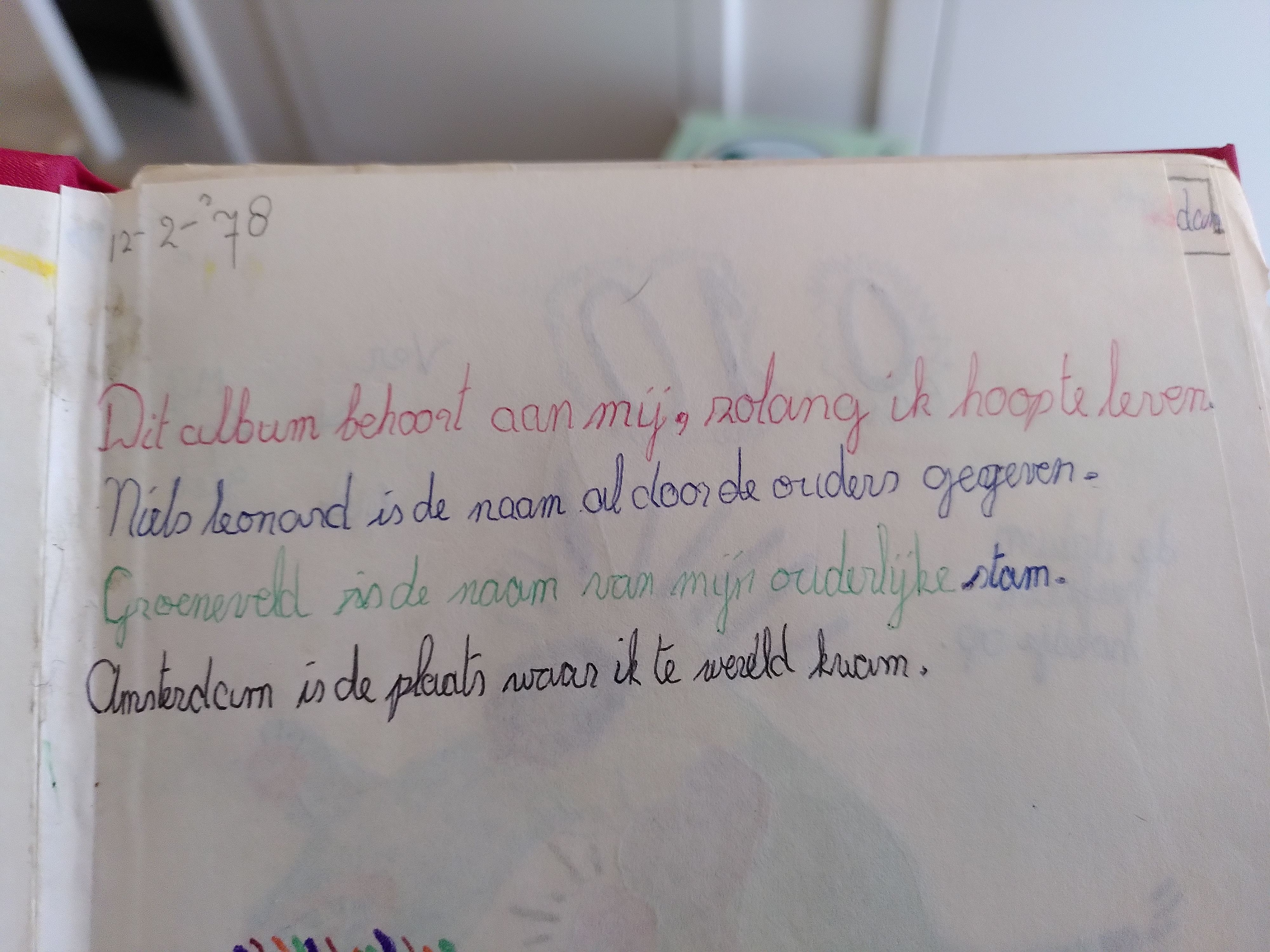
Relinquishing the house is fraught with emotions in too many hues. On the logistical side, it’s large and accommodates more stuff than I was aware we possessed. Intending to get rid of as much as possible, I have been going through it for months now, and the flow of paperwork, books, trinkets and clothes just doesn’t seem to end or even abate. I never realized you held onto mementoes as much as you did, until I dove into the contents of our cabinets and discovered a treasure of souvenirs from your youth and our life. When I came across a few diaries from the time you were about thirteen and freshly in high school, it was the first time I discovered you were inclined to journaling in your teen years. From a more tender age, a poetry book resurfaced. On the first pages of it you introduced yourself to the people who contributed their rhymes to your little keepsake notebook. The innocent children’s poem begins with the line “This book is mine, for as long as I’ll live”.

Since I inherited all your possessions, I guess it’s now mine, to hold onto for your children. It’s one of the most precious discoveries I made during my odyssey, but there were many more like it. Not only cabinets and closets held surprises, our computer did as well. Letters you wrote to me and I to you are the obvious instigators of emotional writhing, and yet I feel the simple notes synchronizing our daily schedules or grocery shopping are more insidious, because the agony they cause is unexpected, giving me a brief taste of how our life together used to be. One of those was particularly nasty. It was a brief email message dealing with the question whether you should get life insurance. I believe we had an argument the night before; the cynical tone was not like you, unless you were feeling hurt. You’ll never know how excruciatingly hard this joke, that was never meant to be funny in the first place, now hit me. This is the way you introduced this email: “Let’s discuss my death.”

From another angle, our moving out of Overbeek (the name of our monumental house) is also a goodbye to my family history, the main reason I wanted to live there. It wasn’t just the house I was born into, it has always been a symbol to me and my entire extended family. The families of both of my parents had lived here. At the same time. Overbeek was built in 1840 and holds the oldest elevator in the Netherlands. One of our wedding gifts was a drawing by my parents of this house, demonstrating its significance and a prophecy of what lay in our future. On our wedding-day, however, we could not possibly imagine we’d ever live there, much less, that you’d die there.

It’s a magnificent yet quirky mansion with a breathtaking woodsy garden. It’s also the place where my grandfather died suddenly and unexpectedly, his youngest son, my father, only thirteen years old. Sixty years later exactly the same happened to you, and your children. The similarities are nothing short of eerie. How well did I come to understand my grandmother’s plight.

As children, my cousin and I had made a pact to buy Overbeek back one day. We did. Now the time has come to finish this chapter of my, our, family history.

Sunglasses and Highlanders

Wood ash weighs next to nothing. Cleaning out a fireplace after the timber has been consumed entirely requires some effort to not let the feathery dust disperse itself throughout the rest of the room. So when the crematorium handed me the heavy urn holding your remains, I thought the material the container was made of accounted for most of its weight. The smooth surface of the object hinted at bakelite or maybe even black marble.

But human ashes are not like wood ash. I did not realize your incinerated body was responsible for the heftiness of the object I had to haul through customs and to Ibiza until our small party was at Winti to return it to the sea you loved so. As all of us scooped handfuls of you from the urn, its weight gradually diminished until it became clear the container was nothing more than a simple plastic jar. Its weight, you, had left it.

In undecided times that complicate international travel, some of your closest friends came through and, on the day you were once born, said a final goodbye to you. The sea was still and receptive, accepting you as a natural part of it, the sky an unbroken blue, the way you preferred it. With the coarse sand that had been you stuck under my nails, one of your recurring jokes came to me: on holidays, when the sun was dominantly present in a sapphire sky, you’d find the tiniest cloud and playfully say: “oh no, it’s overcast!”

Although we all knew the contents of that vessel weren’t you, not anymore, it did feel as if we were setting you free, maybe even more so, ourselves. For me at least, this was closure. Not from you, never from you. You will always be part of me. But returning you to the earth, the sea, was like a permission to continue life without you. To let go of mourning as the main purpose of my daily existence. To know that you’re resting among the rocks of the Balearic Sea makes me feel desperate and joyful at the same time. The furious pain this notion, meaning that you’re no longer a human being, no longer a body, no longer the love I can touch, causes can still strike like lightning and tear me apart in a similar way.

This is a time of countless farewells. Like a dog, I am shedding. Getting rid of superfluous possessions. As our daughters and I are looking to an uncertain and entirely new future, I hold our past in my hands, and every picture, every letter and email from you, passes through my body and mind. Our past is no longer ours, it’s mine now. My responsibility. The process feels like a purging, though that sounds too harsh.

The mushroom table we once bought for Robin had been moulding, useless and unseen, on the terrace for a while. But toppling it into the container at the landfill shut another door to the time we were trying to be the best parents for our two toddlers. We were so ridiculously devoted. I still feel the devotion, but now, I’m scrambling to suffice.  

In tiny steps I’m forced to contemplate every part of our life together. The steps need to be small, because at every single one I break, and I can’t continue until I put myself back together again. Every time, I change a little. Does it make me stronger? I really don’t know.

Some of the items I’m casting off are too significant to be a small step, like our Toyota Highlander. Not because of its size, but of what happened inside it, the places it took us. It was an extravagant present from one of our closest friends, and, at the time being the only SUV with a hybrid technology, he had it shipped to us from the United States. That its transatlantic transport probably negated all environmental benefits the hybrid motor offered, was a realization we had no idea what to do with, so we stored it. Well, we did our best. We certainly didn’t do everything right, but we did try to make a difference.

Our second child was on the way and we wanted more travel space. I detested SUVs, but again, it was the only larger hybrid car available at the time. And for its space and dependability, I grew to love it dearly. So now, with a heavy heart, I rummaged through all its nooks and crannies to make sure I didn’t leave anything behind before handing it over to its fortunate new owner. Some of the objects I found had been lying hidden for years in one of the many compartments, like the tiny pink notebook with the portrait of a horse on its cover in which Robin’s simple sentences reveal what a seven-year-old considers relevant travel annotations. “We are in the car for a long time and I don’t like it” and “On the beach, the wind was so fierce, we could hardly walk! It was so much fun!” At the back of the only partially used notebook, in more mature writing, is another note. It says: “I’m dying inside, while outside, I’m staying strong”. I don’t know if it’s a quote of a song or something I need to be concerned about.

Your sunglasses, still perched in their overhead holder, remind me of your sun-sensitive eyes. You’d almost never go out without them. “If I do”, you’d say, “the sun will be sure to come out.”

I try not to get too attached to objects, and my current process is an excellent exercise. But the Highlander was so much more than that, and when I relinquished the kind monster in the parking lot of the car dealer, I left behind a large part of our past.

The laptop I use now, was once yours. The picture functioning as its wallpaper was made by you. It shows our beautiful dog Scout, and, in the background, our house. Of the three entities implied by or figuring in this photograph, we already lost two. Soon, when I have completed my release and the house will be empty at last, the third will stop being a part of our daily life and find a spot on the extensive shelves of our past.

Our future, a question mark.

Time and a light year

On the 31st of December 2020, a year had gone by since you passed away. It was undeniably a milestone, exacerbated by the date: the year’s end had been yours as well. So, on this day, we had lived through, experienced, every single day a year holds without you. Learned to accept and understand your absence an infinitesimal bit better. Dates are nothing but names and numbers placed arbitrarily by us humans on the circadian rhythms the universe created millions of years ago, but we have imbued them with such significance that, in most of us, dates can evoke strong emotions. And so it was for everyone who loves you.

The days leading up to the 31st of December brought with them very vivid memories of those, your, last days exactly one year ago, how we spent them, with or without you. Our final moments with you are branded into our minds, collectively yet individually, because that ultimate moment was a different one for each and everyone of us. Christmas Eve would turn out to be the last time your parents saw their son, Boxing day, the last time you got to enjoy my mother’s famous traditional Christmas dish: braised saddle of hare. Your sister, awaiting you in the mountains to join her for a few days on the slopes, never got to welcome you there. Instead, she had to drive back twelve hours to cremate you.

Robin’s final moment with you was when she said goodnight to you as I took her to her room. Normally, you would’ve always gone up to give her a bedtime kiss, but you weren’t feeling that well, and were in bed yourself. Her sleep ritual has always been very important to her, so when she realized, right after you died, she didn’t kiss you goodnight that fateful evening, it was like a dagger piercing her heart, and, perhaps even more, mine. A notion like this is enough to destroy a person, but we should take comfort in knowing you were always generous with your kisses and cuddles and showered both our girls with a plethora of signs of affection. And I do, I really do, but this humongous detail can still evoke such a storm of pain.

The last moment I saw you alive was when you left our bed to accompany little Leo, in one of your many selfless acts, to ensure my good night’s rest. Leone had been worried the whole evening (did she intuit your death? It would not surprise me) and wanted to sleep with one of us. Your selfless nature made you get up and join her to sleep in the guestroom.

This made Leone the last person to see you alive. She told me you left her that morning of the 31st. An early riser, you retreated to her bedroom to read. I wish you would have come to me, to our bedroom, where I was still sleeping, entirely unaware of what lay ahead. But you didn’t want to wake me, even though I know there was nothing you wanted more than to snuggle up to me, and so your final, altruistic, act made you pass your last living moments alone.

The events of the 29th and 30th  of December 2019 revisited me vividly, moments that had revealed both your grandness of spirit and your unwellness. Remarkably, those final days were packed with special moments: your compassion for an angry waitress, our beautiful family walk on the beach where you told our kids about some of your adolescent mischief, the visit to the cardiologist who did not see the urgency of your situation. It was a bright and crisp winter day and in the waiting room the low rays of the setting sun embraced us, as we mused about all the places we could go to, to visit or live. We talked about our future, full of soft-glowing adventures, when neither of us realized our future together was heaving its last breath.

In the evening, the four of us played a board game, but I could see the raucousness of the children was a bit too much for you. You were not well, and before you went to bed early, you took your very first, and last, dose of antiplatelets.

Questions and doubts, though not as strident as before, still plague me: perhaps the cardiologist failed, or maybe there was no way he could have have seen it, perhaps he shouldn’t have given you the blood thinners. Why did I, who is always cautious when it comes to pharmaceuticals, let you take antiplatelets while neither the ECG nor your blood pressure called for it? What if those were what killed you? No one knows, and I doubt we’ll ever find out. But it doesn’t matter anymore; no explanation, if it ever comes, will bring you back.   

Your family, the children and I had decided to spend the holidays on Ibiza, in an effort to make them a little lighter, to let the island’s healing energy carry and guide us. As Holland had installed another lockdown, we benefited from Ibiza’s improved COVID-19 situation and were able to find some welcome distraction in the shape of eating out, or simply enjoying a coffee on a sunny terrace, something we hadn’t been able to do since October.

As the new year drew closer, all of us grew increasingly introspective. A full moon let us live through our painful love for you and lit up that dark night preceding the anniversary of your death. We embarked on a guided walk in the northernmost part of the island. Looking out over the Balearic sea and the rugged cliffs, the sky a magnificent purple stage for this Cold Moon, our thoughts rested upon you and the aching cleft in our hearts.

We were fortunate to enjoy our dinner at a truly Ibicencan restaurant, and the pure campo-food was lovely, but our tears made an almost constant film over our eyes. Somehow it seems that the more wonderful the experience, the more stinging the pain of your absence. At dessert, I broke down in a way that doesn’t happen to me very often. Not in public. Most of my tears are controllable, but these weren’t. Salting my brownie and vanilla icecream and dotting the white linen tablecloth, they demanded to be seen, no matter how hard I tried to continue to talk and smile and eat.

I never say, “it is unfair”, because I don’t have a right to say that. Yes, losing you is the worst thing that ever happened to me and it shattered me like a glass figurine. But many are so much less fortunate. Losing you feels like losing everything, and yet, I still have so much, so many loving people around me, our incredible children.

The day of your passing, the 31st, we set out early in the morning to walk to Punta Galera, the mysterious rock formation that offers eternal views of the sea. It’s quite a tricky walk before you reach the immense slates of rock where, during summer time, people go to sunbathe, in the nude or not. It’s an awe-inspiring place, a piece of art, with nature and erosion as its twin sculptors.

We reached the rock that we used to jump off before snorkling in the clear waters surrounding it. Reminiscing, I saw you in happier times, already in the water, egging on whichever one of the kids was losing her daring, coaxing and encouraging them until they finally followed suit. Even I was one of your unwilling subjects, once.

All of us, your parents, your sister and brother-in-law, your nieces, our daughters and me, existed in a mournful solemnity, each of us with their own memories of you, looking out over the sea and down from the rock face to find you.

The rock formation was deserted, except for Alex, the resident of the cave that can be found about six feet up in the rockface. You saw him, the last time we were there as a family, when he made pancakes for the children. I had talked to him several times and he recognizes me.

This cave has been inhabited for a long time. It reminds me of a night we were here on one of our pre-children, carefree holiday nights. Together with Ruben, one of our best friends, we got it into our heads to drink a beer on the rock terraces. In the middle of a moonless night, we climbed down, armed with a flashlight to illuminate our way. As soon as we didn’t need it anymore to reveal the tricky pathway, Ruben let it glide over the rugged rockface. Suddenly, a deep voice broke the dark stillness, wishing us “buenas noches”. We almost fainted. It was Alex’s predecessor, a yogi who lived inside that cave for I don’t know how many years. This man lived soberly, and all his possessions were inside the cave.

That’s not Alex’s way. Our cycloptic friend has made the surroundings of the cave his kitchen, lounge and living room. The place is decorated with pictures, cats and mantras, and he interrupted our commemorative silence by inviting us for some ginger tea. We accepted with grateful surprise and sat down on the cushions he had placed for us on the rocks. He set out to make tea for us, no small feat, since he first needed to make a fire before getting the water to boil. And that’s very unlike flipping the switch on a water cooker.

As we sat, he grated the ginger and sliced the lemon. With amazement we beheld his well-equipped al fresco kitchen and the long time it took him to prepare the tea taught us a bit about patience. Alex’s hospitality was a beautiful surprise, lending an extra shade to our serene sadness. It was fitting for a day that was so filled with you; you used to relish this kind of encounters.

Some days into the new year, I went running and decided to pass by Alex, to see if he needed anything. As we were talking, nature, or you, perhaps that’s the same now, created a miracle for the two of us. A complete rainbow appeared (again, a rainbow without rain) right in front of us. It rose up out of the cold seawater, a spectacle of which we could see both the beginning and the end, simultaneously. Alex, who has lived with nature as his constant backdrop for seven years, told me he had only ever seen a rainbow like this three or four times. We were dumbstruck and it felt like a benediction. A benediction from you.

Our Newyears Eve was demure, but we did our best. We had oysters and oliebollen (a Dutch pastry, not unlike a doughnut without a hole) but no champagne. I couldn’t help but revisit the way we spent the last day of the year in the past. We would wake up excitedly, in anticipation of the newyears festivities, picking out our craziest clothes. What a different life. What a morphed world, this 2020 world. A year without parties, a year without visits from friends, a year without school camps, but most of all, a year without you.

Time indeed polishes the pain. Like the sea smoothing the rocks it gets rid of the sharp edges. But each passed day, every bygone year, time also takes you further away from me. If one could translate time into distance, which is done in astronomy, after one year, you’re already a light year (the distance light travels in a year, almost ten trillion kilometres) away from me. And every single day adds to that distance.