OUR FOSSIL FUEL ADDICTION, CRUISESHIPS AND BONFIRES
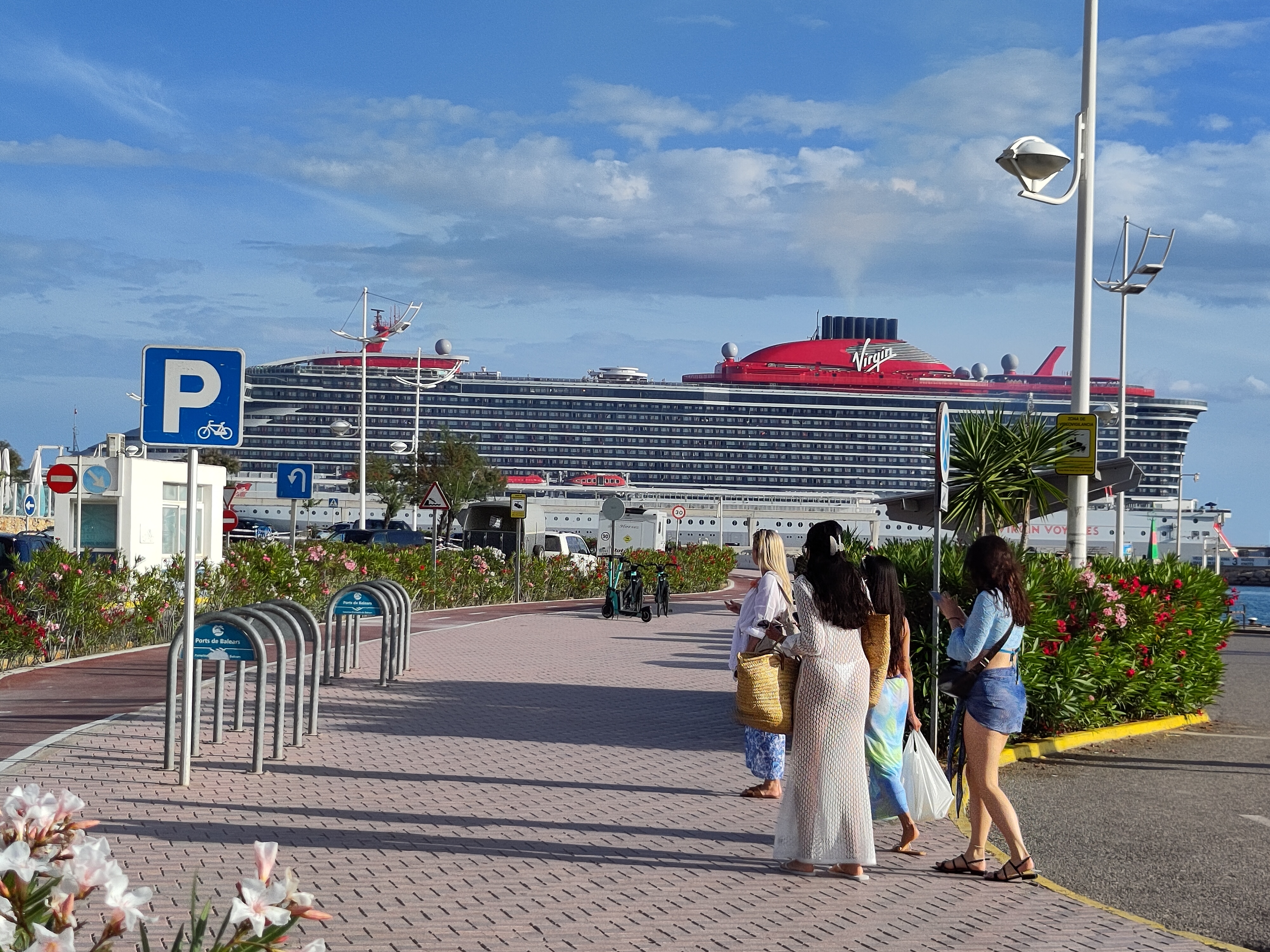
As you know, I currently live in Ibiza, where you’d think the air quality, blown pristine by the ocean all around us, must be excellent at all times. Unfortunately, the popularity of the island has greatly increased all types of transportation, and a multitude of cars flood the island with their physical presence and waste products. Previous summers traffic jams got so bad, the Ibizan government decided to restrict the amount of motorized vehicles allowed to enter the island during the high season. Any kind of freight vehicles and commercial trucks, significant exhaust emitters, however, are exempt from this regulation. The island’s appeal has seriously boosted construction, bringing with it an increased amount of fine dust particles (PM2.5) and lorries that all run on diesel fuel. Living in the marina of the city Eivissa has introduced me to yet another source of pollution I wasn’t that aware of before: ferries and cruise ships. All year, ships like apartment buildings moor in the tiny port. When I had just moved here, I caught myself thinking sometimes, while looking along one of the narrow streets and registering that it no longer offered a sea view, that building wasn’t there before… quickly to be followed by the realization, ah right— a cruise ship.
Personally, I don’t understand why you’d want to spend your holidays packed in a minuscule cubicle of a large superstructure, but I also don’t see the charm of getting falling down drunk or partying for 48 hours, and plenty of people regard this as the ultimate way to spend their holiday, especially in Ibiza. I guess it’s convenient to be able to remain snugly in your room inside the floating village that will allow you to visit many different locations around the Mediterranean. And I have never been inside one of those mega ships, so I really can’t have an opinion about luxury cruises executed by companies like Grimaldi, Princess, Norwegian Cruise Line and MSC cruises, and I’m sure they’re impressive and probably very comfortable. To each their own. However, the bad rap cruises have gotten for their generally polluting nature, thanks to documentaries like ‘The Poop Cruise’ on Netflix, are not baseless, so there’s definitely room for improvement, but I’m not convinced these companies see it that way.
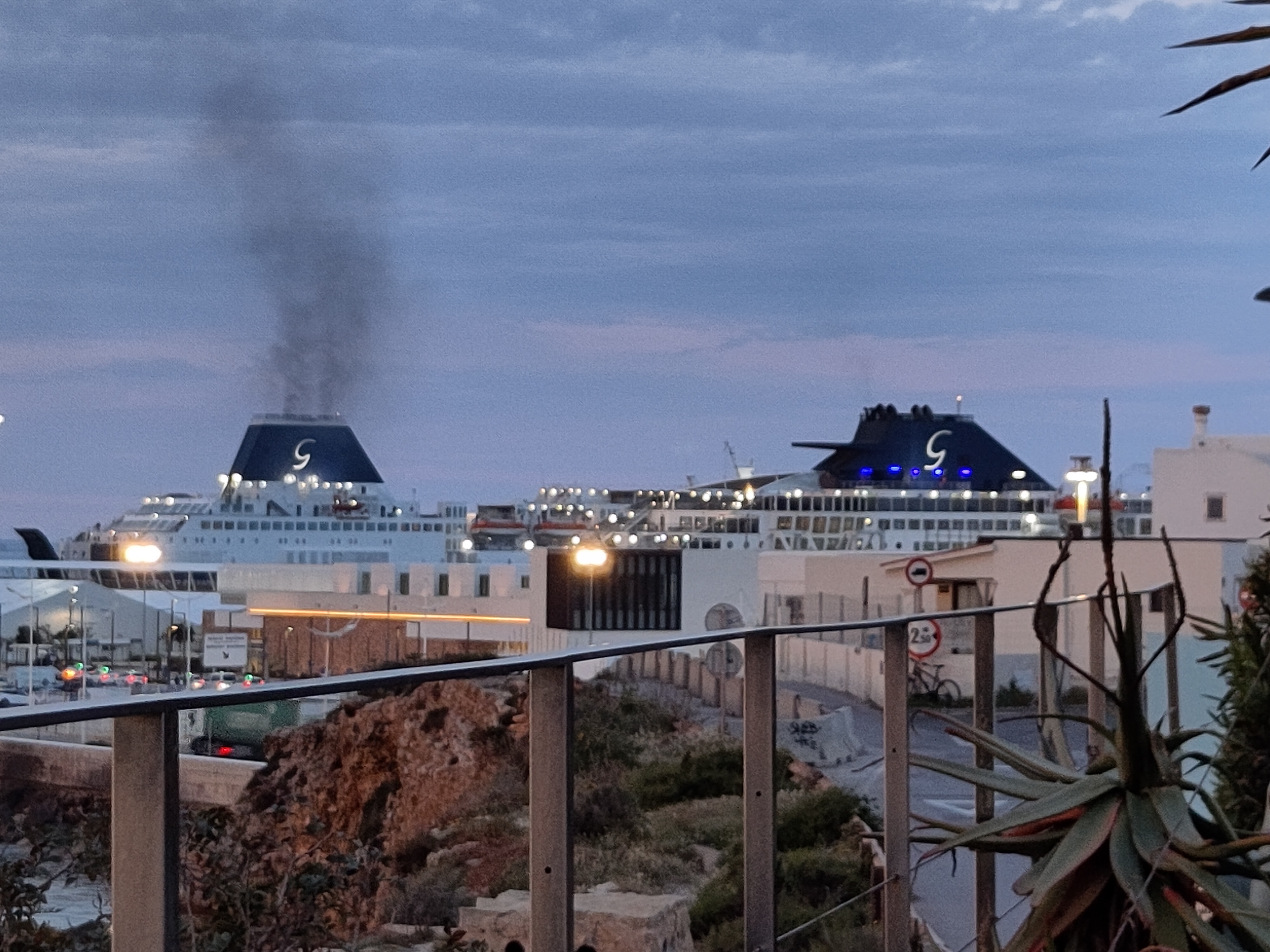
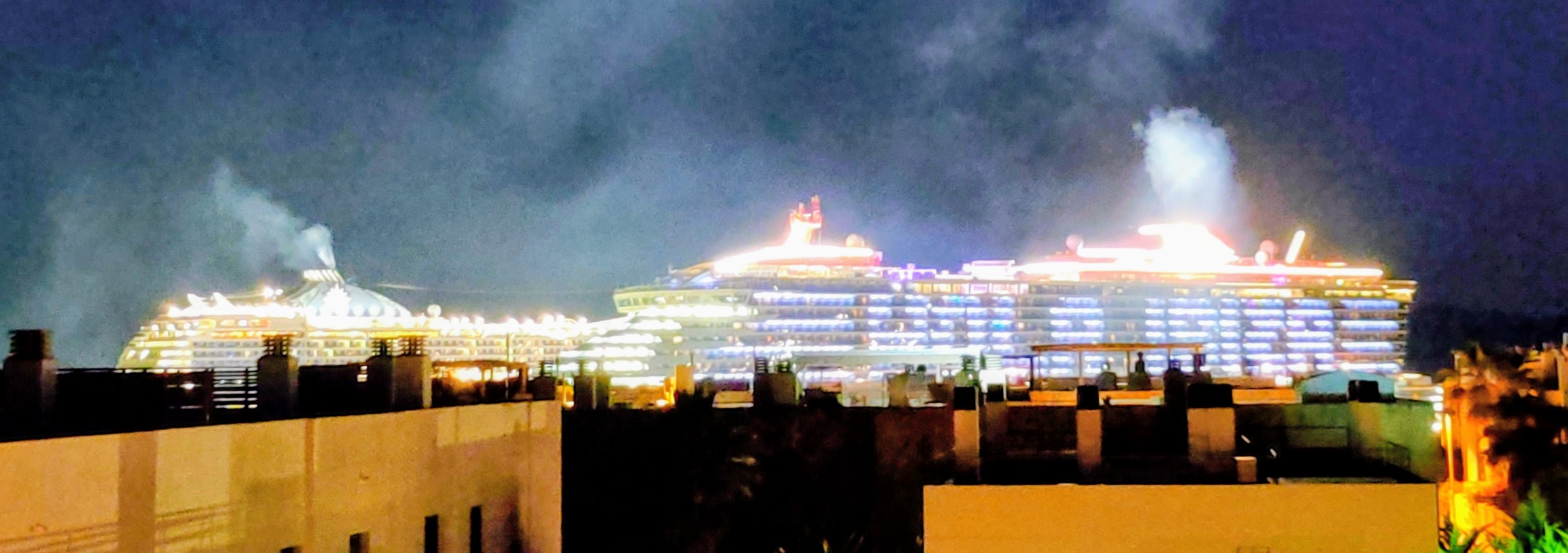
It’s not the size per se that bothers me, even though it does feel proportionally wrong in the tiny port of a small island. I also don’t mind the crowds of people passing by our house during the four hour window they are allowed to go on land to get a taste of the ‘real’ Ibiza. What I do find problematic is that the small port doesn’t have the capacity to receive these huge vessels. I’m not talking about the space to dock the ships (it can get a bit crowded when three are visiting at the same time), it’s the electricity. Ships and boats are supposed to be able to connect to the general grid when they’re docked, but never-ending expansion causes them to get too big for smaller harbors to accommodate them. The solution is to keep the engines running to generate electricity for the floating ziggurat that boasts restaurants, a shopping mall, swimming pools, cinemas, discotheques and sometimes even water parks. This translates into a giant diesel engine producing exhaust fumes, 24/7. If the people living in Illa Plana get unlucky and there’s a southwest breeze, the neighborhood is submerged in severe air pollution all day. If the winds turns, the people in Marina Botafoch get it, and when it blows seaward it’s dispersed over the beautiful Balearic sea, something I have contemplated when such a ship left Ibiza, trailing behind it a thick black plume as a thank you note for Ibiza’s hospitality.
We also have planes, of course, and significantly more of them during the summer months, contributing to air pollution, but airline companies seem to be working harder at reducing their emissions and finding alternatives. Empirically speaking, the effect on our air quality by airplanes is much less noticeable than those of cruise ships and ferries.
Air quality is determined by many different factors, some of which are natural phenomena, such as travelling Sahara sand, erupting volcanoes or pollen. These sources of pollution, if you can call natural processes that (I personally don’t), are difficult to combat, and something we more or less need to live with, although we can take measures to decrease their presence inside our homes or cars.
Most air pollution, however, is caused by us humans. Exhaust fumes are generally more accepted than unpleasant natural smells, even though we are well aware of how deleterious to our lungs these emissions are. Most people find the stink of sewers or stagnant water more offensive than the smoke an idling car discharges. I am clearly more sensitive (some might say overly) than other people, but unfortunately, my concern is not unwarranted. According to the WHO, 99% of humanity breathes air that exceeds the guideline limits, a staggering percentage that blew even me away. No pun intended.
Asthmatic people and sufferers of pulmonary diseases are the silent victims of bad air quality, and although some efforts are made to protect us from combustion byproducts, it’s not nearly enough, which is incomprehensible to me. We prefer warning people with COPD or asthma to not go outside when the air quality is bad over making sure it doesn’t get to that point. During COVID19 the narrative was that we needed to wear face masks to protect those people, whereas making sure they breathe clean air is not only a much more effective strategy, it also prevents others from contracting similar conditions in the future, and decreases the susceptibility of everyone to the corona virus (or other respiratory pathogens). However, air pollution compromises not only patients with pulmonary diseases. High exposure to air pollution significantly increases the risk of cardiovascular diseases, cancer, diabetes, neurological conditions, and reproductive issues. It has even been linked to mental disorders like depression.
What baffles me, after having lived in what I thought was one of the most polluted areas in the world, Los Angeles, I just discovered that the current level of air pollution in Ibiza is actually higher than it is in LA, and it’s still off-season. It might be a Spanish problem. Air quality fluctuates, of course, according to the amount of traffic at a certain hour, but in general, Barcelona and Madrid are not doing great on the clean air scale. (to check the air quality in your own place of residence: https://www.iqair.com/)
Taking action to improve this is largely the responsibility of governing bodies, but there is a lot we can do ourselves. I see so many stationary cars, delivery trucks, with their motors running. At our school, they put up signs asking for the parents to turn off their engines while waiting. For their kids’ health, and everyone else who spends time on the school grounds. Still quite a few don’t. Apparently many people don’t feel or realize the necessity.
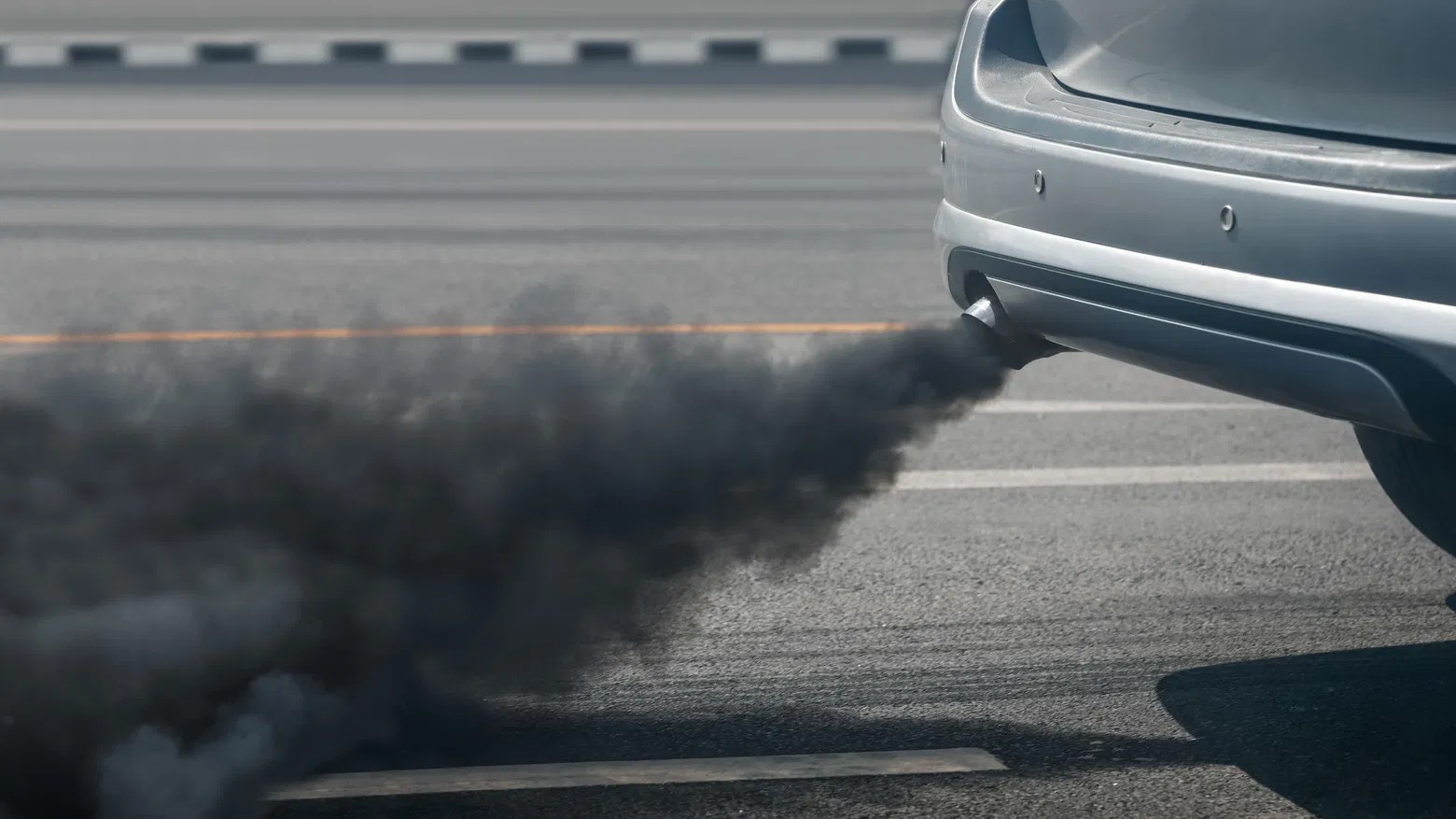
In Ibiza, like in all countries, every year (every couple of years for newer cars) you need to get your car tested, for safety reasons, and to check the amount of pollution emitted. However, judging by the amount of cars on the road coughing up black or grey smoke whenever they accelerate, the exhaust checks cannot be very strict. I often wonder how they pass the ITV (Inspección Técnica de Vehículos) test.
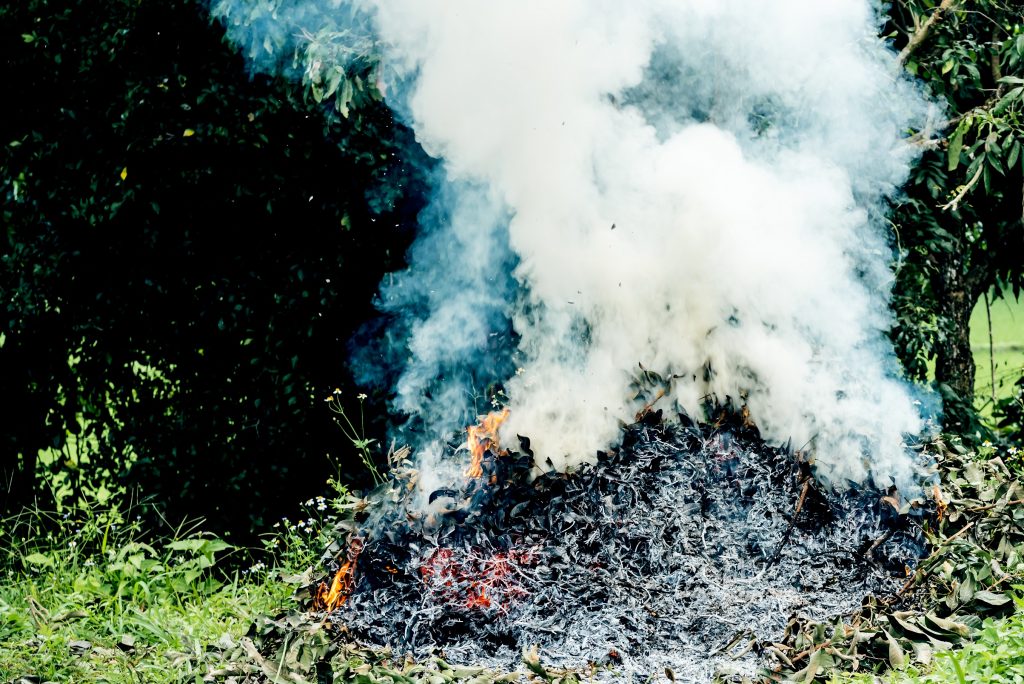
Another factor that contributes to air pollution in Ibiza is fires. Not wildfires, which do occasionally happen as well, but manmade, controlled ones. During the winter months, farmers are allowed to gather their agricultural waste and kindle it, in order to dispose of it. The smell of these fires is one we would usually classify as pleasant, homey, like that of a fireplace, and it does lend the winter season a certain atmosphere. But these fires, some more than others, create significant amounts of smoke, and it’s not rare to see the air muddied by it in residential areas and on school playgrounds. As cozy as the scent may be, it’s still pollution and a health risk. I think many Ibicencos would object to laws that prohibit these fires, but that kind of action is not even necessary. With a small adjustment, these fires become not only much less polluting, but in the process, a way to create a valuable addition to agri- and horticulture: biochar. I learned of biochar about seven years ago, and it seemed such an incredible solution to many problems. Because I don’t understand why it’s still not widely used and deem it an important tool for battling climate change I will dedicate one of my following essays to this magical substance.
We have the technology and the expertise to significantly reduce air pollution. Numbers show that actions can be taken successfully. Los Angeles, with its huge car population and large international airport (and wildfires, I know only too well), managed to significantly improve air quality by encouraging the use of electric cars and implementing other guidelines and regulations. Cars that run on cleaner fuel, electric cars, we have those options, why not expand this? A few boats, even in Ibiza, already run on solar energy or even hydrogen, like a smaller ferry from Balearia. But why not all? God knows we have enough sunshine in Ibiza for solar energy powered ships, homes or anything that needs electricity.
The not-so-conspiracy train of thought would be that the fossil fuel industry doesn’t like that idea and actively obstructs it. And the people who are pulling the oil-strings are generally living in the cleanest, most luxurious places on earth. When you’re on your private beach on your private island, I’m sure it’s easy to forget that the earth has one atmosphere, which contains everything we put out. The fires in Los Angeles made entire neighborhoods uninhabitable, but their toxic smoke did not just remain there; part of it was lifted by the Santa Ana winds and carried to many, if not all corners of the earth. If northern winds blow the exhaust from the cruiseships away from me, it ends up somewhere else, perhaps landing in Mallorca or Formentera. It doesn’t disappear.
Interestingly, most actions that improve air quality would simultaneously help fight climate change. For the people who deny climate change, the reality of air pollution is easier to prove and therefore accept, and so combining these two environmental issues makes total sense.
An additional advantage of weaning ourselves off fossil fuels is independence. It’s a well-know fact that oil (and therefore gasoline and diesel) prices go up when the Middle-East is unquiet, which is often. Currently, the invasion of Iran by the US and Israel is causing oil prices to rise. This is not the place to discuss the legitimacy (or sanity, for that matter) of this military strategy of an incoherent head of state, but it’s just another reminder of how vulnerable we all are to the whims of the so-called leaders of this world. Developing ways to better use solar or other sources of green energy (algae?), preferably within easier reach and control of smaller communities and individuals, is beneficial and necessary for too many reasons.
 NEW CHAPTERS