Wood ash weighs next to nothing. Cleaning out a fireplace after the timber has been consumed entirely requires some effort to not let the feathery dust disperse itself throughout the rest of the room. So when the crematorium handed me the heavy urn holding your remains, I thought the material the container was made of accounted for most of its weight. The smooth surface of the object hinted at bakelite or maybe even black marble.
But human ashes are not like wood ash. I did not realize your incinerated body was responsible for the heftiness of the object I had to haul through customs and to Ibiza until our small party was at Winti to return it to the sea you loved so. As all of us scooped handfuls of you from the urn, its weight gradually diminished until it became clear the container was nothing more than a simple plastic jar. Its weight, you, had left it.
In undecided times that complicate international travel, some of your closest friends came through and, on the day you were once born, said a final goodbye to you. The sea was still and receptive, accepting you as a natural part of it, the sky an unbroken blue, the way you preferred it. With the coarse sand that had been you stuck under my nails, one of your recurring jokes came to me: on holidays, when the sun was dominantly present in a sapphire sky, you’d find the tiniest cloud and playfully say: “oh no, it’s overcast!”
Although we all knew the contents of that vessel weren’t you, not anymore, it did feel as if we were setting you free, maybe even more so, ourselves. For me at least, this was closure. Not from you, never from you. You will always be part of me. But returning you to the earth, the sea, was like a permission to continue life without you. To let go of mourning as the main purpose of my daily existence. To know that you’re resting among the rocks of the Balearic Sea makes me feel desperate and joyful at the same time. The furious pain this notion, meaning that you’re no longer a human being, no longer a body, no longer the love I can touch, causes can still strike like lightning and tear me apart in a similar way.
This is a time of countless farewells. Like a dog, I am shedding. Getting rid of superfluous possessions. As our daughters and I are looking to an uncertain and entirely new future, I hold our past in my hands, and every picture, every letter and email from you, passes through my body and mind. Our past is no longer ours, it’s mine now. My responsibility. The process feels like a purging, though that sounds too harsh.
The mushroom table we once bought for Robin had been moulding, useless and unseen, on the terrace for a while. But toppling it into the container at the landfill shut another door to the time we were trying to be the best parents for our two toddlers. We were so ridiculously devoted. I still feel the devotion, but now, I’m scrambling to suffice.

In tiny steps I’m forced to contemplate every part of our life together. The steps need to be small, because at every single one I break, and I can’t continue until I put myself back together again. Every time, I change a little. Does it make me stronger? I really don’t know.
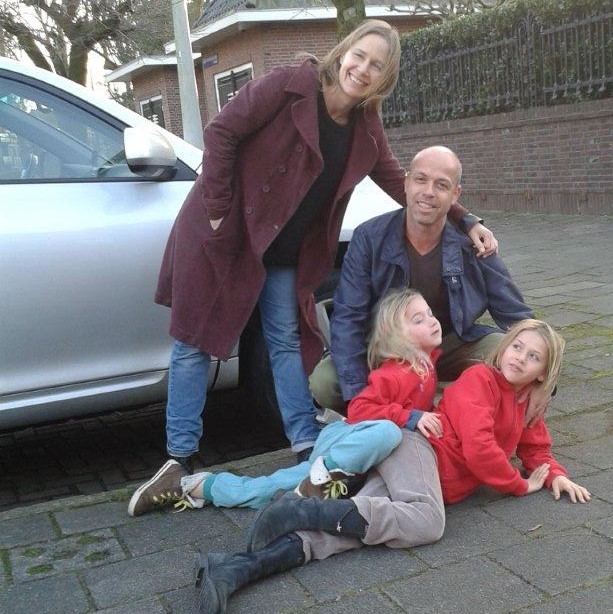
Some of the items I’m casting off are too significant to be a small step, like our Toyota Highlander. Not because of its size, but of what happened inside it, the places it took us. It was an extravagant present from one of our closest friends, and, at the time being the only SUV with a hybrid technology, he had it shipped to us from the United States. That its transatlantic transport probably negated all environmental benefits the hybrid motor offered, was a realization we had no idea what to do with, so we stored it. Well, we did our best. We certainly didn’t do everything right, but we did try to make a difference.
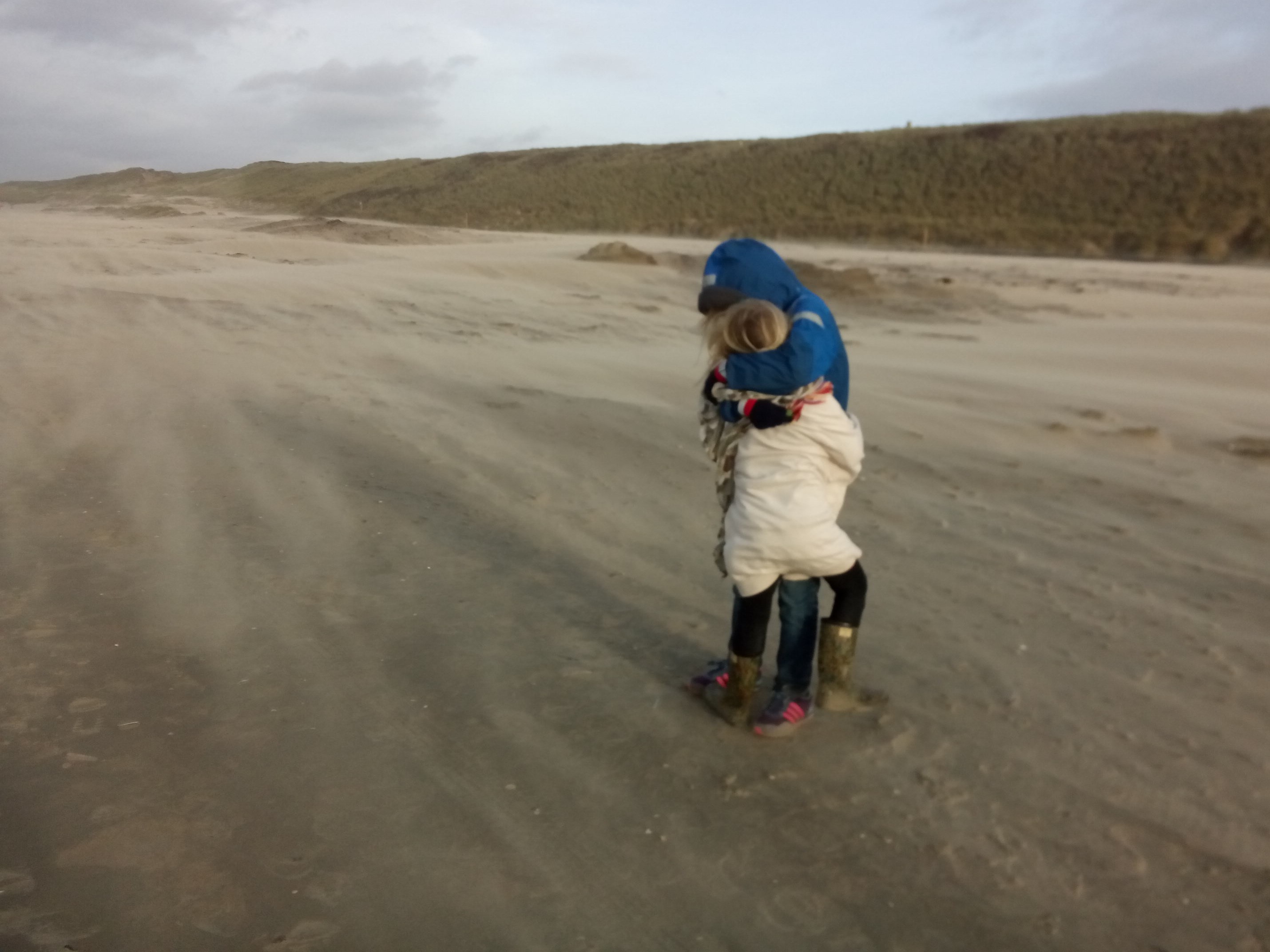
Our second child was on the way and we wanted more travel space. I detested SUVs, but again, it was the only larger hybrid car available at the time. And for its space and dependability, I grew to love it dearly. So now, with a heavy heart, I rummaged through all its nooks and crannies to make sure I didn’t leave anything behind before handing it over to its fortunate new owner. Some of the objects I found had been lying hidden for years in one of the many compartments, like the tiny pink notebook with the portrait of a horse on its cover in which Robin’s simple sentences reveal what a seven-year-old considers relevant travel annotations. “We are in the car for a long time and I don’t like it” and “On the beach, the wind was so fierce, we could hardly walk! It was so much fun!” At the back of the only partially used notebook, in more mature writing, is another note. It says: “I’m dying inside, while outside, I’m staying strong”. I don’t know if it’s a quote of a song or something I need to be concerned about.
Your sunglasses, still perched in their overhead holder, remind me of your sun-sensitive eyes. You’d almost never go out without them. “If I do”, you’d say, “the sun will be sure to come out.”
I try not to get too attached to objects, and my current process is an excellent exercise. But the Highlander was so much more than that, and when I relinquished the kind monster in the parking lot of the car dealer, I left behind a large part of our past.
The laptop I use now, was once yours. The picture functioning as its wallpaper was made by you. It shows our beautiful dog Scout, and, in the background, our house. Of the three entities implied by or figuring in this photograph, we already lost two. Soon, when I have completed my release and the house will be empty at last, the third will stop being a part of our daily life and find a spot on the extensive shelves of our past.
Our future, a question mark.
 NEW CHAPTERS